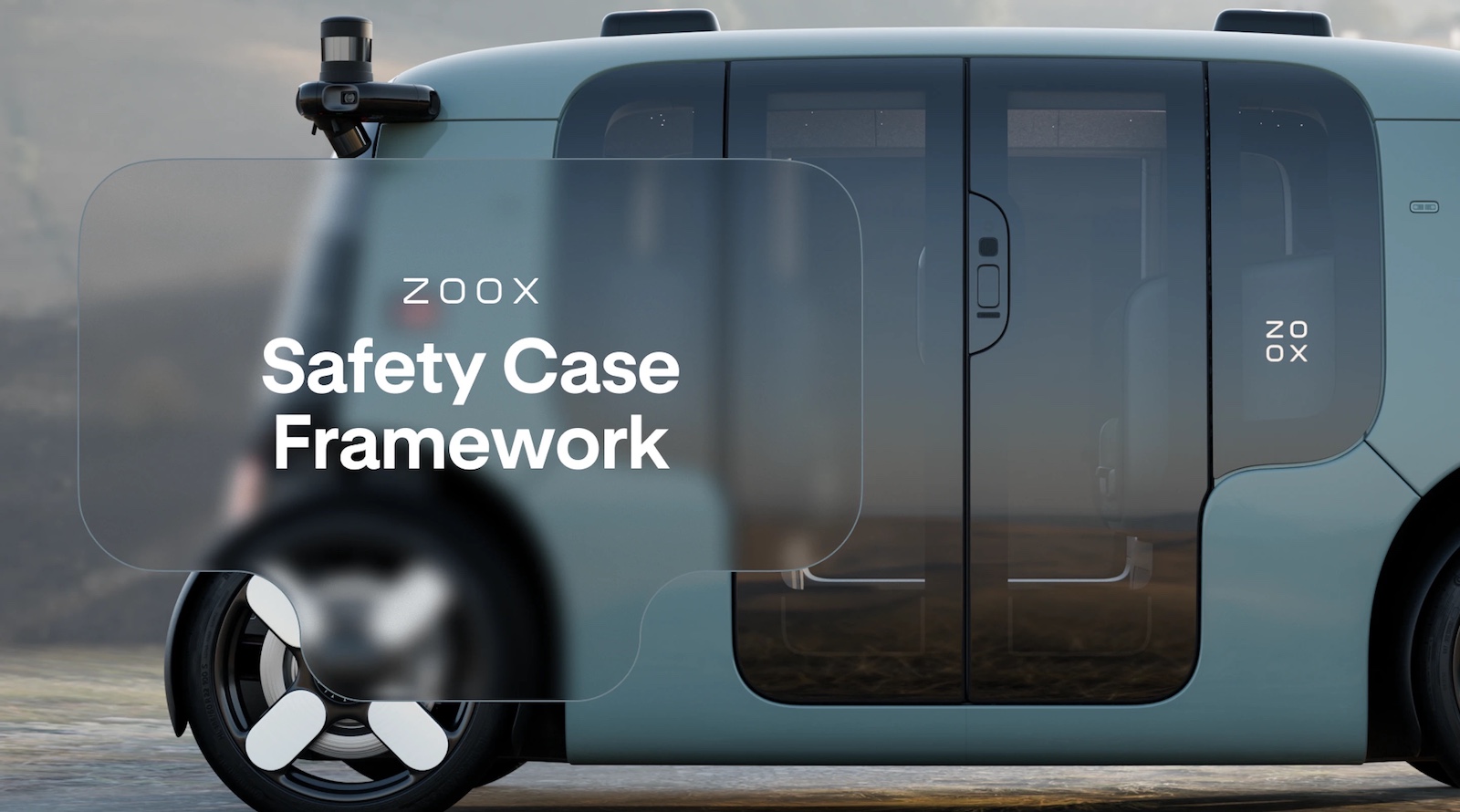
Zoox, Amazon's autonomous vehicle subsidiary, has published a comprehensive safety framework outlining how it integrates hardware, software, and operational systems to validate the safety of its robotaxi fleet. The safety case framework represents the company's systematic approach to addressing technical and operational risks before deploying fully driverless vehicles on public roads.
The framework examines three interconnected layers. Hardware encompasses the vehicle's sensors, computing systems, and mechanical components. Software includes perception algorithms, decision-making systems, and control software that govern vehicle behavior. Operations covers deployment procedures, maintenance protocols, driver monitoring systems, and real-world testing conditions.
Zoox's methodology follows established safety engineering practices from the aerospace and automotive industries, applying structured analysis to autonomous vehicle development. The company documents hazard identification, risk assessment, and mitigation strategies for failure modes ranging from sensor degradation to software errors to unexpected road conditions. This layered approach reflects industry standards like ISO 26262 for functional safety in vehicles.
The framework addresses a central challenge in autonomous vehicle deployment: regulators and insurers lack standardized testing protocols for fully driverless systems. Without drivers as backup safety layers, autonomous vehicles must demonstrate redundancy across all critical systems. Zoox's safety case attempts to provide evidence that its vehicles meet acceptable risk thresholds through integrated design rather than relying on human intervention.
The company has conducted extensive testing in limited geographic areas, including San Francisco and Las Vegas. Zoox operates primarily in controlled environments with geofenced service areas, defined speed limits, and pre-mapped routes. This operational constraint reduces the complexity of scenarios the vehicle must handle compared to unrestricted public driving.
Zoox faces regulatory scrutiny from the National Highway Traffic Safety Administration (NHTSA), which has issued guidance on autonomous vehicle safety but stopped short of mandating specific testing standards. State regulators in California and Nevada have issued conditional permits for driverless ride-hailing operations, but these permits remain subject to performance requirements and incident reporting.
The company's safety framework publication appears timed to address growing concerns about autonomous vehicle incidents. In 2024 and early 2025, several autonomous vehicle operators reported accidents, including collisions with emergency vehicles and pedestrian injuries. These incidents prompted calls for more rigorous safety validation before expanded deployment.
Zoox's approach distinguishes between design safety and operational safety. Design safety relies on engineering principles and testing to eliminate hazards during development. Operational safety depends on continuous monitoring, rapid incident response, and fleet-wide performance tracking after deployment begins.
The framework does not provide specific numerical safety targets, such as miles between critical failures or acceptable collision rates. The company states safety is "foundational," but comparative metrics against human drivers remain limited. Industry researchers have proposed benchmarks such as one fatal crash per 100 million miles for autonomous vehicles, but no regulatory standard has been codified.
Amazon's ownership of Zoox provides resources for extended testing and development. The company can absorb years of limited commercial operation while perfecting its safety systems, unlike smaller autonomous vehicle startups facing investor pressure for rapid revenue growth.
The publication of Zoox's safety case framework signals the company's confidence in its development progress while acknowledging the technical complexity of safe autonomous vehicle operation. Regulatory approval for expanded driverless operations will depend on demonstrable performance over time, not framework publication alone.