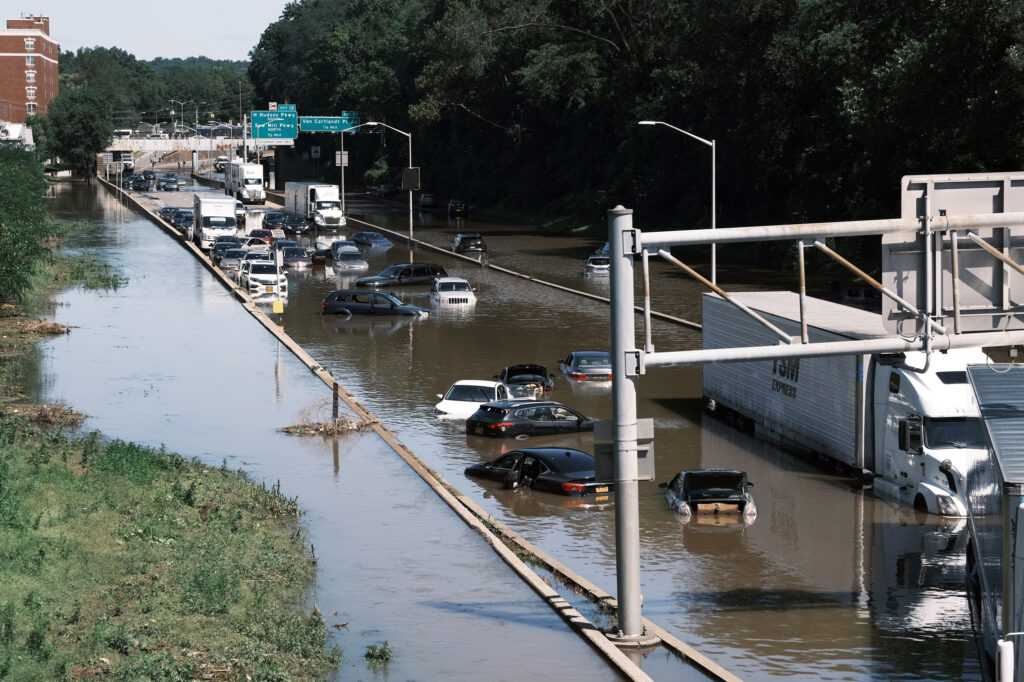
A federal judge in New York has invalidated the state's Climate Change Superfund Act, determining the law encroaches on federal regulatory territory. The decision blocks a major climate financing mechanism that would have forced fossil fuel companies to contribute to adaptation costs across the state.
U.S. District Judge Lewis Kaplan ruled the legislation conflicts with federal authority over interstate commerce and environmental regulation. The law would have created a dedicated funding stream by requiring fossil fuel producers, refiners, and importers to pay for damages caused by climate change. The state estimated the law could generate billions in revenue for infrastructure hardening, flood prevention, and relocation of vulnerable communities.
The Superfund approach parallels the federal Comprehensive Environmental Response, Compensation and Liability Act, which holds responsible parties liable for pollution cleanup. New York's version applied this framework to climate impacts by imposing liability on companies whose products directly contributed to greenhouse gas emissions. The state calculated that fossil fuel companies should bear responsibility proportional to their historical emissions.
Judge Kaplan's reasoning centered on federal preemption doctrine. He concluded the state operated in an area where "the federal interest is so dominant" that state action becomes impermissible. The decision reflects longstanding constitutional tensions between state environmental authority and federal commerce power. Federal law, through the Clean Air Act and other statutes, establishes the primary regulatory framework for greenhouse gas emissions. Kaplan found New York's attempt to create parallel liability mechanisms duplicated and potentially conflicted with this federal structure.
The ruling matters because it removes a template other states considered replicating. California, Vermont, and other jurisdictions explored similar climate liability schemes. Courts nationwide now face comparable legal questions about whether states can independently regulate fossil fuel companies' climate obligations. The decision suggests federal courts may constrain such efforts even as state climate ambitions expand.
New York Governor Kathy Hochul's administration pursued the Superfund law as a financing tool when federal climate investments remained uncertain. The legislation passed both chambers of the state legislature and reflected growing state pressure for fossil fuel accountability. Supporters argued the law targeted specific economic actors responsible for emissions, not a general tax on fossil fuels, and thus fit within state police powers.
The ruling does not eliminate all state climate authority. Courts recognize states retain power over land use, building codes, and procurement standards. But liability schemes that single out fossil fuel companies face heightened scrutiny under federal preemption analysis. Kaplan's decision suggests courts view direct financial liability imposed by states as distinctly federal terrain.
Climate advocates and environmental groups expressed concern about the precedent. The decision potentially blocks multiple policy approaches states developed to address climate financing gaps. Federal climate investments through the Inflation Reduction Act and Infrastructure Investment and Jobs Act provide funding, but state officials argued supplementary revenue streams remained necessary for localized adaptation projects.
The state's legal team indicated plans to appeal. The decision now moves to the Second Circuit Court of Appeals, where judges will review Kaplan's preemption analysis. The appellate outcome carries implications beyond New York. It could determine whether other states successfully implement climate superfund models or whether federal courts systematically strike down such measures as regulatory overreach.