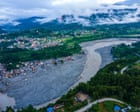
A major disaster in the Himalayas has triggered an urgent response from Nepali and Tibetan communities living in New York City, particularly concentrated in Jackson Heights, Queens. The diaspora is organizing relief efforts while grappling with the scale of the crisis unfolding in their home regions.
Geeta Tamang, a 24-year-old computer science student at Queens College, learned of the catastrophe through her aunts late at night. "My aunts came into my room and told me what had happened," Tamang recalled. The news hit hard, rippling through households across Jackson Heights, which hosts one of the largest Nepali and Tibetan populations outside their native regions.
The Himalayan region faces mounting environmental pressures that compound disaster risks. Glacial retreat accelerates across the range, destabilizing water systems that support nearly 2 billion people downstream. Climate change intensifies extreme weather patterns, including the intense precipitation and avalanches common to high-altitude terrain. Nepal ranks among the countries most vulnerable to climate impacts despite contributing minimally to global emissions. Tibet faces similar exposure to glacial loss and environmental degradation that threatens water security across Asia.
Community members in Jackson Heights are mobilizing quickly. Diaspora organizations typically coordinate fundraising, collect supplies, and channel resources to affected villages through established networks. Many hold dual citizenship or maintain close family ties, positioning them as crucial bridges between crisis zones and international aid infrastructure. Jackson Heights residents have mobilized during previous disasters, drawing on long-established community institutions and religious organizations.
The response reflects a broader pattern. Environmental disasters in Asia increasingly trigger diaspora activism in North American cities. When Nepal suffered the 2015 Gorkha earthquake, New York-based Nepali communities raised millions for reconstruction. These networks matter because they operate faster than formal government aid channels and target remote villages that international agencies struggle to reach.
Nepali and Tibetan communities in New York face particular urgency because environmental threats compound economic pressures. Glacier-dependent water supplies sustain agriculture and hydropower across both regions. Himalayan ecosystem collapse threatens livelihoods for millions. Young people like Tamang, educated in the United States, often feel caught between stability abroad and responsibility at home.
The scale of Himalayan vulnerability remains undersized in global climate conversations. The Intergovernmental Panel on Climate Change warns that high-mountain regions face rapid warming exceeding global averages. The Hindu Kush Himalayan Assessment, published by the International Centre for Integrated Mountain Development, documented that up to one-third of glaciers could disappear by 2050 even under moderate warming scenarios. Loss of glacier-fed water systems would destabilize food production, energy generation, and drinking water access across South and East Asia.
Diaspora activism serves practical and political functions. Fundraising delivers resources. Advocacy amplifies international attention. Community members testify to climate impacts their families experience directly, translating abstract climate science into lived reality for policymakers and media.
Jackson Heights residents emphasize that outside attention matters. The Himalayan region receives disproportionately little international focus compared to other disaster zones, despite its scale and interconnectedness with global systems. Environmental degradation in the Himalayas affects weather patterns, water availability, and migration patterns far beyond Nepal and Tibet. Diaspora voices amplify calls for climate adaptation funding and disaster preparedness investment in regions with minimal historical responsibility for emissions driving current warming.