# South African Town Purifies Polluted River Using Low-Tech Natural Filtration
The Stiebeuel River in South Africa flows heavily contaminated with sewage, industrial chemicals, and pharmaceutical residues. Residents of an expanding informal settlement downstream faced a stark choice: import expensive treated water or find a local solution. University of Cape Town researchers chose the latter.
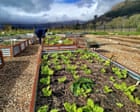
The system operates without chemicals or external power inputs. It relies on layered filtration using locally sourced stones, heat-treated wood, and sand to process 36,000 liters of wastewater daily. The treated water meets standards safe for irrigating community vegetable gardens that supply food security to residents in an area where fresh produce access remains limited.
The technology addresses a dual crisis. Water scarcity intensifies across southern Africa as temperatures climb and rainfall patterns shift. Simultaneously, informal settlements expand rapidly around urban centers, straining infrastructure that was never designed to serve them. The Stiebeuel pilot demonstrates that passive treatment systems can bridge this gap without the capital costs of conventional wastewater plants.
How the system works matters for replication. Contaminated river water enters the first chamber where coarse stones trap sediment. Water then passes through heat-treated wood that acts as a biofilter, allowing microorganisms to break down organic pollutants while the thermal treatment eliminates pathogens. Sand layers in the final stages capture remaining particles and trace chemicals. The entire process relies on gravity flow and solar heating. No pumps. No electrical infrastructure. No ongoing chemical purchases.
University of Cape Town researchers tested the output against irrigation safety standards. Water quality improved consistently across bacterial counts, chemical contaminants, and pharmaceutical traces. Results appear sufficient for vegetable production, a finding with immediate practical value in communities where malnutrition rates exceed national averages.
The model extends beyond South Africa. Sub-Saharan African cities face parallel pressures: rapid urbanization, aging or absent water infrastructure, and climate-driven hydrological stress. Informal settlements housing millions lack piped water connections entirely. Conventional engineering solutions require government funding and centralized systems that often fail to reach peripheral communities first.
Natural filtration systems sidestep these barriers. They require minimal maintenance training. Spare materials exist locally. Treatment capacity scales by adding filter beds. The Cape Town team is now documenting construction protocols and cost breakdowns to enable other communities to build similar systems.
Climate change context sharpens the urgency. The IPCC projects southern Africa experiencing increased droughts punctuated by intense rainfall events that overwhelm existing drainage systems. Water for agriculture represents roughly 70 percent of freshwater consumption across the region. As rainfall becomes less reliable, treated wastewater recycled for irrigation transitions from innovation to necessity.
The Stiebeuel project demonstrates that resource-scarce communities need not wait for large-scale infrastructure investment. Low-cost, locally-constructed treatment systems can generate water for food production immediately. As climate impacts accelerate, such distributed solutions may prove essential to maintaining nutrition security in rapidly urbanizing regions.