# Record Flooding in Indiana Compounds as Emergency Aid Stalls and Environmental Funding Shrinks
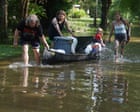
Record floodwaters devastated swathes of Indiana, killing seven people and destroying homes across multiple communities. Ten days after the water receded, Cambridge City and surrounding areas remain littered with the debris of disaster. Abandoned vehicles, household fixtures, and personal belongings clog parks and side streets. Homes bear red spray-paint marks indicating they have been cleared by water rescue teams. Garages sit displaced from their foundations, moved by the force of rushing water. Dumpsters overflow with salvaged possessions residents could not save.
The recovery effort faces a critical bottleneck. The Trump administration has not approved emergency federal disaster aid for Indiana, leaving state and local authorities to manage cleanup and reconstruction with limited resources. This delay compounds an existing vulnerability. Indiana's state government has reduced funding for environmental agencies, limiting the capacity to respond to the flooding's aftermath.
The combination of withheld federal support and depleted state environmental capacity creates a cascading crisis. Communities need immediate assistance for debris removal, water quality assessment, and restoration of damaged infrastructure. Without federal aid approval, Indiana must absorb these costs from existing budgets already stretched thin by prior funding cuts.
The timing matters. Flooding events require rapid response to prevent secondary damage. Mold growth begins within 24 to 48 hours in wet structures. Contaminated water left in affected areas poses public health risks, particularly for vulnerable populations. Environmental agency staff typically coordinate water quality testing and remediation guidance. Reduced agency staffing means fewer inspectors, scientists, and coordinators available to address these hazards.
Indiana's experience reflects a pattern affecting disaster response nationally. When federal emergency declarations face delays or denials, states and localities must immediately mobilize their own resources. This places particular strain on states that have cut environmental budgets during periods of relative calm, betting that emergency funding would cover future disasters. That assumption fails when federal support does not materialize.
The floodwaters affected a broad geography, not isolated pockets. Multiple communities experienced record inundation levels. The scale of destruction indicates this was not a localized rain event but a major weather system that overwhelmed existing drainage and flood control infrastructure.
Local officials in Cambridge City and other affected areas now face a choice. They can wait for federal approval of emergency aid while cleanup costs accumulate, or they can begin clearing debris and assessing damage using municipal budgets designed for routine operations. Many choose the latter, knowing that delays worsen conditions and that federal reimbursement processes, when they occur, lag months or years behind spending.
Environmental agencies play a distinct role beyond debris removal. They test contaminated soil, assess water quality in flooded areas, and identify environmental hazards released by the flooding. Reduced agency staffing means these assessments happen more slowly or incompletely. Residents moving back into homes without thorough environmental clearance face unknown exposure risks.
The political dimension compounds the technical challenge. Federal emergency aid requires presidential approval. The process involves federal agencies reviewing damage assessments and making determinations about aid eligibility. Delays in this approval process leave affected communities in limbo, unable to plan recovery timelines or budget allocations with certainty. For residents in Cambridge City still cataloguing losses, every day without federal commitment to assistance represents another day their homes sit damaged and their recovery remains uncertain.