# Alabama Power's Grid Surveillance Raises Questions About Utility Dominance and Public Oversight
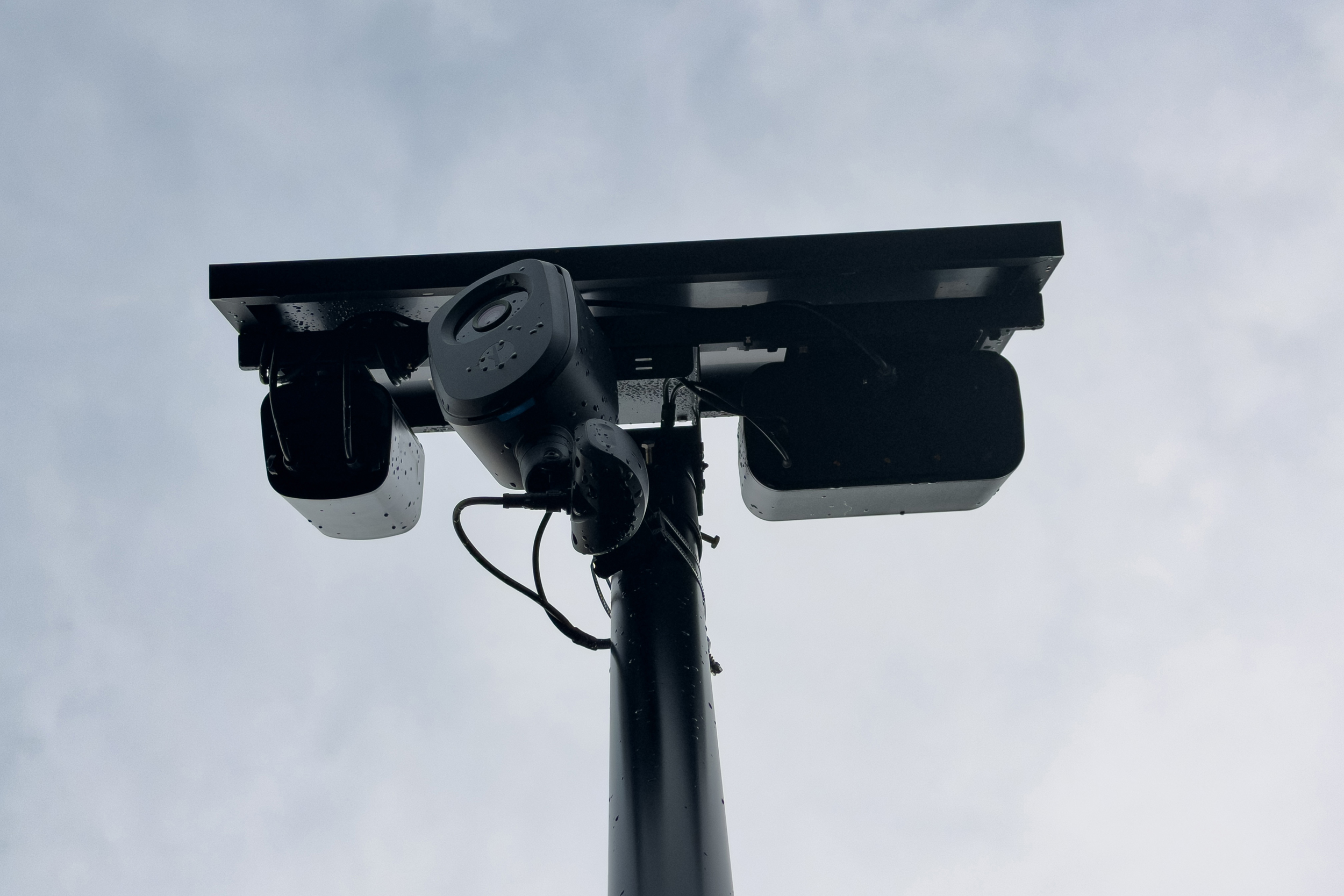
Alabama Power operates an extensive network of surveillance cameras across its electrical infrastructure in Alabama. The utility company monitors its grid, substations, and transmission lines continuously, tracking system operations that affect millions of residents across the state. This surveillance capability exists within a broader context of corporate control over energy delivery and pricing that has drawn scrutiny from community activists and energy policy analysts.
Darrell Nance, founder of DeFlock Birmingham and a longtime city resident, has documented the visible surveillance presence throughout Alabama's power infrastructure. His observations point to a larger issue: the opacity surrounding how utilities monitor and control the systems that deliver electricity to homes and businesses. While grid monitoring serves legitimate operational purposes, the extent and scope of Alabama Power's surveillance infrastructure raises questions about transparency and public accountability.
Alabama Power holds dominant control over electricity rates and energy policy across Alabama. The utility operates as a vertically integrated monopoly, controlling generation, transmission, and distribution of power to approximately 1.5 million customers. This market position allows the company to influence regulatory decisions at the state level while maintaining significant discretion over infrastructure investment and pricing structures.
The surveillance systems installed by Alabama Power form part of the utility's broader operational infrastructure. Modern grid management increasingly relies on camera systems, sensors, and data collection to monitor equipment performance and respond to outages. However, the deployment of such systems reflects broader concerns about utility accountability. Customers have limited visibility into how their service providers operate, what data they collect, or how that information influences rates and service reliability.
This reporting represents the fifth installment in Inside Climate News' investigation into Alabama Power's influence over electric rates, renewable energy development, pollution emissions, and political engagement across the state. Previous reports documented how Alabama Power has resisted renewable energy expansion while maintaining reliance on coal-fired generation. The utility has opposed solar and wind development that could reduce its market share and influence over the state's energy mix.
Alabama Power's market dominance extends to political influence. The company maintains significant lobbying presence at the state capitol and contributes substantially to political campaigns. This influence shapes energy policy decisions that affect renewable energy adoption, pollution standards, and rate structures. Citizens lack meaningful mechanisms to challenge utility decisions or demand alternative approaches to energy development.
The surveillance infrastructure symbolizes a larger asymmetry between utilities and their customers. While Alabama Power monitors every corner of its system, customers lack equivalent visibility into utility decision-making. Rate-setting processes remain opaque. Investment priorities remain undemocratic. Renewable energy development decisions reflect corporate profit maximization rather than public interest or climate necessity.
Alabama's regulatory framework permits this imbalance. The Public Service Commission nominally oversees utility operations but historically defers to industry preferences on rates and investment decisions. This regulatory capture leaves residents without meaningful recourse when utilities prioritize profits over clean energy transition or pollution reduction.
The cameras monitoring Alabama's electrical grid represent infrastructure investment choices that prioritize surveillance and control. They stand in contrast to what Alabama lacks: robust renewable energy deployment, public engagement in energy planning, and regulatory structures that center customer interests and climate science rather than utility profits.