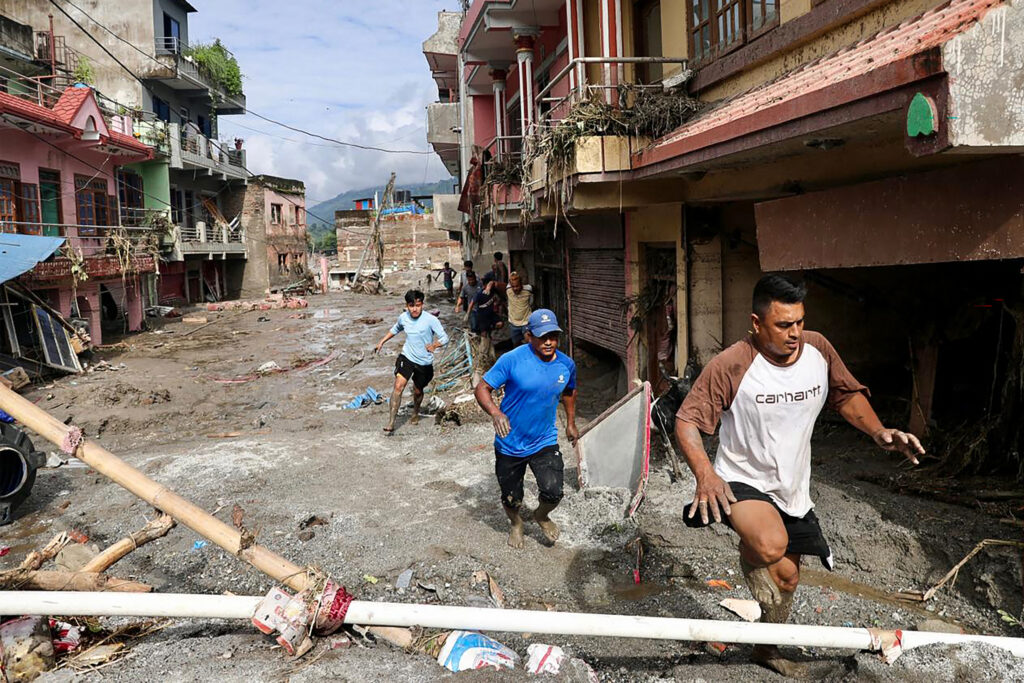
# Flood-Ravaged Nepal Faces Cascading Disaster as Debris Dams Threaten New Surge
Residents and rescue workers across Nepal's flooded valleys braced for a second catastrophe Friday as scientists identified a new hazard. Debris from Wednesday's devastating floods blocked rivers upstream, creating temporary dams that could burst without warning and unleash additional inundation downstream.
The initial deluge on Wednesday swept across Nepal's narrow upper valleys with destructive force. Flood waters crested above rooftops and demolished homes and infrastructure across entire communities. The scale of destruction left rescue operations overwhelmed and survival prospects grim for those in the path.
The secondary threat emerged from the flood's own debris. Massive accumulations of rock, soil, wood, and other material lodged in river channels, damming the water behind them. These natural barriers are inherently unstable. When they fail, the water volume trapped upstream releases suddenly, creating a second wave that can be as destructive as the original event.
Glacial lakes and similar natural hazard systems in high-altitude regions create comparable risks. The Hindu Kush Himalayan region, which encompasses Nepal, has faced increasing glacial lake outburst floods (GLOFs) in recent decades. A 2023 assessment by the International Centre for Integrated Mountain Development documented accelerating glacier melt across the region, expanding the number of potentially unstable lakes at high elevation. That research directly links warming temperatures to the frequency of sudden water releases in mountainous terrain.
Nepal sits in one of the world's most geologically active and hydrologically volatile zones. The Himalayas' steep terrain and monsoon precipitation patterns combine to create conditions where debris dams form frequently during major flood events. The country has limited early warning systems in rural valleys where populations remain most vulnerable.
Immediate challenges faced rescue teams on Friday. Scientists worked to forecast whether specific debris dams would hold or collapse. The uncertainty complicated evacuation decisions. Warning residents to leave could strain already stretched resources. Failing to evacuate could prove fatal if barriers gave way.
Nepal's monsoon season runs from June through September. Heavy rainfall amplifies risks across steep mountain slopes prone to landslides. Those landslides generate the debris that blocks waterways. Climate data from Nepal's Department of Hydrology and Meteorology shows precipitation intensity has increased over the past two decades, creating conditions where debris accumulation hazards become more frequent and severe.
The country reported significant loss of life and displacement from Wednesday's floods, though exact casualty figures remained incomplete as Friday progressed. Remote valleys limited real-time communication with rescue coordinators. Bridges destroyed by the initial flood complicated access for relief teams attempting to reach isolated communities.
International attention focused on whether regional climate patterns contributed to the intensity of Wednesday's event. Researchers from multiple institutions have linked warming in South Asia to changes in monsoon intensity and timing. Whether this specific flood event reflects those long-term trends requires detailed analysis of rainfall records and atmospheric conditions from the preceding weeks.
Debris dam failures represent a documented hazard in post-flood periods across mountainous Asia. Similar events in Pakistan following the 2010 floods killed hundreds. The cascading nature of mountain hydrology means initial disasters frequently trigger secondary hazards that claim additional victims and destroy infrastructure already damaged by initial events.