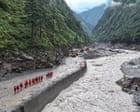
# Rescue Operations Resume in Nepal-Tibet Region After Catastrophic Flooding Event
Rescue teams have returned to affected areas along the Nepal-Tibet border after temporarily withdrawing due to the threat of secondary flooding from an overflowing glacial lake. The pause in operations underscores the cascading hazards facing emergency responders in high-altitude terrain where initial disasters trigger unpredictable subsequent events.
The initial flash floods devastated communities across the Nepal-Tibet border region, claiming hundreds of lives and leaving many more missing. The flooding resulted from rapid water discharge, likely triggered by glacial lake outburst or intense precipitation in mountainous terrain. When rescue teams detected rising water levels in a nearby lake threatening to overflow, they pulled back personnel to prevent additional casualties among rescue workers and remaining residents.
Residents in low-lying areas received warnings to evacuate uphill as water levels rose. The evacuation protocol reflects lessons learned from previous alpine flooding events where secondary surges have killed people who survived the initial inundation. Glacial lakes in the Himalayan region pose persistent flood risks. Climate change accelerates glacier retreat, creating unstable water bodies that can rupture without warning. The Intergovernmental Panel on Climate Change documented that high-mountain regions face accelerating ice loss, elevating hazard frequencies across Nepal, Tibet, Bhutan, and adjacent areas.
The Nepal-Tibet border zone sits atop some of Earth's most geologically active and climatically sensitive terrain. The region's river systems drain glacial fields spanning thousands of square kilometers. Warming temperatures reduce snow cover and destabilize moraine-dammed lakes. When infrastructure or natural dams fail, water races downhill at speeds exceeding 30 kilometers per hour, with force enough to obliterate buildings and clear forests.
Nepal's Department of Disaster Management Coordination activated emergency protocols and mobilized rescue teams from multiple districts. The Tibetan Autonomous Region government coordinated parallel operations on the Chinese side of the border. Cross-border coordination remains challenging due to limited communication infrastructure in remote valleys and political constraints on joint operations.
The flooding destroyed critical infrastructure including bridges, roads, and water systems serving thousands. Agricultural land suffered severe erosion and contamination. Local hospitals overwhelmed by casualties faced shortages of medical supplies and personnel. Initial damage assessments suggested economic losses exceeding hundreds of millions of dollars.
Climate projections indicate that flash flood frequency will increase across the Hindu Kush-Himalayan region through 2050. A 2019 study in Geophysical Research Letters found that glacial lake outburst floods in Nepal increased by 40 percent since 1980. Warming rates in high mountains exceed global averages by 50 to 100 percent. This acceleration means communities across Nepal, Tibet, Bhutan, and India face intensifying hazards.
Rescue operations face logistical constraints typical of alpine disasters. Helicopter access depends on weather windows. Ground teams navigate unstable terrain where aftershocks, landslides, and additional water surges remain threats. Rescue workers from the Nepali Armed Forces, Indian disaster response teams, and international organizations worked in coordinated shifts while monitoring water levels and weather forecasts.
The resumption of rescue operations after the lake-overflow warning represents a temporary reprieve rather than resolution. Residents remain in temporary shelters. Missing persons searches continue. The underlying climate trend driving glacial retreat and lake formation continues unchecked, ensuring that Nepal-Tibet border communities will confront similar disasters with increasing regularity unless adaptation measures expand significantly.