# California Farmers Confront a Six-Decade Plastic Dependency in Agriculture
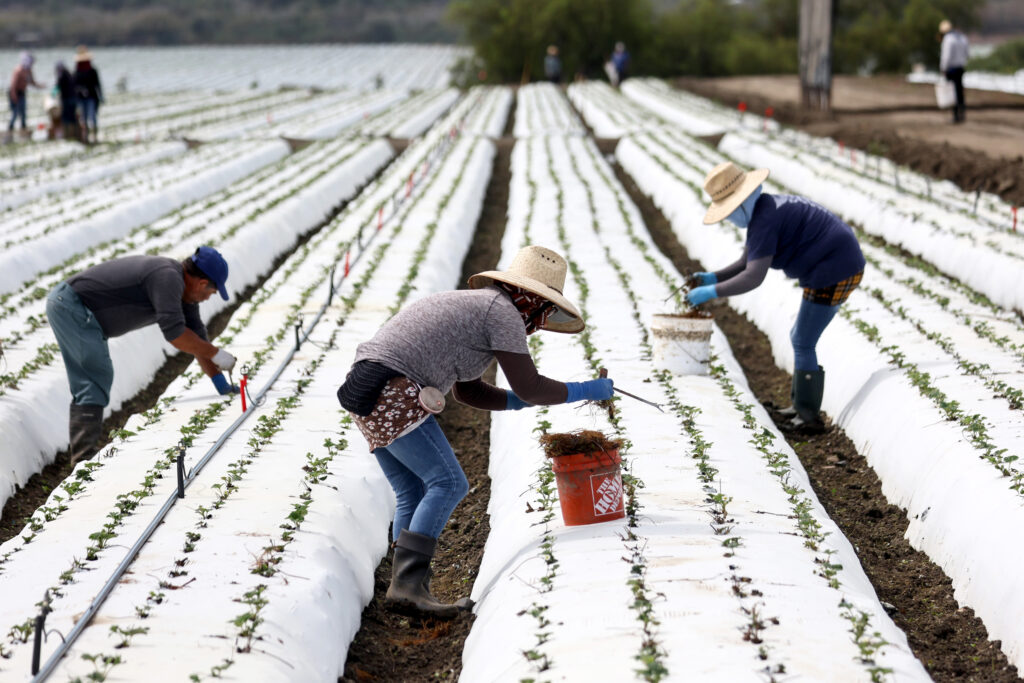
California's agricultural sector faces mounting pressure to abandon plastic mulch, a farming practice entrenched since the 1960s when petrochemical-based materials became cheap and widely available. The dependency runs deep. Plastic sheeting—typically polyethylene film laid across fields—controls soil temperature, suppresses weeds, reduces disease pressure, and cuts pesticide applications significantly. For decades, these benefits justified the practice across California's vast acreage of corn, tomatoes, strawberries, and other high-value crops.
The problem persists on the ground. Farmers peel away plastic sheeting after harvest, leaving behind degraded fragments in soil. Microplastics accumulate in agricultural soils, contaminating groundwater and entering food chains. California produces roughly one-third of America's vegetables and two-thirds of its fruits and nuts. The state's farming infrastructure, built around plastic efficiency, now confronts environmental costs that earlier generations did not calculate.
Regulatory scrutiny has intensified. California's Department of Food and Agriculture has begun tracking plastic waste from agricultural operations. The state's water boards investigate microplastic contamination in groundwater beneath crop zones. Federal researchers at the U.S. Department of Agriculture have documented plastic persistence in soils across multiple regions, with California bearing particular burden due to its intensive production systems and scale.
Alternatives exist but carry trade-offs. Biodegradable mulches derived from plant materials offer one pathway. Paper-based films, made from cellulose and coated polymers, break down faster than conventional plastic while maintaining many functional benefits. Some farmers experiment with reflective mulches using aluminum or mineral-based coatings that do not rely on persistent polymers. Others return to manual weeding or mechanical cultivation, labor-intensive methods that reduce synthetic input but increase production costs.
Economic barriers block rapid transition. Plastic mulch costs farmers roughly $300 to $500 per acre annually for materials and application. Biodegradable alternatives run 20 to 40 percent higher. Labor-intensive methods demand workforce expansion in regions already facing agricultural labor shortages. California's farmers operate on thin margins, particularly small and mid-sized operations unable to absorb transition costs.
Research funding remains inadequate. UC Davis and other state agricultural extension services have tested alternative mulch systems but lack comprehensive regional data on long-term performance across California's diverse climates and soil types. Federal support for plastic-free agriculture research lags investment in petrochemical-based systems, leaving farmers with incomplete information about viable pathways.
Market mechanisms could accelerate change. California's environmental regulations, including its Sustainable Farming Practices Act and groundwater protection rules, create incentives for alternative approaches. Retailers and food processors increasingly demand supply chain transparency around plastic use. Some major buyers now require plastic-free certification for produce contracts, forcing supplier networks to adapt.
The timeline remains unclear. No state or federal deadline forces plastic phase-out, but regulatory momentum suggests pressure will mount through 2025 and beyond. Successful transition depends on coordinated action: research investment in scalable alternatives, financial support for farmer adoption, and market mechanisms that reward plastic-free production sufficiently to justify higher input costs.
California's farming future will not abandon plastic overnight. The infrastructure, economics, and agronomic systems built around polyethylene endure. Change arrives incrementally, crop by crop and farm by farm, as alternatives prove viable and regulations tighten.