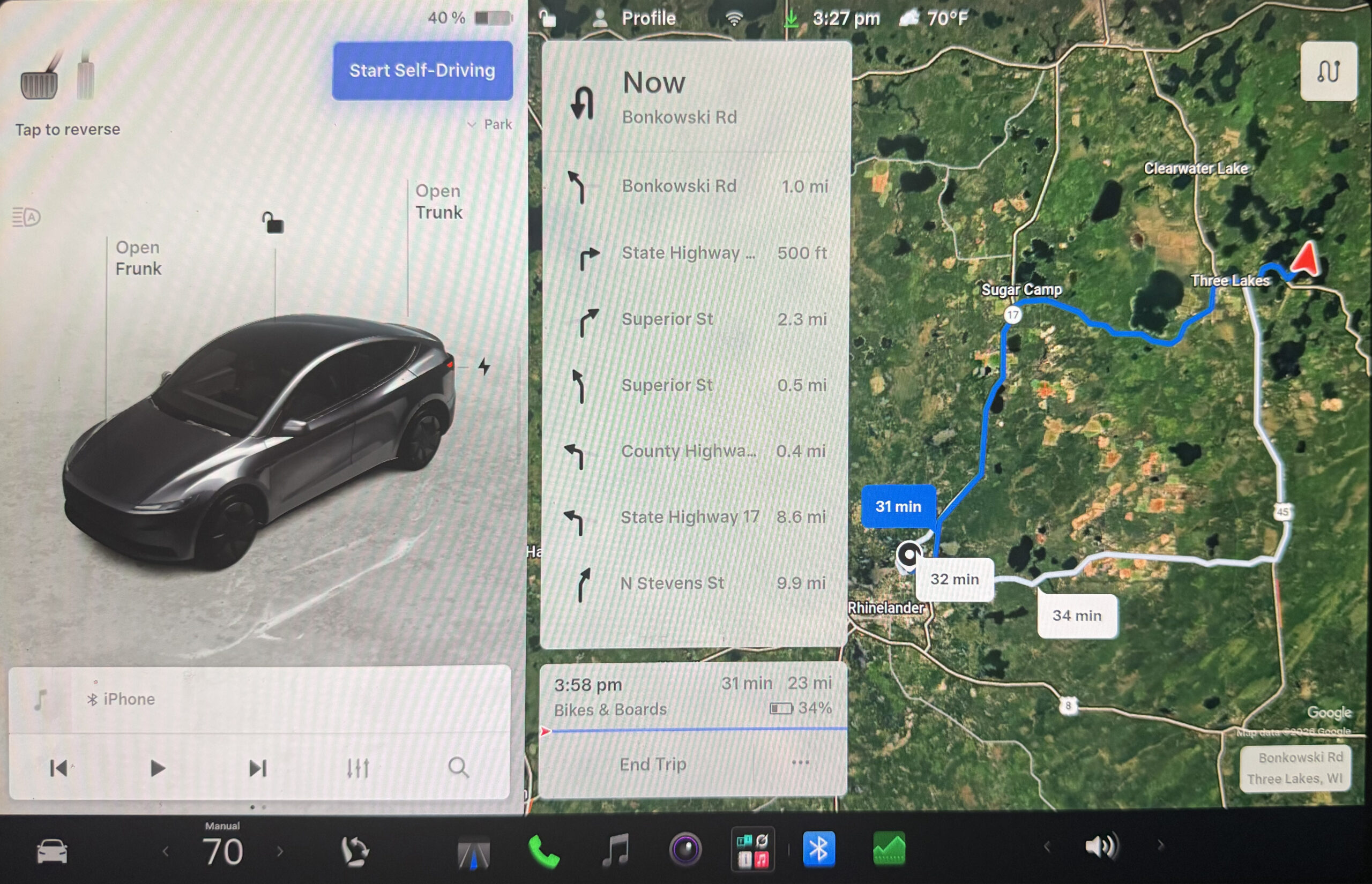
Tesla's Full Self Driving V14 remains a partial autonomy system, not the fully autonomous vehicle the name suggests. After three months of testing on a 2026 Model Y, the technology demonstrates clear capability gaps that persist despite years of development.
The software successfully handles highway driving with lane changes, merges, and basic navigation. Urban driving represents a stronger area for V14. The system manages traffic lights, stop signs, and pedestrian crossings with reasonable consistency. It navigates turns and handles parking lot scenarios that would have failed in earlier versions. For routine commuting on familiar roads, V14 delivers functional assistance.
What V14 cannot reliably do matters more than what it can. The system struggles with complex intersections where traffic patterns deviate from standard layouts. Unpredictable driver behavior from other vehicles frequently causes the system to disengage. Construction zones and temporary traffic modifications confuse the software. Severe weather conditions degrade performance significantly. The system lacks robust handling of motorcycles, bicycles, and pedestrians in unexpected positions.
Night driving reveals another limitation. While V14 performs better than earlier versions, low-light conditions still trigger frequent disengagements. School zones with activated flashers present problems. Rain and snow substantially reduce system confidence.
The driver monitoring system remains touchy. V14 demands active hand positioning on the wheel and eye contact with the road. Sustained automation of more than 15 minutes typically triggers warnings. This design reflects regulatory reality, not technological achievement. Tesla cannot market full autonomy without triggering deeper regulatory scrutiny from the National Highway Traffic Safety Administration.
After six years testing earlier FSD versions and three months on V14, the trajectory shows improvement. The gap between V13 and V14 feels smaller than previous generation jumps. Elon Musk's timeline promises for "full autonomy by next year" have missed deadlines repeatedly since 2016. The 2026 Model Y still requires driver intervention on 20 to 30 percent of typical mixed driving.
Real autonomy requires systems that handle edge cases reliably. A truly autonomous vehicle must navigate the unexpected without human override. V14 achieves perhaps 70 to 75 percent autonomy in ideal conditions on known routes. That represents progress from V12, which managed around 60 percent. But the final 25 to 30 percent involves the hardest problems. Unexpected obstacles, unusual road configurations, and genuine emergencies require the human driver to take control.
The broader context matters here. NHTSA opened investigations into Tesla Autopilot safety in 2021 and 2022. The agency found multiple crash cases involving system failures. Calling V14 "Full Self Driving" misleads consumers about actual capabilities. The name suggests a Level 5 autonomous system (no steering wheel needed). V14 operates at Level 2 or high Level 2 autonomy. The human driver remains the safety-critical component.
Tesla's incremental approach works for marketing but stalls against the physics of the autonomy problem. Each generation adds polish to familiar scenarios. The hard work of reliable edge case handling continues. V14 represents an evolution, not the breakthrough that finally eliminates the need for driver attention.