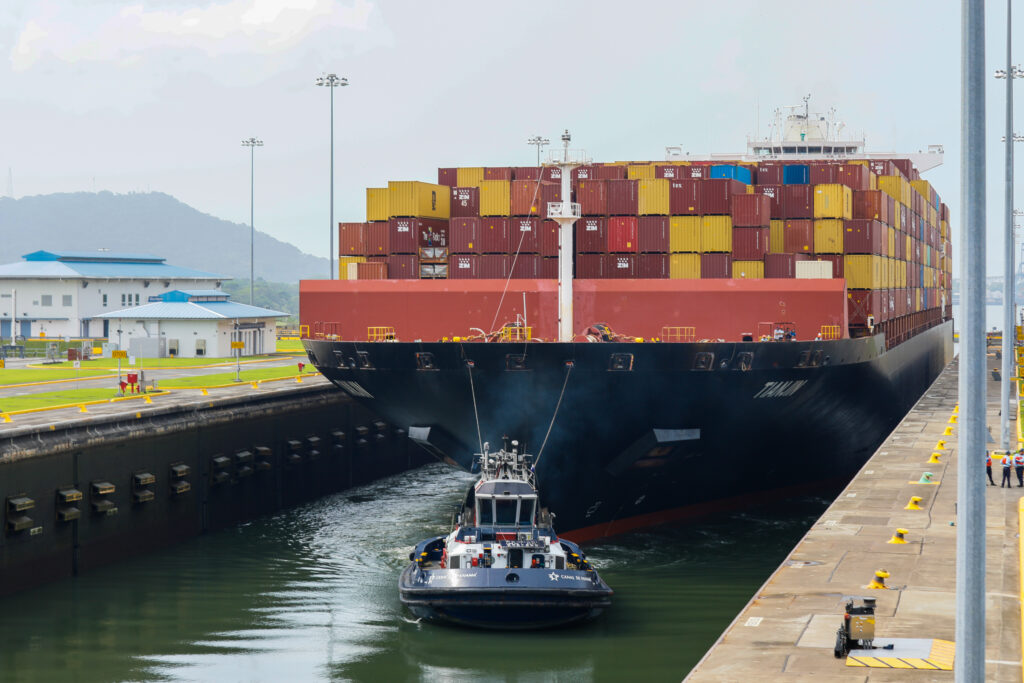
# Drought Threatens Panama Canal Operations as Climate Change Looms
The Panama Canal is entering an operational crisis. Starting in September, the canal authority will slash daily ship transits by approximately half, cutting from a normal 36 vessels per day to 18. The cause is acute: dangerously low water levels in Gatun Lake and Alajuela Lake, the artificial reservoirs that supply freshwater to the canal's lock system.
The drought now strangling Central America represents the worst hydrological stress on the canal in years. The waterway depends on seasonal rainfall to maintain sufficient lake levels for lock operations. Without adequate water volume, the locks cannot fill and drain properly, forcing operators to restrict passage or risk operational failure. This shutdown arrives at a moment when global trade already faces container-ship backlogs and extended wait times.
Panama experienced its driest September on record in 2023, according to climate data. The current drought extends across Central America, driven by a combination of below-normal precipitation and the warming ocean temperatures associated with El Niño. Scientists point to a pattern: as global temperatures rise, tropical precipitation becomes less predictable, and dry seasons intensify.
The canal moves roughly 6 percent of global maritime trade by volume. Redirecting vessels around Cape Horn at South America's southern tip adds 10 to 14 days to voyages and consumes tens of thousands of additional gallons of fuel per ship. For time-sensitive cargo like fresh produce, pharmaceuticals, and electronics, delays translate directly to spoilage, supply shortages, and profit loss.
Canal authorities implemented emergency conservation measures. Operators began lowering the minimum operating level for Gatun Lake and investing in water-recycling technology during lock operations. A desalination plant project sits in planning stages but remains years away from completion. The canal authority also negotiated water-sharing arrangements with Panama's government to prioritize canal operations during shortages.
Climate scientists warn that intensifying droughts may become routine. Research from institutions including the Smithsonian Tropical Research Institute indicates that Central America faces increased dry-season severity under warming scenarios. If atmospheric CO2 concentrations continue rising unabated, the region could experience droughts 15 to 20 percent more severe by 2050, according to projections from the Intergovernmental Panel on Climate Change.
The canal's vulnerability exposes a broader infrastructure fragility. Transportation chokepoints worldwide depend on hydroelectric systems, river navigation, or consistent precipitation patterns. The Suez Canal faces different but equally acute pressures. The Rhine River in Europe regularly becomes too shallow for barge traffic during summer months. As global temperatures climb, water stress touches every major shipping route.
Panama's government recognizes the long-term problem. Officials commissioned studies on climate-adaptive infrastructure, including expanded desalination capacity and improved watershed management upstream of the canal's lakes. But upgrading infrastructure at the canal's scale requires billions of dollars and takes years to execute. Meanwhile, each season presents new operational constraints.
The canal's crisis reflects a reality moving beyond environmental statistics. Physical infrastructure built on assumptions of historical climate stability now confronts a new hydrological reality. Without rapid decarbonization to limit warming, droughts will persist and intensify. For a waterway that moves roughly 200 million tons of cargo annually, reduced capacity cascades through global supply chains. Shipping companies, manufacturers, and consumers across continents already face the consequences of climate disruption at one of the planet's most critical junctures.