# A 1995 Dodge Ram Shows What US EV Policy Keeps Missing
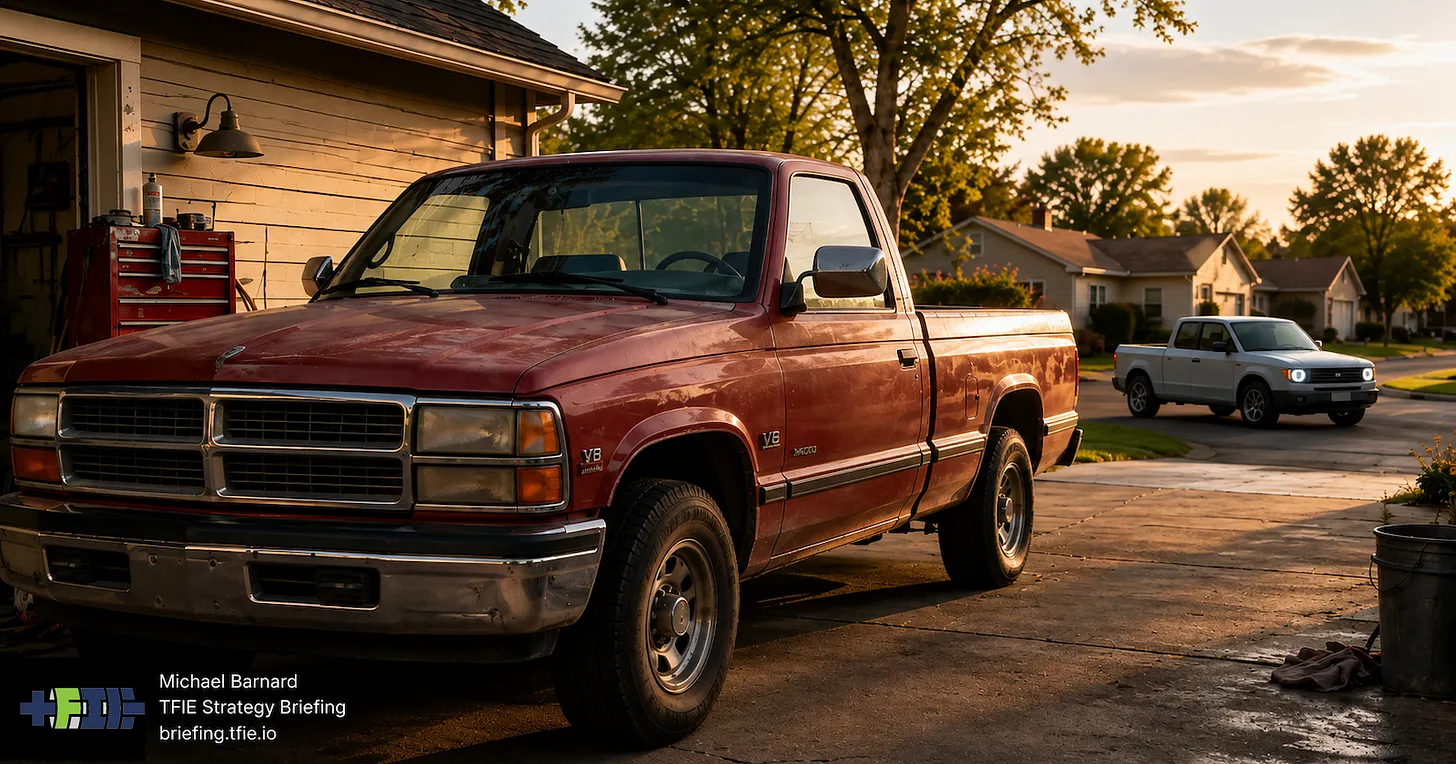
The owner of a 1995 Dodge Ram has made a choice that reveals a fundamental gap in American electric vehicle policy: keep repairing an aging gasoline truck rather than buy new. This decision is economically rational. The truck is paid for. Repair costs run into hundreds of dollars, not thousands. The owner understands the truck's maintenance needs. A used EV purchase would require financing or a large upfront payment, insurance adjustments, and learning new repair protocols.
This calculus exposes why federal EV incentives have failed to move millions of Americans off combustion engines. Current policy targets new vehicle buyers with tax credits up to $7,500. Those incentives ignore the used vehicle market and the reality of owner economics in lower and middle-income households.
The United States has roughly 285 million registered vehicles. The average age of a vehicle on American roads is 12.2 years. Most drivers in rural areas and working-class neighborhoods do not buy new cars. They buy used ones, keep them running, and repair them until the math changes. A paid-off truck that needs $400 spark plugs or $800 brakes remains cheaper than a $25,000 used EV with an unknown battery history and no local repair infrastructure.
Scrappage incentive programs offer an alternative policy lever that most developed nations employ but the United States has largely abandoned. Germany, France, and the United Kingdom ran scrappage schemes after the 2008 financial crisis. More recently, the European Union considered targeted scrappage programs to accelerate fleet turnover. These programs pay owners to retire old, high-emission vehicles and provide point-of-sale rebates for EV purchases, often stacked with existing EV tax credits.
A scrappage program targeting vehicles older than 15 years could accelerate EV adoption among the households most locked into older gasoline vehicles. The 1995 Ram owner would receive cash for retiring the truck, lowering the effective purchase price of a used EV. The older vehicle leaves the road permanently rather than being resold into secondary markets where it continues emitting for another decade.
The Environmental Protection Agency estimates that light-duty vehicles account for 27 percent of U.S. transportation emissions. Passenger cars emit less per mile than trucks, but older trucks emit substantially more than newer models due to degraded catalytic converters and less efficient engines. A 1995 truck produces roughly double the nitrogen oxides of a 2015 model.
Current federal policy allocates roughly $7 billion annually to EV purchase incentives through the Inflation Reduction Act. Dedicating $1 to $2 billion to a scrappage program would not require additional appropriations, merely reallocation. The program could target vehicles 15 years and older with owners earning below 300 percent of the federal poverty line, focusing on rural counties and neighborhoods with the fewest EV chargers.
Without such a program, millions of owners of aging vehicles will continue the rational choice of repair over replacement. Fleet electrification slows. Emissions reductions plateau. Policy remains disconnected from actual household decisions.