# Nevada Sues Trump Administration Over Colorado River Water Cuts
Nevada filed suit against the federal government this week over a Trump administration proposal to cut Colorado River allocations, arguing the plan threatens catastrophic water losses to the state and its largest city.
The lawsuit came within three days of the administration's announcement. Nevada receives the smallest legal allocation among the seven basin states that depend on the Colorado River, yet state water managers contend that the proposed cuts would inflict severe long-term damage. Las Vegas faces particular vulnerability given its dependence on Lake Mead water supplies.
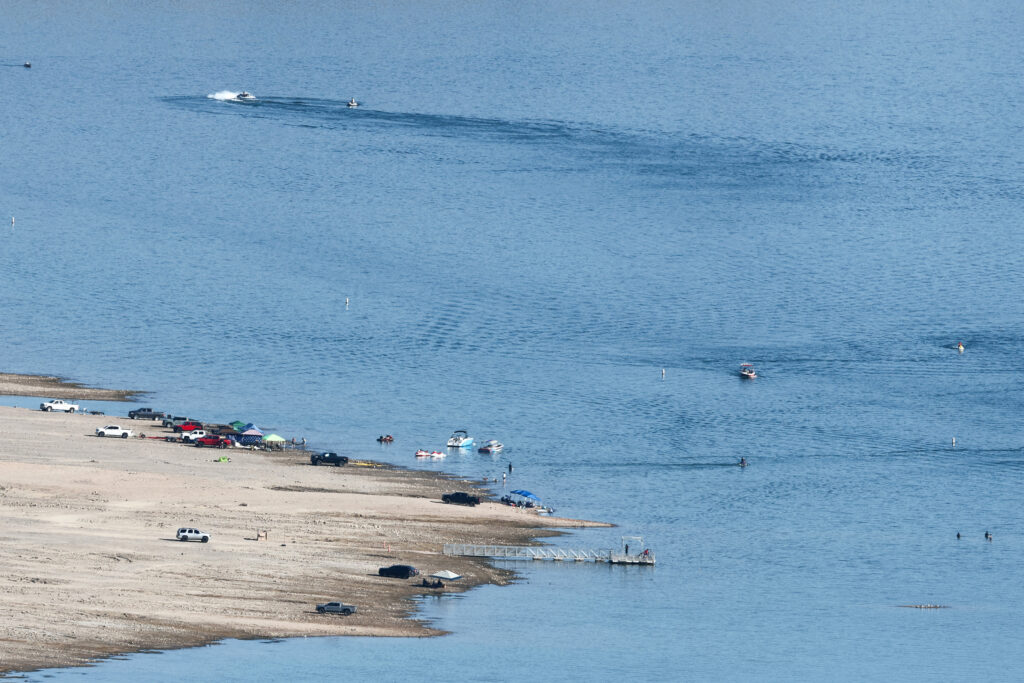
The Colorado River sustains roughly 40 million people across the American West. Its water supplies agriculture, municipal systems, and hydroelectric generation across Arizona, California, Colorado, New Mexico, Nevada, Utah, and Wyoming. The river system has operated under acute stress for over two decades as demand outpaces supply. Lake Mead and Lake Powell, the two largest reservoirs, have dropped to historic lows driven by prolonged drought and climate change.
The Trump administration's plan proposes reducing water deliveries to western states, with the specifics targeting how states should absorb shortages. Nevada's complaint suggests these reductions would disproportionately harm the state despite its already minimal allocation under the 1922 Colorado River Compact, which set initial distribution percentages that Nevada locked at 300,000 acre-feet annually. Arizona receives roughly 2.8 million acre-feet, while California claims 4.4 million acre-feet annually.
Water managers in Carson City argue that Nevada lacks the reservoir storage capacity other states possess. Arizona and California can draw water from Lakes Mead and Powell. Nevada has limited storage at smaller reservoirs, making it more vulnerable to sudden allocation cuts. Las Vegas obtains roughly 90 percent of its drinking water from Lake Mead, creating direct risk to municipal water security if federal policy reduces Colorado River flows reaching the lake.
The state's lawsuit raises questions about how federal water managers will allocate scarcity across competing interests. The Department of Interior, which administers Colorado River operations, has attempted multiple times since 2020 to broker agreements among basin states on how to distribute cuts. Those negotiations produced the 2023 Interim Guidelines, which water states agreed would expire in 2026.
Nevada's challenge represents the opening legal salvo in what will likely become protracted litigation over Colorado River policy. The state filed in federal court, naming the Department of Interior and relevant federal agencies as defendants. The complaint requests that courts block implementation of the administration's proposed allocations pending judicial review.
The lawsuit also reflects broader tensions within the basin. Arizona and California, which hold senior water rights and larger allocations, have generally supported federal intervention requiring upstream states to cut usage. Nevada and other smaller states resist proposals that would reduce their already limited access. Utah and Colorado, which sit upstream, have opposed cuts to their deliveries.
Climate change projections show the Colorado River basin receiving 10 to 30 percent less precipitation by mid-century under most warming scenarios. Federal hydrologists have warned that current allocation frameworks cannot sustain current usage patterns indefinitely. Nevada's lawsuit contests how that unavoidable scarcity gets distributed, placing water law and climate reality on a collision course.