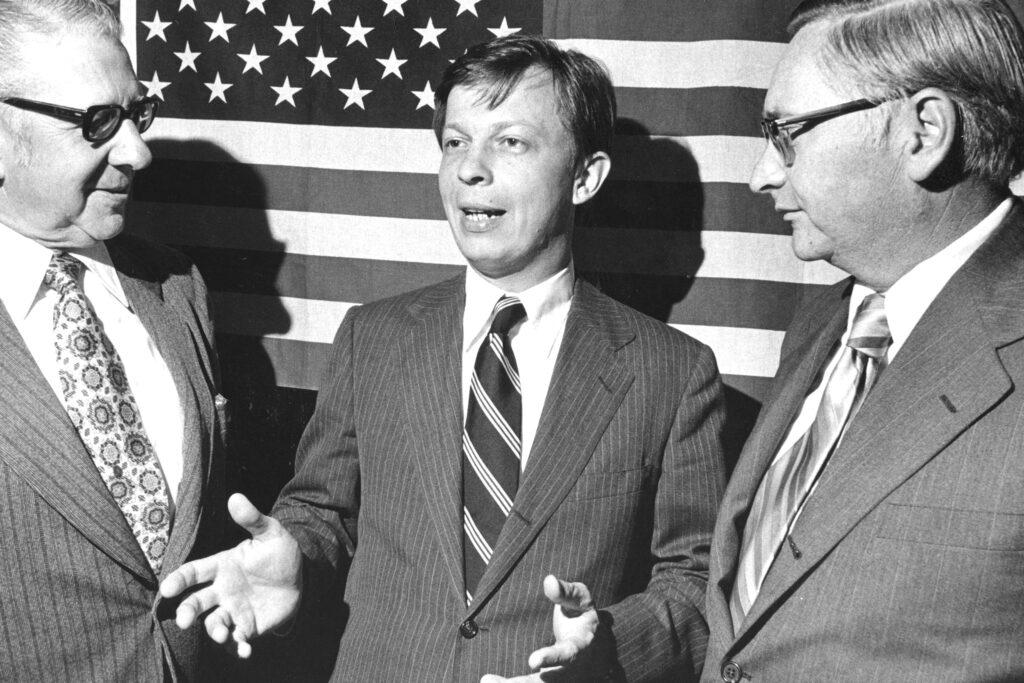
Franklin Kury, the Pennsylvania legislator who authored the state's groundbreaking Environmental Rights Amendment, died last week at age 89. His legacy rests on a constitutional provision that ranks among the most expansive environmental protections ever written into law.
Pennsylvania adopted Kury's amendment in 1971, embedding the right to a clean environment directly into the state constitution. The language reads: "The people have a right to clean air, pure water, and to the preservation of the natural, scenic, historic and esthetic values of the environment." This framing differs fundamentally from federal law. The Clean Air Act and Clean Water Act grant regulators authority to set standards. Pennsylvania's amendment grants citizens a personal constitutional right.
The timing mattered. The amendment passed during a surge of environmental consciousness. The first Earth Day occurred in 1971. The National Environmental Policy Act had been signed into law the previous year. Yet Pennsylvania moved faster and more boldly than most states. Only a handful of other jurisdictions globally had embedded environmental rights into constitutional text by that era. The amendment positioned Pennsylvania ahead of nations like Chile, South Africa, and Brazil, which followed with their own environmental constitutions decades later.
Kury's amendment shifted how Pennsylvania courts interpreted environmental harm. Citizens could invoke constitutional protections directly rather than relying solely on statutory regulations. The provision empowered plaintiffs to challenge industrial operations, mining practices, and development projects on constitutional grounds. Over five decades, courts applied the amendment to block or modify projects that would damage air quality, water resources, or natural areas.
The practical impact extended beyond courtrooms. The amendment elevated environmental protection from a policy preference to a constitutional mandate. Pennsylvania's legislature and agencies had to consider the amendment when writing and enforcing environmental laws. Judges held agencies accountable to the constitutional standard, not just minimum regulatory compliance.
Environmental lawyers and activists have credited Kury's work with preventing projects that would have caused substantial ecological damage in Pennsylvania. The amendment became a tool for communities fighting industrial expansion, fossil fuel extraction, and urban sprawl. Unlike federal law, which often defers to state regulatory discretion, Pennsylvania's constitution created a floor below which environmental protection could not fall.
Kury served in the Pennsylvania House of Representatives and championed environmental causes throughout a long political career. He recognized early that traditional regulatory frameworks lacked teeth. Constitutional protections, he believed, would outlast political cycles and shifting administrations.
The amendment's influence extended beyond Pennsylvania's borders. Environmental rights amendments adopted in other states drew inspiration from Kury's model. Legal scholars studying constitutional environmentalism cite Pennsylvania's 1971 amendment as a foundational text. The provision demonstrated that citizens could secure environmental protections through constitutional design rather than waiting for legislation.
Kury's death marks the loss of a legislator who understood that durable environmental protection required constitutional anchoring. His amendment remains operational and continues to shape Pennsylvania environmental disputes today. Courts still invoke the provision in cases involving wetlands, air pollution, and industrial development. The amendment's survival through changing political administrations reflects Kury's foresight about how constitutional language provides stability that statutes cannot guarantee.