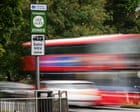
London's Low Emission Zone (LEZ) has delivered measurable results over the past decade, forcing a reckoning for cities worldwide about whether to embrace similar restrictions or buckle under industry pushback.
The LEZ, which expanded in November 2023 to cover all of Greater London, charges owners of polluting vehicles up to 12.50 pounds per day to drive in the capital. Early data shows the policy works. Air quality has improved in targeted areas. Hospital admissions for respiratory conditions dropped in zones where the LEZ took effect. Children's lung function tests improved. These are not theoretical benefits. They translate into fewer people gasping for breath.
Yet cities from Barcelona to Bogotá hesitate. They launch similar schemes, then pause them. They propose them and retreat. The gap between evidence and action reveals how entrenched opposition operates against clean air policies.
Misinformation spreads faster than particulate matter. Critics claim LEZ schemes disproportionately harm low-income drivers, though data from London shows disadvantaged communities benefit most from cleaner air. Retrofitting vehicles or transitioning to compliant models costs money, triggering organized industry resistance. Taxi associations, logistics companies, and transport operators mobilize politically. Local politicians face real pressure from constituents who own non-compliant vehicles.
The Guardian story centers on Alastair Harper, a health advocate whose daughter suffered an asthma crisis during an air pollution spike. His personal trauma became motivation for pushing London's LEZ forward. That intersection between individual suffering and policy change defines the emotional weight of this issue.
Barcelona implemented a more aggressive Low Emission Zone than London, restricting diesel vehicles entirely in some areas. Bogotá has cycled between commitment and retreat on its own restricted zones. Mexico City maintains restrictions but struggles with enforcement. The variation shows that policy design matters less than political will.
Air pollution kills 7 million people annually worldwide, according to World Health Organization estimates. In London specifically, air quality remains the single largest environmental health risk. The problem concentrates in urban centers where traffic congestion, industrial activity, and building density collide. No natural force resolves this. Only policy does.
London's success carries a lesson about implementation. The LEZ combined enforcement with grace periods, retrofitting support, and phased expansion. The initial Congestion Charge (launched 2003) proved that tolled driving restrictions work in wealthy cities. The LEZ extended that model to pollution reduction specifically, targeting vehicles rather than congestion.
Other cities struggle to replicate this because London had advantages: a wealthy tax base, strong mayoral authority independent of national government interference, and existing public transport infrastructure. Barcelona faces austerity. Bogotá confronts corruption and institutional weakness. These are genuine constraints, not excuses.
The politics of clean air pit future health against present inconvenience. Vehicle owners face immediate costs. The elderly person avoiding hospitalization never shows up to protest the LEZ. The child with improved lung function does not lobby politicians. Health benefits accrue silently while opposition mobilizes loudly.
Momentum matters. As more cities observe London's results without economic collapse, resistance weakens. Insurance companies and vehicle manufacturers adapt. Retrofitting technology improves and becomes cheaper. What seemed radical becomes normal.
The question facing cities is whether they wait for perfect conditions or implement imperfect policies that save lives now. London chose action.