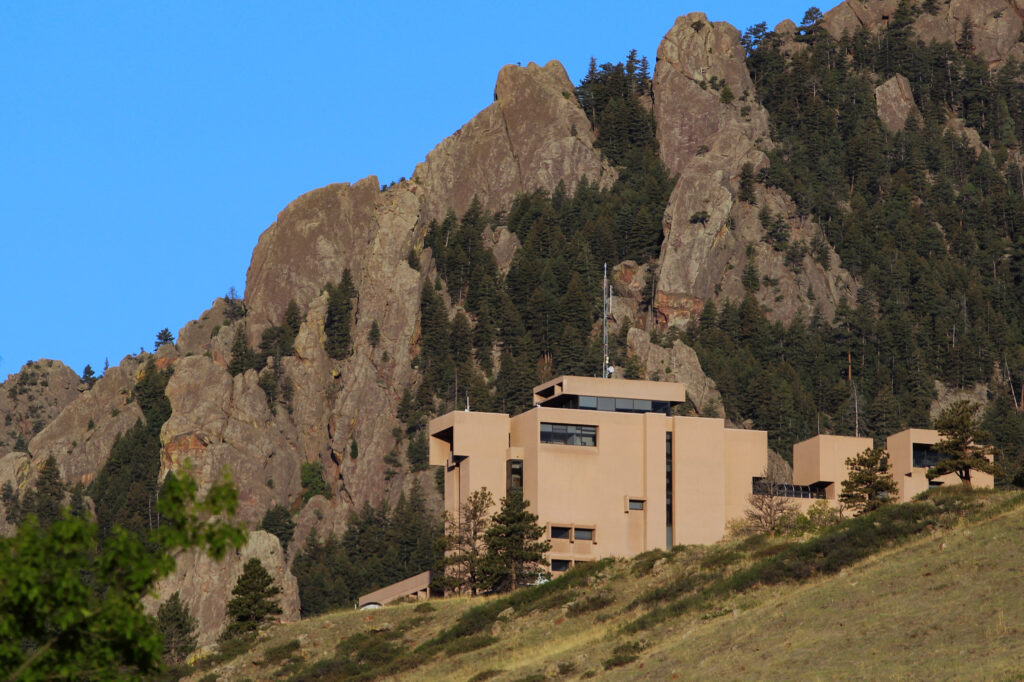
Environmental groups have moved aggressively to halt the Trump administration's planned closure of the National Center for Atmospheric Research in Colorado, one of the federal government's primary climate science institutions.
A major environmental organization filed suit Thursday in federal court arguing that dismantling NCAR violates federal law. The administration announced in December its intention to shutter the facility, which operates as a federally funded research and development center. NCAR employs roughly 1,000 scientists and support staff across its Boulder campus and conducts some of the nation's most consequential work in atmospheric chemistry, climate modeling, and weather prediction.
The lawsuit targets what plaintiffs characterize as an unlawful termination of operations. The legal challenge rests on administrative procedure requirements and potentially broader questions about the government's authority to eliminate research infrastructure without congressional approval or public review. NCAR operates under the University Corporation for Atmospheric Research, a nonprofit consortium of universities, which adds layers of complexity to the closure process.
NCAR's research output directly informs federal climate policy, international emissions assessments, and the National Weather Service's forecasting models. The center has contributed data to United Nations climate reports and maintains atmospheric monitoring networks that track greenhouse gas concentrations, aerosol patterns, and climate indicators used globally. Shuttering the facility would eliminate institutional knowledge accumulated over decades and disrupt ongoing research projects with multi-year timelines.
The administration has not publicly detailed its rationale for the closure beyond general statements about reducing federal spending. Environmental analysts note that NCAR's annual operating budget represents less than 0.1 percent of total federal climate science expenditures, making the budgetary savings minimal compared to the loss of research capacity.
The lawsuit filing sets up a legal confrontation between environmental plaintiffs and executive branch officials over the scope of presidential authority to eliminate established research centers. The case will likely hinge on procedural questions about whether the closure requires National Science Foundation approval, environmental review, or other statutory compliance measures. Courts have previously intervened in disputes over federal research facility operations when plaintiffs demonstrated procedural violations or arbitrary decision-making.
NCAR operates specialized computing facilities that run climate models used by researchers worldwide, including the Community Earth System Model, a widely adopted tool for projecting future climate scenarios under different emissions pathways. The center also houses the High Altitude Observatory, which studies solar variability and its effects on Earth's atmosphere.
Researchers affiliated with NCAR have expressed concern about project continuity and the loss of institutional expertise. The center has ongoing commitments to international climate research collaborations, including work on monsoon patterns, extreme weather events, and atmospheric composition changes tied to both human activities and natural cycles.
The lawsuit's outcome could determine whether federal research institutions face heightened vulnerability to administrative restructuring. An adverse ruling for the administration might establish procedural requirements for future closures, while a victory could expand executive discretion over research infrastructure.
The case will proceed through federal district court, likely in Colorado or Washington D.C., depending on venue decisions. Oral arguments and discovery could extend the process for months, creating uncertainty for NCAR staff and research partners.