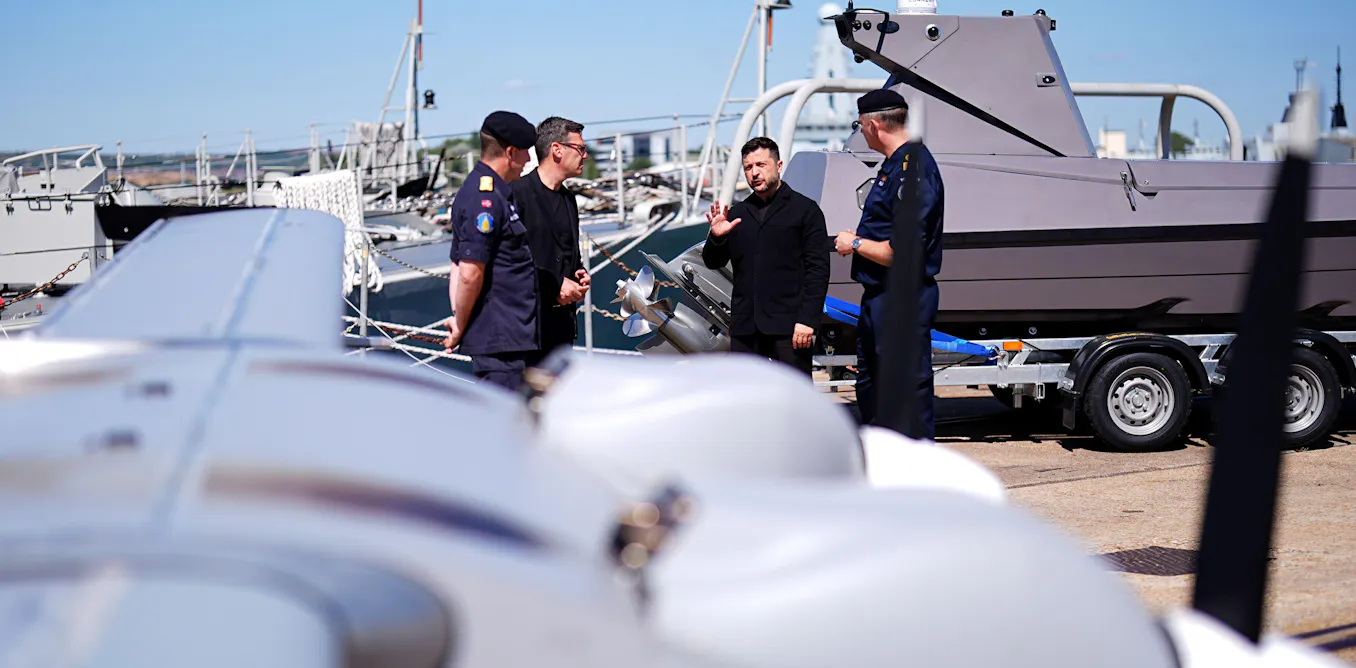
# UK-Ukraine Drone Partnership Risks Putin's Wrath but Will Boost Long-Term Security
Britain's military drone development programme with Ukraine represents a calculated escalation in Western support for Kyiv, with significant geopolitical consequences. The UK government is prioritising drone technology development while Ukraine provides operational experience and battlefield testing conditions that accelerate weapons advancement.
This partnership reflects a shift in Western strategy. Rather than limiting support to defensive systems, Britain now openly collaborates on offensive drone capabilities. Ukraine's battlefield needs align with the UK's military modernisation goals, creating mutual benefit. British defence contractors gain access to real-world combat data. Ukrainian forces receive cutting-edge systems developed iteratively through active conflict.
The arrangement carries direct risks. Russia views Western drone partnerships with Ukraine as direct military intervention. Moscow has explicitly warned that such collaborations escalate tensions and could justify broader Russian responses against NATO nations. The Kremlin may retaliate through cyber operations, disinformation campaigns, or military posturing in Eastern Europe and the Arctic.
Britain frames the partnership as necessary for Ukraine's long-term defence capability. Once this conflict concludes, Ukraine will face continued Russian pressure. Advanced drone technology becomes essential infrastructure for deterrence and territorial protection. The UK argues that strengthening Ukraine's military capacity now prevents future Russian aggression and costly Western interventions later.
The programme reflects broader NATO strategy: sustaining Ukrainian resistance while avoiding direct military confrontation with Russia. By channelling support through equipment and expertise rather than troops, Western nations maintain deniability while effectively opposing Russian expansion.
However, the transparency around this partnership differs from earlier covert weapons transfers. Publicly acknowledging drone development with Ukraine signals Western confidence in Ukrainian victory and commitment to Ukrainian sovereignty. It also tests Russian tolerance thresholds. Moscow's response will shape whether other NATO nations accelerate similar programmes.
Britain's decision prioritises long-term European security architecture over short-term