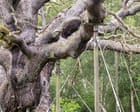
The Woodland Trust reports that England's ancient oak trees are dying under extreme heat and drought stress this summer, with older specimens suffering disproportionate damage. The organization warns that trees and ecosystems cannot adapt quickly enough to accelerating climate shifts.
European heatwaves have severely impacted plant health and crop growth across the continent. Ancient oaks, which have survived centuries of environmental pressures, now face conditions they have not encountered in their lifespans. These trees evolved physiological responses suited to historical climate patterns. When soil moisture depletes rapidly during extended droughts, root systems cannot extract sufficient water. Combined with record temperatures, this creates lethal stress for wood tissue and vascular systems.
The vulnerability of older oak populations presents a cascading ecological problem. Ancient trees provide critical habitat for insects, fungi, and birds that depend on dead wood and complex bark structures. Oak woodlands store substantial carbon reserves in both living biomass and soil. When these trees die at scale, ecosystems lose carbon storage capacity while releasing stored carbon back into the atmosphere.
The Woodland Trust's findings align with broader climate research showing that established forests face mortality risks when temperature and precipitation patterns shift beyond their adaptive range. A 2023 study published in Nature Climate Change documented widespread tree die-off across Europe linked to compound heat and drought events. Scientists expect these conditions to intensify as global temperatures rise.
England's ancient oaks represent irreplaceable ecological and cultural resources. Regenerating new oak populations takes centuries. Mature trees that die today cannot be replaced within human timescales relevant to policy decisions. The loss accelerates ecosystem simplification, reducing biodiversity and carbon storage.
Foresters and conservation groups now grapple with managed adaptation strategies. Some propose assisted migration of oak genetics from warmer regions. Others argue for protecting remaining mature trees through targeted irrigation during droughts. These interventions remain experimental and resource-intensive.
The crisis undersc