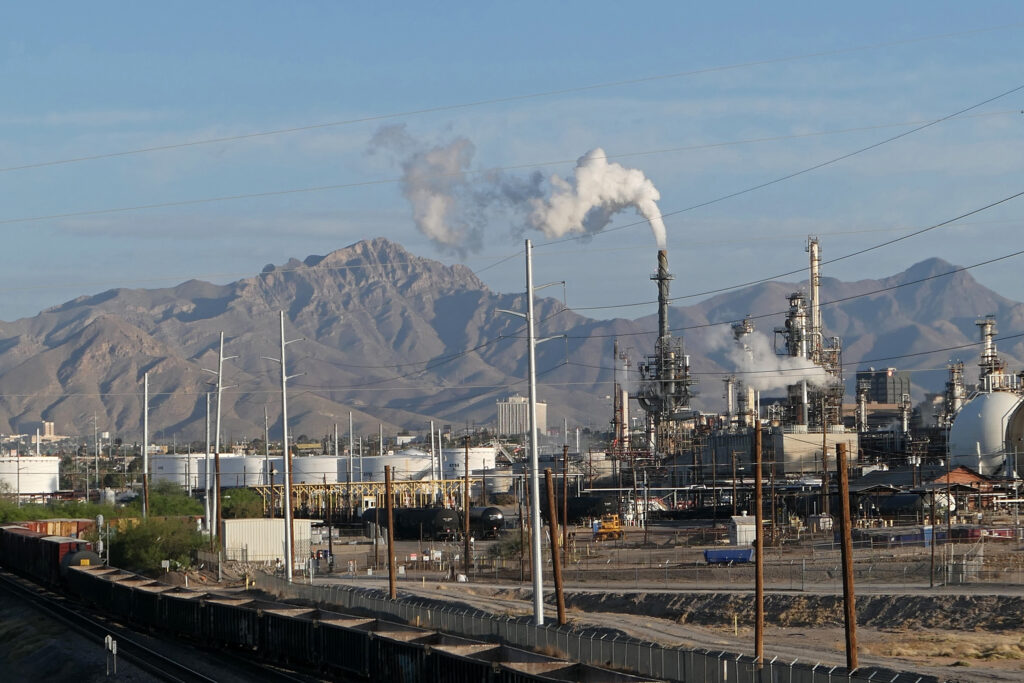
Gilbert Morales stood before El Paso City Council with grief still fresh, describing his wife's death from lung cancer in June despite her never smoking. He lives adjacent to Marathon Petroleum's El Paso Refinery, one of the region's largest emission sources. His testimony prompted city officials to demand answers about air quality impacts from the facility.
The Marathon refinery operates in West Texas, a region already burdened by industrial pollution. Residents near oil and gas facilities face elevated cancer risks from exposure to volatile organic compounds, benzene, and particulate matter. The El Paso facility processes crude oil and produces gasoline and diesel, releasing nitrogen oxides, sulfur dioxide, and other hazardous air pollutants during normal operations and equipment malfunctions.
City Council members requested detailed emissions data from Marathon, including records of upset events, flaring episodes, and maintenance activities that discharge pollutants. They also called for independent air quality monitoring near the refinery fence line. The Texas Commission on Environmental Quality oversees the facility, though enforcement has faced criticism from environmental groups for insufficient penalties when violations occur.
El Paso's air quality ranks among the worst in Texas. The region exceeds federal ozone standards regularly, driven partly by refinery emissions that react with sunlight to form ground-level smog. Research published in Environmental Health Perspectives links proximity to oil refineries with increased respiratory disease, cancer, and premature mortality.
Marathon has not publicly responded to the emissions inquiry. The company operates the refinery under a state air quality permit that sets pollution limits but does not account for cumulative health impacts on neighboring communities. Environmental justice advocates argue that low-income, predominantly Hispanic neighborhoods surrounding the refinery bear disproportionate health burdens from industrial operations.
The council's investigation reflects growing pressure on refineries nationwide to disclose emissions more transparently and accept liability for community health effects. El Paso officials signaled they