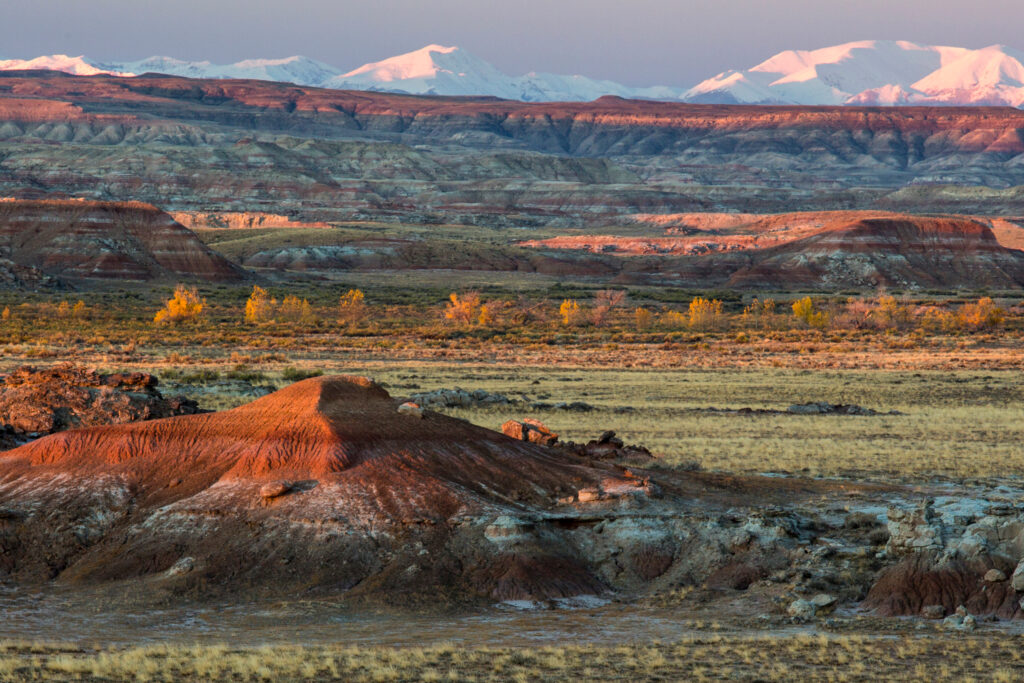
Wyoming voters face a pivotal choice Tuesday in primary elections where public lands management has emerged as a defining issue. The election represents the first statewide contest since Western congressional Republicans intensified efforts to transfer federal lands to state control, a shift that could reshape conservation policy across the region.
Public lands comprise roughly 48 percent of Wyoming's total acreage. These federally managed forests, rangelands, and wilderness areas generate substantial revenue through livestock grazing permits, oil and gas leases, and hunting and fishing licenses. Control over these lands determines extraction rights, recreation access, and wildlife habitat preservation.
Republican candidates have taken divergent stances on the federal land question. Some align with the property-rights movement, arguing that states can manage public lands more efficiently than the U.S. Forest Service or Bureau of Land Management. Others defend the current federal framework, contending that transfer proposals risk underfunding conservation and eliminating public access to hunting and fishing areas that form the backbone of Wyoming's outdoor economy.
Conservation groups and outdoor recreation companies have mobilized voters around the issue. The outdoor industry generates approximately $887 billion annually across the United States, with hunting and fishing contributing $156 billion. Wyoming's economy depends significantly on these activities. Polling suggests voters prioritize maintaining public access and preventing resource extraction on sensitive lands.
The election also reflects broader Western tensions between federal authority and state autonomy. Proponents of land transfer cite examples like Utah, where the state Department of Natural Resources manages school trust lands. Critics point to budget constraints that prevent adequate stewardship when states absorb management costs.
Tuesday's results will signal whether Wyoming voters support maintaining public lands in federal trust or back efforts to shift control. The outcomes may influence similar debates in Montana, Idaho, and Nevada, where public lands represent equally large portions of the landscape. A shift toward state control could accelerate extraction activities and reduce funding for habitat restoration and recreation infrastructure.