# Hawaiians Fight to Restore Mail Delivery After USPS Eliminated Addresses in Wildfire Zone
The U.S. Postal Service has complicated recovery efforts in Lahaina by eliminating mail delivery addresses for residents who rebuilt homes after the August 2023 wildfire, even as unburned properties continue receiving mail normally.
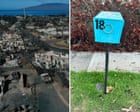
Pam Reader returned to her devastated Lahaina property two months after the fire to find her turquoise mailbox still standing, one of the few structures to survive the disaster. What Reader discovered next proved more frustrating than the ruins themselves. When she attempted to restore mail service to her rebuilt home, USPS informed her that her address had been "eliminated" from the postal system.
The problem extends beyond Reader's case. Dozens of Lahaina residents rebuilding after the fire face the same barrier. USPS has systematically removed addresses from areas where properties burned, citing loss of the physical structure as justification for deletion from postal records. The agency treats burned-out lots differently than occupied addresses, removing them from delivery routes entirely.
This creates a bureaucratic paradox. Residents who escaped the fire with homes intact continue receiving mail at their original addresses without interruption. Those who lost everything and are now constructing new homes in the same locations cannot restore service, even with rebuilt structures and reestablished residency.
The implications extend to recovery logistics. Homeowners rebuilding require mail for mortgage documents, insurance correspondence, utility connections, and official government communications. Banks and government agencies use physical mail addresses to verify identity and process claims. Without active USPS addresses, residents face delays in accessing disaster relief, securing financing, and completing necessary paperwork tied to rebuilding.
Lahaina's August 2023 wildfire burned over 2,200 structures and killed 101 people, making it the deadliest U.S. wildfire in over a century. Recovery has proven slow and frustrating for residents across multiple fronts. Housing shortages, insurance disputes, and land acquisition complications have already created obstacles for those attempting to return and rebuild. USPS address elimination adds another layer of administrative friction at a vulnerable moment.
The postal service operates under standardized protocols that do not account for post-disaster community rebuilding. When a structure burns, USPS removes it from active delivery records. The system contains no efficient mechanism to reactivate addresses for reconstructed homes on the same lots. Residents must navigate a complex process to request address restoration, often without clear guidance from USPS about eligibility or timelines.
Community advocates have pushed USPS for expedited address restoration in Lahaina, arguing that the policy contradicts disaster recovery principles. The agency has shown some willingness to work with affected residents but has not implemented systematic changes to address the problem across the entire fire zone.
Reader and other residents are fighting to have their addresses formally reinstated. They argue that USPS should treat rebuilt homes on original lots as continuations of prior addresses, not as new construction requiring standard application processes. The alternative, they contend, creates unnecessary hardship for people already struggling with catastrophic loss and complex rebuilding decisions.
As Lahaina's recovery unfolds, this postal address dispute highlights how federal bureaucracies designed for stable conditions falter during disaster response. The small turquoise mailbox that survived the flames represents not just mail delivery but a symbol of residents' attempt to restore their lives in the ruins of what was lost.