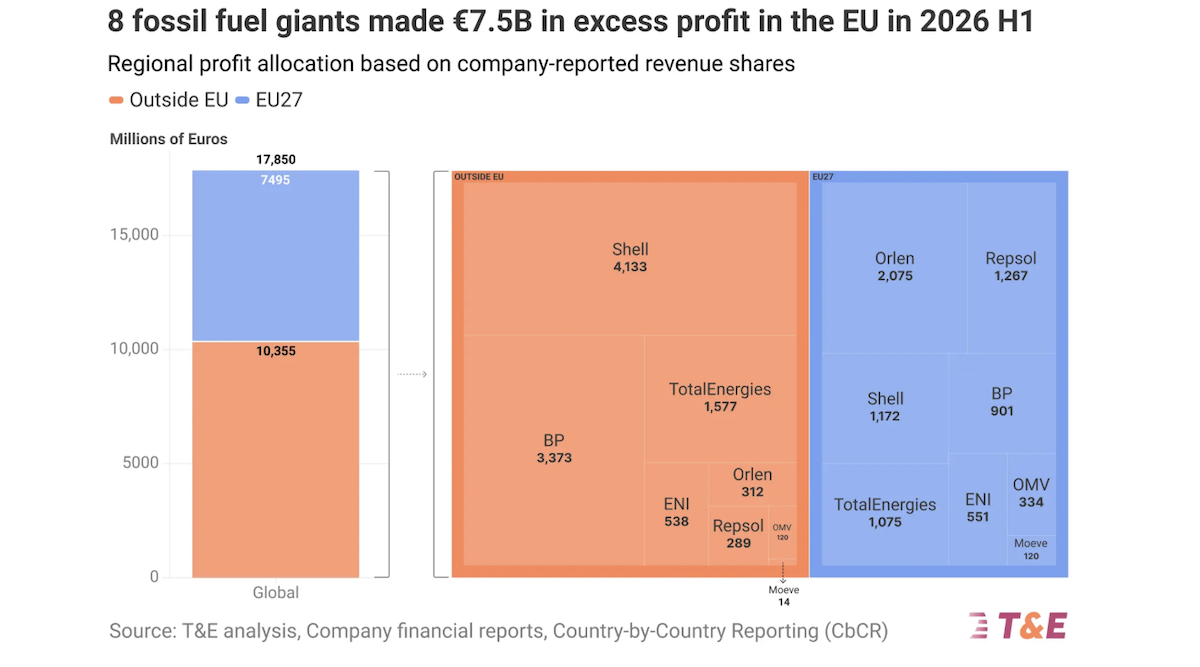
Eight major oil companies operating in Europe accumulated €7.5 billion in excess profits during the first half of 2026, capitalizing on geopolitical disruption in the energy market. The surge followed an Iranian conflict that began in late February 2026, which sent Brent crude prices above $100 per barrel within weeks. European oil producers immediately reported sharp increases in revenue and profitability as prices climbed.
The windfall profits emerged during a period of energy market volatility triggered by regional instability. As crude prices spiked, oil companies with existing production capacity and supply contracts reaped substantial gains without corresponding increases in extraction costs or operational efficiency. The €7.5 billion figure represents the gap between actual profits and baseline earnings levels, reflecting pure gains from price inflation rather than business performance.
This windfall raises questions about energy policy and corporate accountability in Europe. While oil companies benefited from external shocks beyond their control, the scale of excess profits has prompted scrutiny of how fossil fuel producers capture value during supply disruptions. Some European policymakers have discussed windfall profit taxes on energy companies to redirect revenues toward supporting households facing higher energy costs.
The situation underscores Europe's continued dependence on oil despite renewable energy expansion. Energy security concerns and geopolitical vulnerabilities in oil-producing regions create price volatility that benefits extractive industries while imposing costs on consumers and economies. Eight companies controlling this scale of windfall profits highlights market concentration in European energy sectors.
The timing coincides with broader European efforts to accelerate renewable energy deployment and reduce oil dependency. However, short-term price spikes create incentives for fossil fuel investment even as long-term climate policy aims to phase out oil consumption. The €7.5 billion windfall demonstrates how geopolitical shocks can temporarily reverse economic pressure on traditional energy producers.