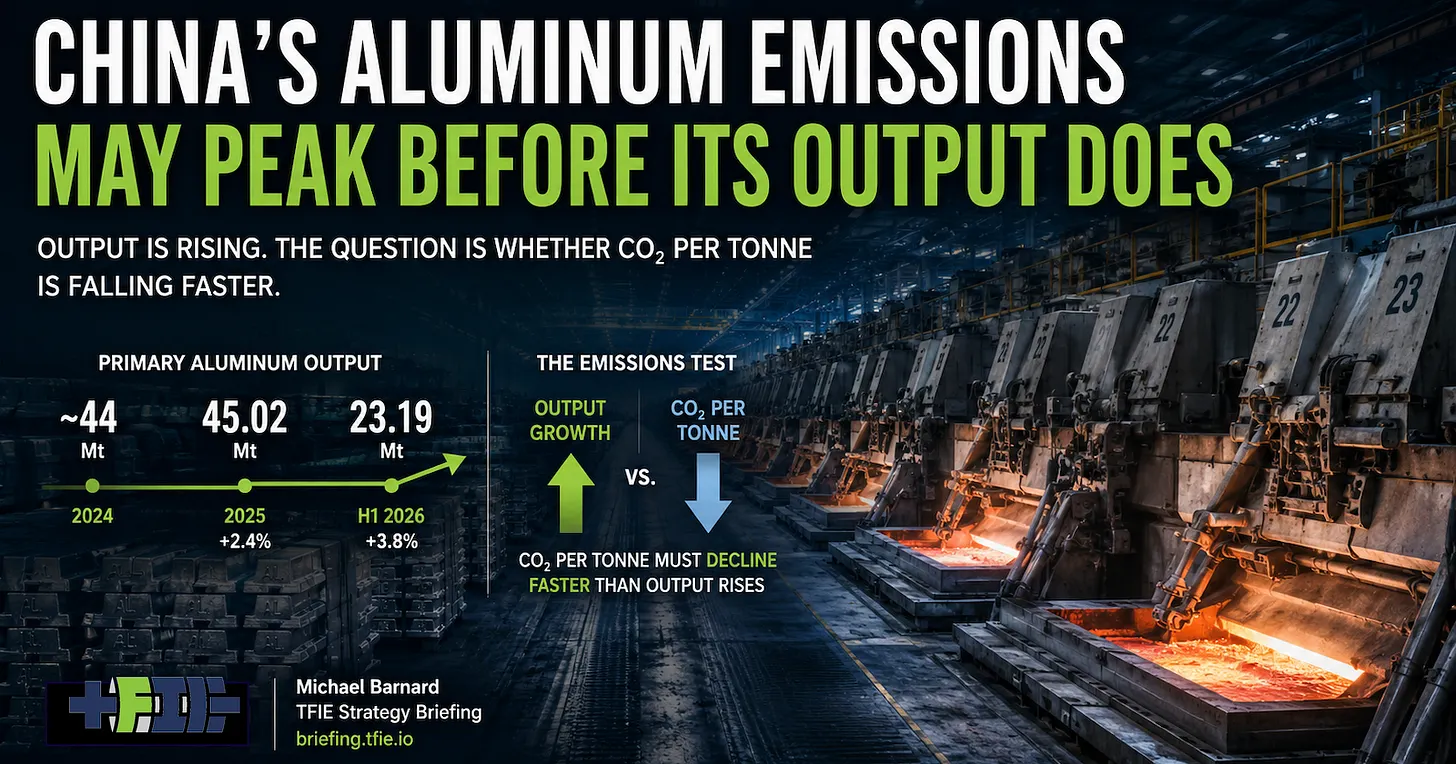
China's primary aluminum production reached 45.02 million tonnes in 2025, a 2.4 percent increase from 2024, yet sector emissions may still have peaked despite the rising output. This apparent paradox reflects a fundamental shift in how China manufactures aluminum.
The growth in production volume contradicts earlier predictions that China's aluminum sector emissions had plateaued around 2024. However, the composition of China's power grid has changed dramatically. Renewables now supply a larger share of electricity to aluminum smelters, reducing the carbon intensity of each tonne produced even as total output climbs.
China dominates global aluminum production, accounting for roughly 60 percent of worldwide primary aluminum output. The sector historically represents one of China's largest industrial emissions sources due to the energy-intensive electrolysis process required to extract aluminum from ore. Each tonne of primary aluminum production typically generates 12 to 16 tonnes of carbon dioxide equivalent when powered by coal.
The shift toward renewable electricity in China's power system changes this calculus. Solar and wind capacity additions outpaced coal plant construction for years, and this trend accelerated through 2025. When aluminum smelters draw power from wind farms or solar installations rather than coal plants, emissions per unit of production drop sharply, even when total smelter capacity operates at higher rates.
This distinction matters for climate accounting. Total sectoral emissions depend on two variables: production volume and grid carbon intensity. Rising aluminum output paired with declining grid emissions can result in flat or falling total emissions from the sector, provided renewable generation grows faster than production increases.
China's aluminum producers have also invested in efficiency upgrades and switched some capacity toward recycled aluminum, which requires 95 percent less energy than primary production. Recycled output expanded as scrap collection improved.
The data suggest China's aluminum emissions trajectory depends on the speed of grid decarbonization.