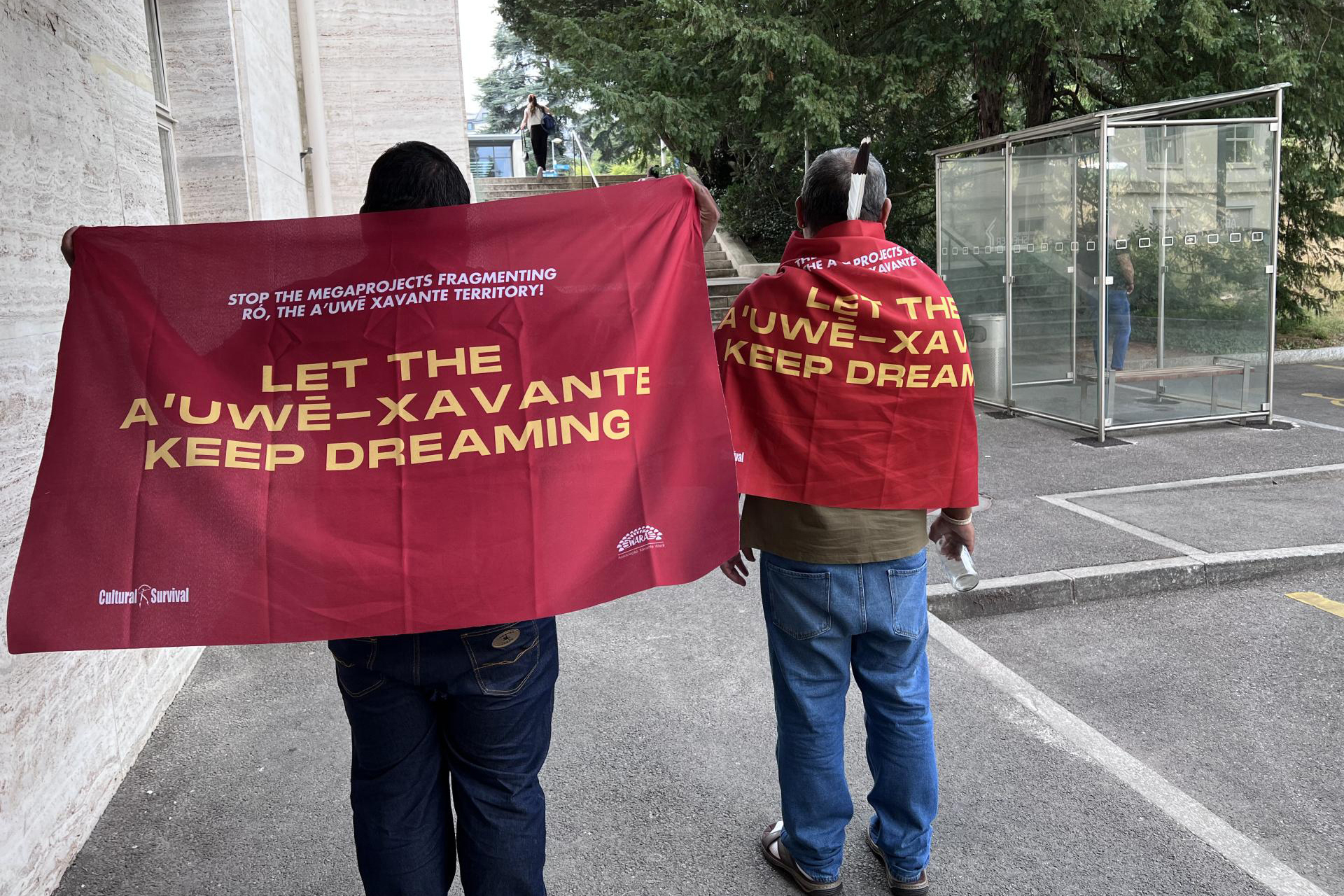
Brazilian Indigenous leaders delivered a stark warning at United Nations climate negotiations this week. The energy transition cannot replicate colonial extraction patterns that have devastated their territories for centuries.
The statement emerged from Indigenous representatives attending UN climate discussions, where they confronted a persistent paradox. The global shift away from fossil fuels increasingly depends on mining lithium, cobalt, copper, and other minerals essential for batteries, solar panels, and electric grids. These minerals lie disproportionately beneath Indigenous lands in Latin America, Africa, and Southeast Asia.
The Xavante people of Brazil illustrated the concrete stakes. Along the Owawê River, the Xavante maintain sacred sites, ancient villages, burial grounds, and ceremonial locations tied to their cultural survival. The ear-piercing ritual performed there marks a boy's transition to adulthood, anchoring community identity across generations. Now a proposed railway project called the Center-West Integration Railway (Ferrovia de Integração do Centro-Oeste) threatens to fragment this territory, enabling mineral extraction and industrial development.
This scenario repeats across Indigenous territories worldwide. Mining operations for energy transition materials displace communities, contaminate water sources, and fragment ecosystems that Indigenous peoples have stewarded for millennia. The Lithium Triangle spanning Argentina, Bolivia, and Chile has become the epicenter of this tension. Mining operations there consume vast quantities of freshwater in already arid regions, depleting aquifers that Indigenous communities depend on for survival.
Indigenous leaders argue that renewable energy development cannot simply substitute one extraction model for another. They demand genuine consultation, benefit-sharing agreements, and the right to refuse projects on their lands. The UN Declaration on the Rights of Indigenous Peoples, adopted in 2007, enshrines free, prior, and informed consent (FPIC) for projects affecting Indigenous territories. Yet compliance remains inconsistent across nations and corporations.
The energy transition will require approximately 3 billion tons of minerals extracted by 2050, according to International Energy Agency estimates. Without strict protections, that extraction will concentrate in regions with the weakest environmental enforcement and least political power to resist. Indigenous territories contain roughly 80 percent of Earth's remaining biodiversity. Mining disruption in these areas carries cascading ecological consequences.
Brazilian Indigenous leaders specifically demanded that climate finance mechanisms prioritize Indigenous land stewardship as a climate solution. Research consistently shows that Indigenous-managed territories maintain carbon stocks and biodiversity at rates exceeding protected areas managed by governments or corporations. Yet Indigenous communities receive less than 1 percent of global climate finance.
The statement reflects growing Indigenous organizing at climate negotiations. At COP27 in Egypt and COP28 in Dubai, Indigenous delegations pressed governments and corporations to abandon the false choice between climate action and territorial rights. They argue that genuine climate solutions must respect Indigenous sovereignty and ecological knowledge.
The Center-West Integration Railway proposal in Brazil exemplifies how development narratives obscure whose interests get served. Clean energy rhetoric masks the same dispossession dynamics that characterized colonialism and industrial extraction. Indigenous leaders insist the transition toward renewables must differ fundamentally. That requires recognizing Indigenous peoples as climate leaders, not obstacles to be removed.