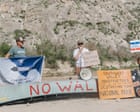
Bulldozers have begun excavating ground at Big Bend National Park's Santa Elena Canyon in southwest Texas as part of the Trump administration's border wall expansion program. Activist footage confirms heavy machinery is operating at the mouth of the canyon, one of the park's most iconic natural features.
The work represents a direct incursion into protected federal land. Big Bend covers roughly 500 miles along the US-Mexico border in southwest Texas and ranks as the state's largest and most-visited national park. Santa Elena Canyon, where the Rio Grande cuts through limestone cliffs, draws thousands of visitors annually for hiking, rafting, and backcountry exploration.
The administration's "smart wall" initiative aims to expand border security infrastructure across multiple sections of the southern boundary. The project carries multibillion-dollar budget allocations and has triggered sharp opposition from conservation groups, park officials, and local stakeholders concerned about habitat fragmentation and ecosystem damage.
Environmental organizations argue the construction will fragment wildlife corridors used by bighorn sheep, mountain lions, and migratory birds that depend on the Big Bend region. The park sits along a critical migration route for species moving between the Sierra Madre Occidental in Mexico and ranges in the American Southwest. Vehicular access, fence installation, and ground disturbance disrupt movement patterns established over centuries.
The legal framework governing this work remains contested. The Trump administration has invoked national security statutes that authorize border barrier construction on federal lands, including within national parks and wildlife refuges. These authorities, granted under Section 102 of the Illegal Immigration Reform and Immigrant Responsibility Act of 1996 and invoked again by executive order, exempt certain border security projects from environmental review requirements.
Conservation groups have filed legal challenges arguing the exemptions violate the National Environmental Policy Act and the National Park Service Organic Act, which mandates preservation of parks "in such manner and by such means as will leave them unimpaired for future generations." Courts have split on these arguments, with some districts blocking construction and others allowing it to proceed pending full litigation.
The Big Bend expansion represents the most recent flashpoint in a longer conflict over border infrastructure placement. Similar construction has occurred in Arizona's Organ Pipe Cactus National Monument and California's Imperial National Wildlife Refuge, causing measurable environmental damage documented by park scientists.
Park rangers and Texas Parks and Wildlife Department staff have expressed alarm privately, though official statements remain guarded. Monument managers cannot easily challenge executive directives on national security grounds, leaving them in administrative limbo regarding damage mitigation.
Local economists worry about visitor disruption. The Big Bend region generates approximately $500 million annually in tourism spending across Brewster County and surrounding areas. Visible construction, dust, noise, and altered canyon access may suppress visitation during the project's duration, potentially lasting several years depending on final wall specifications.
The excavation began without advance public notice, contradicting past administration practice of announcing infrastructure projects. This approach suggests expedited timelines to complete work before potential legal rulings force halts or modifications.