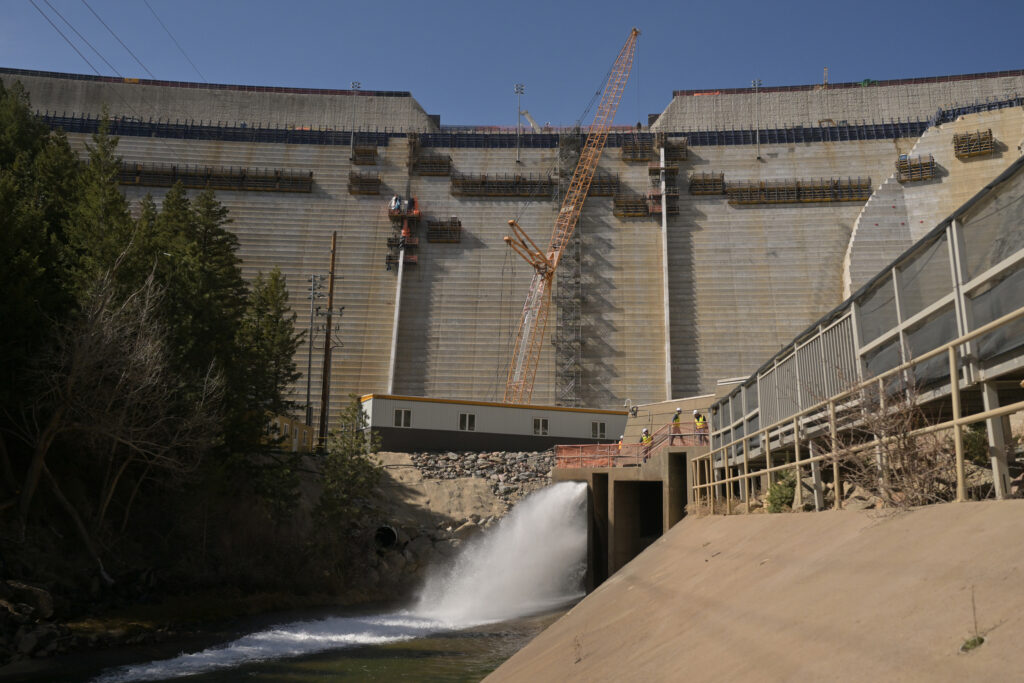
# Dam Expansion Project Faces Climate Challenge on Colorado River
The U.S. Army Corps of Engineers and Colorado's largest water utility now defend an expansion of Ruedi Reservoir against a lawsuit arguing that climate change makes the project unjustifiable. Environmental nonprofits contend that the expansion violates federal environmental law by failing to account for future water scarcity driven by warming temperatures.
Ruedi Reservoir, located in central Colorado, supplies water to the Colorado River basin, one of the most strained water systems in North America. The expansion project would increase storage capacity, allowing the utility to capture more runoff during wet years. But critics argue this approach ignores a fundamental reality: the Colorado River itself is shrinking due to climate change.
The Colorado River supplies water to roughly 40 million people across seven Western states and Mexico. The river's annual flow has declined roughly 20 percent over the past two decades, according to federal data. Scientists attribute much of this decline to warming temperatures that cause earlier snowmelt and increase evaporation. Hydrological models project further declines as global temperatures continue rising.
Environmental groups argue that expanding reservoir capacity to capture more water assumes the river will maintain historical flow levels. This assumption, they say, violates the National Environmental Policy Act, which requires federal agencies to consider reasonably foreseeable environmental consequences. The lawsuit contends the Corps of Engineers failed to adequately analyze how climate change will affect the project's long-term viability and whether expansion actually benefits water security or merely redistributes scarcity among users.
The Colorado utility defended the expansion as essential infrastructure for managing current and future water needs. Officials argued that the project does not extract additional water from the river but instead stores existing flows more efficiently. This storage, they maintain, provides resilience during drought periods when surface water becomes unavailable.
Water managers across the Colorado River basin have grown increasingly dependent on reservoir storage as river flows become unpredictable. Lake Powell and Lake Mead, the two largest reservoirs on the river, have dropped to historically low levels multiple times in recent years. In response, states have implemented water cuts and negotiated emergency shortage agreements.
The Ruedi Reservoir case represents a broader tension in Western water policy. Traditional approaches to water security emphasize infrastructure expansion and storage, assumptions rooted in 20th century hydrology. Climate science now suggests that building larger reservoirs cannot offset losses from warming temperatures and reduced precipitation.
Federal courts have increasingly recognized climate change as a valid consideration in environmental impact reviews. This lawsuit tests whether agencies must fundamentally rethink infrastructure projects when climate projections contradict the hydrological assumptions underlying those projects.
The outcome carries consequences beyond Colorado. Hundreds of water infrastructure projects across the West rely on similar assumptions about river flows and storage capacity. If courts determine that climate modeling must reshape how agencies approve expansion projects, water utilities and state governments will face pressure to revise long-term planning strategies.
The case remains pending as the Colorado River basin enters another dry season, with water managers again implementing emergency conservation measures.