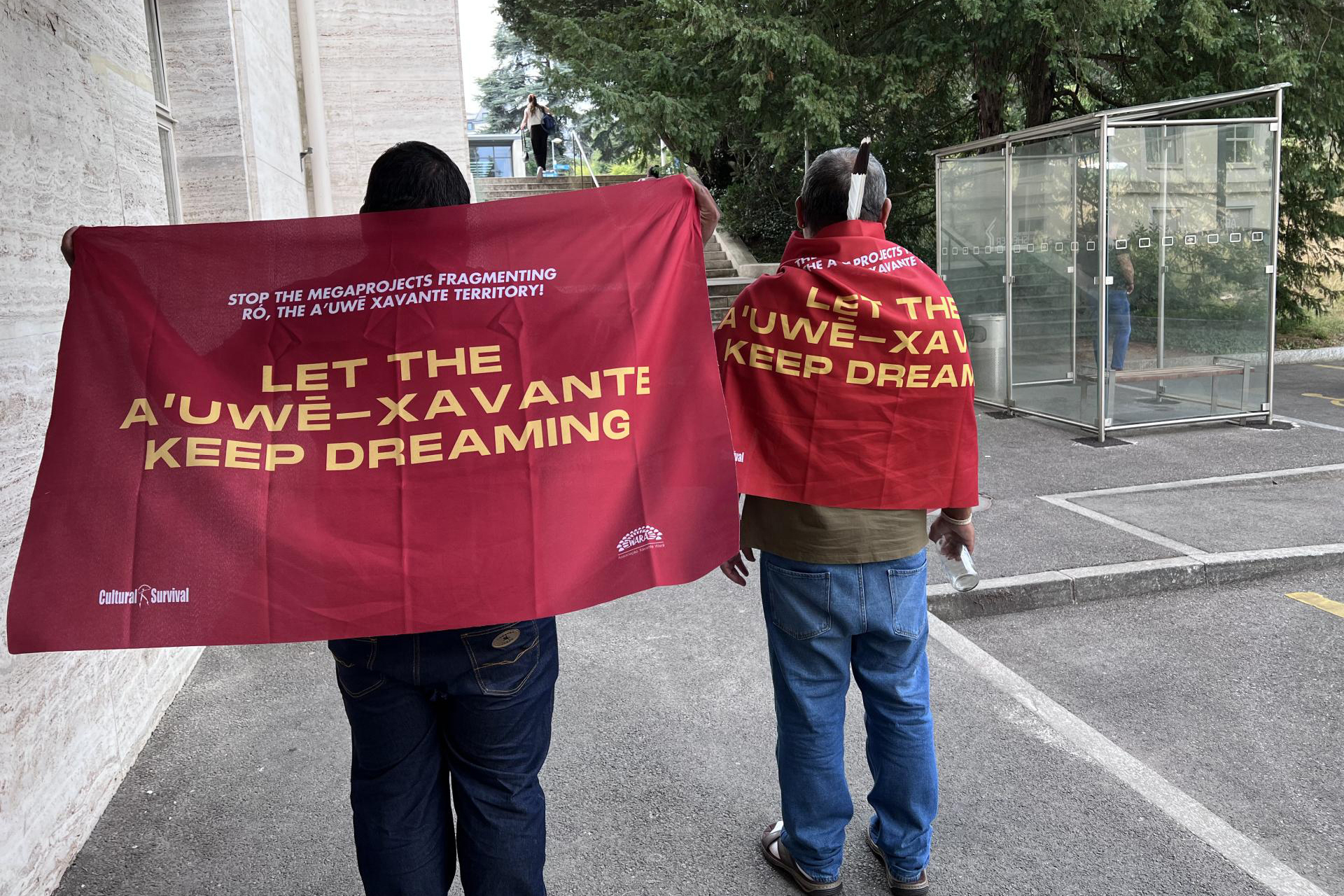
Brazilian indigenous leaders told the United Nations that the global energy transition risks becoming a new form of colonial violence if renewable energy projects proceed without their consent and land rights protection.
The warning came from representatives of indigenous nations including the Xavante people, whose territories along the Owawê River contain sacred sites, villages, and burial grounds. The Xavante use these lands for the fura-orelha ceremony, a ritual marking boys' passage to adulthood. A proposed rail project, the Ferrovia de Integração do Centro-Oeste (Center-West Integration Railway), threatens these culturally essential areas.
This conflict reflects a broader pattern across Brazil and the Amazon basin. Renewable energy infrastructure, hydroelectric dams, and mineral extraction for battery production drive land encroachment on indigenous territories. While governments and international energy companies frame these projects as climate solutions, indigenous leaders argue they replicate extraction patterns that characterized centuries of colonialism.
The indigenous statement to the United Nations emphasized that energy transition planning excludes indigenous peoples from decision-making. Free, prior, and informed consent (FPIC), a principle established under international law and the UN Declaration on the Rights of Indigenous Peoples, remains largely ignored in Brazil. Energy projects proceed with minimal consultation, and indigenous objections face dismissal as obstacles to climate action.
Brazil's indigenous territories store approximately 28 percent of the country's carbon reserves in forests. Indigenous land management practices maintain these carbon stocks far more effectively than protected areas without indigenous stewardship. Simultaneously, indigenous communities face escalating violence. Between 2012 and 2021, over 300 indigenous people were murdered in land conflicts, according to data from Indigenist Missionary Council (CIMI). Land invasions by illegal miners, cattle ranchers, and logging operations accelerated during recent administrations that weakened environmental enforcement.
The railway project specifically threatens multiple indigenous groups across central and western Brazil. Infrastructure expansion to support agricultural exports and mineral transport prioritizes economic growth over territorial integrity. Similar dynamics shape renewable energy development, where wind and solar farms, transmission lines, and battery material mines fragment indigenous lands and disrupt traditional subsistence practices.
International climate finance and corporate sustainability commitments often fuel these projects. Companies seeking renewable energy sources and battery metals source from regions with weak indigenous land protections. Development banks finance infrastructure that displaces communities. This dynamic creates a paradox: efforts to reduce global emissions generate new harms for populations with minimal historical responsibility for climate change.
Indigenous leaders now demand substantive change before supporting energy transition frameworks. They call for genuine FPIC implementation, binding agreements recognizing indigenous land rights, and revenue sharing from renewable energy projects developed on or near their territories. They also insist on recognition of indigenous conservation models as climate solutions, not merely as obstacles to overcome.
Brazil's government has made limited progress on these demands. The country ratified ILO Convention 169, establishing indigenous consultation requirements, yet implementation remains inconsistent. Recent administrations have shown greater commitment to indigenous rights, but infrastructure projects continue advancing with inadequate consultation.
The UN statement represents escalating indigenous pressure to reshape energy transition politics. Without addressing indigenous land rights and genuine participation in energy planning, renewable energy development will replicate historical extraction patterns, the leaders concluded.