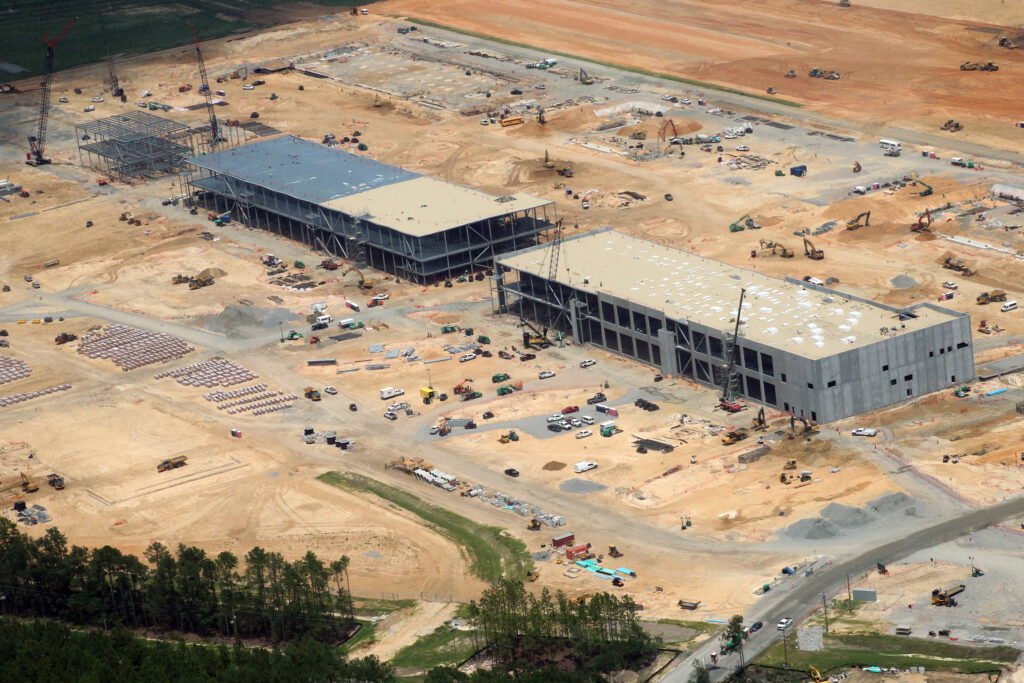
# Data Center Marketing Campaign Stumbles in North Carolina Despite Economic Promise
The data center industry's push to win over rural communities is encountering skepticism on the ground in North Carolina, where residents are questioning claims about economic benefits while grappling with real-world impacts on their infrastructure and utilities.
Mitzi Parrott, Kathie Hamm, and Bobbie Lequire, residents of Vance County in Henderson, North Carolina, encountered television commercials promoting data centers during prime time broadcasts and on streaming platforms like Sling. The advertisements highlighted economic advantages of data center development, but the messaging failed to resonate with households already contending with the sector's footprint in their region.
The disconnect reflects a broader friction between how the data center industry markets itself and the lived experience of communities where these facilities operate. Data centers consume enormous amounts of electricity and water. A single large facility can demand as much power as a small city. This consumption strains water supplies and electrical grids, particularly in areas without robust infrastructure upgrades. Vance County, like much of rural North Carolina, depends on systems built for a different era of industrial demand.
The PR campaign's backfire in Vance County illustrates why the data center expansion narrative has become fraught. Tech giants and data center operators promote job creation and tax revenue. These claims hold surface appeal in economically disadvantaged rural areas. Yet residents increasingly recognize that while jobs exist, many require specialized training unavailable locally. Tax incentives frequently reduce the revenue that actually benefits schools and local services. Meanwhile, costs accumulate invisibly. Power demands spike electricity rates for existing residents. Water withdrawals can deplete aquifers. The infrastructure upgrades necessary to serve data centers get subsidized by taxpayers.
North Carolina has become a prime target for data center development, particularly in the Research Triangle region and surrounding counties. The state offers tax breaks, available land, and existing fiber optic networks. Vance County, economically distressed and rural, represents exactly the type of community that data center companies target with economic development pitches. The television commercials and social media posts attempting to build support reflect a calculated strategy to neutralize local opposition before it solidifies.
That strategy appears to be failing. Residents like Parrott, Hamm, and Lequire are comparing industry messaging against observable effects. They note power consumption increases, water usage during drought conditions, and traffic from construction equipment. They observe that promised jobs often go to workers brought from elsewhere rather than local residents. The glossy advertisements ring hollow against these realities.
The data center industry faces mounting scrutiny from environmental groups, water agencies, and local governments across the United States. Virginia, which hosts massive data center clusters, has begun implementing stricter water withdrawal limits. Iowa restricted some projects. Communities are demanding environmental impact assessments and binding commitments to infrastructure investment before approving new facilities.
Vance County residents are responding to their legitimate concerns with appropriate skepticism. The industry's blanket economic development messaging, repeated in television ads and social media posts, underestimates the sophistication of rural communities who have watched industrial promises fail to materialize before. The data center sector's PR push in North Carolina demonstrates how communities increasingly recognize the gap between corporate marketing and actual outcomes on the ground.