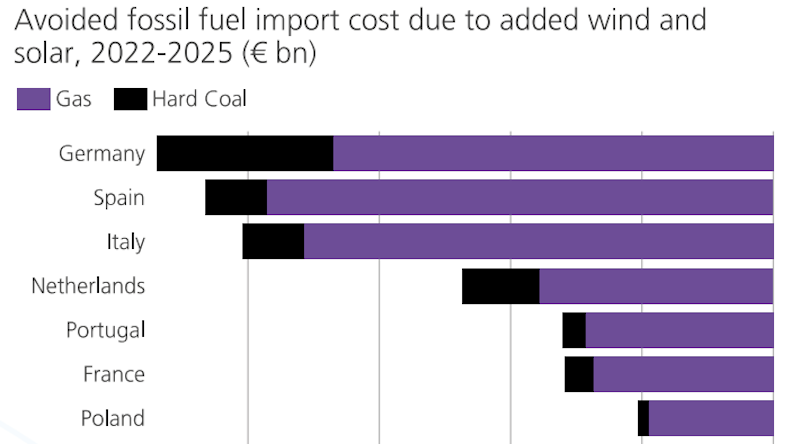
European nations have reduced fossil fuel imports worth tens of billions of euros annually through rapid deployment of wind and solar energy, according to data presented in the 75th Statistical Review of World Energy.
The analysis quantifies the economic benefits of the continent's renewable energy transition. Countries across Europe have displaced oil, natural gas, and coal purchases by expanding wind and solar capacity, creating direct savings on energy imports. These reductions represent a fundamental shift in Europe's energy security strategy, particularly following Russia's invasion of Ukraine and subsequent disruptions to natural gas supplies.
The findings emerge from BP's comprehensive Statistical Review, which tracks global energy production and consumption patterns. The report documents how renewable energy growth has fundamentally altered import dependencies across European economies. Specific figures on savings by individual countries appear in the review's analysis of import displacement costs.
Europe's renewable deployment accelerated significantly after 2022, driven by energy security concerns and climate commitments under the EU's Green Deal. Wind farms and solar installations now generate a growing share of electricity across the continent, reducing reliance on imported fossil fuels. Germany, Denmark, and Spain lead in wind capacity, while southern European nations have expanded solar installations.
The economic argument for renewables extends beyond environmental policy. Import reductions directly lower trade deficits and strengthen national balance sheets. Nations spending less on fossil fuel purchases redirect capital toward domestic renewable infrastructure investment, creating employment and industrial development within their borders.
These savings compound as renewable capacity continues expanding. Most European countries have committed to carbon neutrality by 2050, requiring continued transitions away from fossil fuels. The Statistical Review's data demonstrates that this transition delivers measurable economic benefits alongside emissions reductions.
The magnitude of import savings underscores a reality reshaping energy markets. Renewable energy is not merely an environmental imperative but an economic advantage, particularly for nations dependent on imported energy. Europe's experience offers a template for other regions facing both climate targets and energy security press