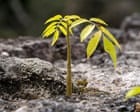
Guatemala's Maya Biosphere Reserve demonstrates that sustainable timber harvesting can coexist with forest expansion, contradicting the region's broader deforestation crisis. Local communities managing concessions within the reserve are selectively logging mahogany and other hardwoods while simultaneously increasing overall forest cover through natural regeneration and replanting.
The model operates through a concession system where indigenous and local groups hold harvesting rights across thousands of hectares. Strict regulations limit timber extraction volumes and require operators to maintain canopy cover and biodiversity. Harvesters remove individual mature trees rather than clear-cutting, leaving younger growth intact. Forest inventory data shows these managed areas are accumulating biomass, with sapling densities rebounding after selective logging.
This approach inverts conventional conservation economics. Rather than excluding local people from forests, the system creates direct financial incentives for protection. Communities earning sustainable income from timber have strong motivation to prevent illegal logging, agricultural conversion, and fires. Studies from similar community forestry models across Latin America document significantly lower deforestation rates in areas where local groups hold legal harvest rights compared to protected areas without community involvement.
Guatemala loses roughly 80,000 hectares of forest annually, driven largely by cattle ranching and subsistence agriculture. Yet within the Maya reserve's concessions, forest loss has slowed substantially. The contrast reflects a principle gaining traction among conservation agencies: nature is best protected by those whose livelihoods depend on it.
The model faces challenges. International demand for tropical hardwoods remains volatile. Verifying compliance with sustainable harvest limits requires robust monitoring. Climate change threatens forest regeneration rates. Neighboring communities outside concessions still convert forest to pasture.
However, the "green islands" created by these working forests offer a replicable framework for Central America's deforestation crisis. When protection generates wealth for local communities rather than imposing restrictions, forest conservation becomes economically rational rather than