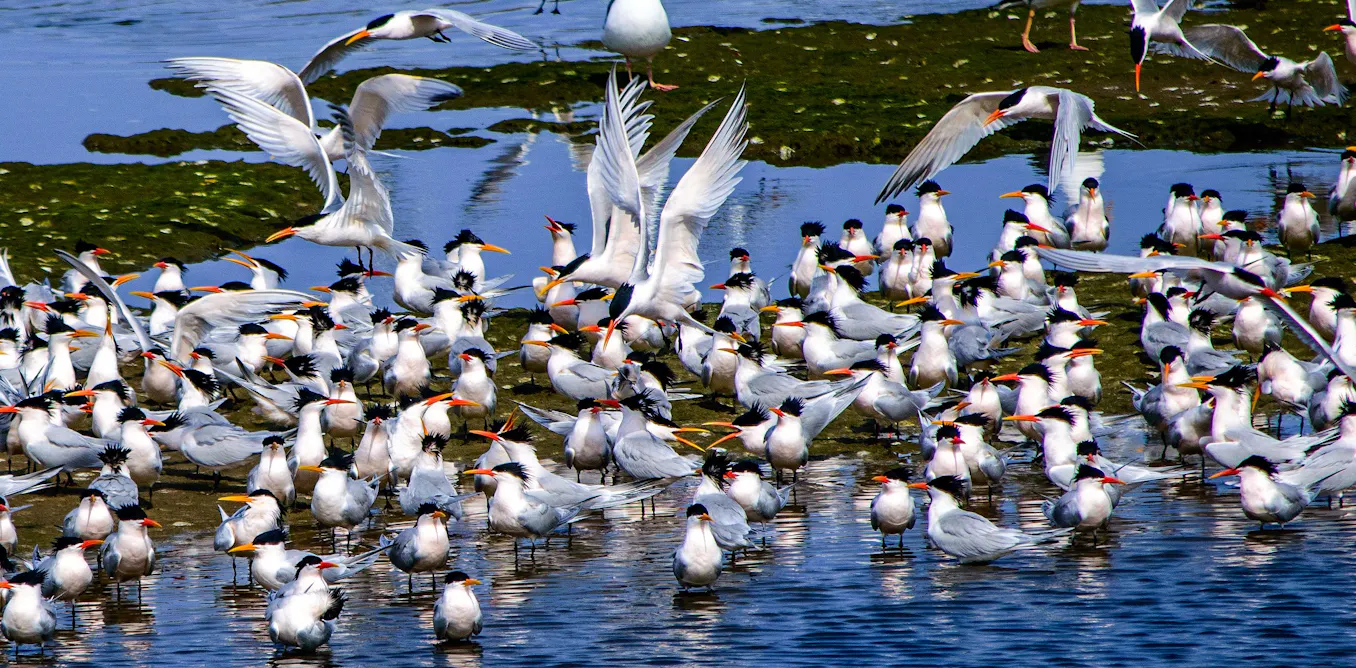
Australia's wildlife faces an unprecedented avian influenza crisis as the H5N1 strain spreads through wild bird populations with no containment strategy in place. The virus, which has devastated poultry operations globally, now circulates in native Australian species with minimal oversight or coordinated response.
The outbreak represents a fundamental shift from warning to active crisis. Wild birds cannot be vaccinated or quarantined at scale. Unlike domestic flocks, where culling and biosecurity measures can limit spread, free-flying populations carry the virus across state and territorial borders. Australia's fragmented wildlife management system lacks the surveillance infrastructure to track transmission in real time or predict where the virus will spread next.
H5N1 poses two concurrent threats. The immediate risk involves ecological collapse among vulnerable bird species. Seabirds, raptors, and waterbirds show high mortality rates when infected. A single outbreak site can devastate local populations with no recovery pathway. The secondary risk involves spillover to terrestrial mammals and potential human infection, though human transmission remains rare.
Australia's response relies on reactive monitoring rather than proactive containment. State agencies operate independently, creating gaps in data sharing and coordination. The federal government has provided limited additional funding or resources despite the outbreak's scope. No unified surveillance protocol exists to detect new infections across the continent's vast distances.
The window for preventing catastrophic spread has closed. Australia now must shift toward managed tracking and damage limitation. This requires immediate investment in wildlife surveillance networks, particularly around high-risk sites like coastal colonies and wetlands. Laboratories need capacity to process samples rapidly. Interstate communication protocols must enable real-time information sharing. Veterinary teams require resources to respond to outbreak hotspots.
The cost of inaction exceeds the cost of preparation. Without coordinated tracking, the virus will spread undetected until entire populations collapse. With it, Australia can document transmission patterns, identify vulnerable species