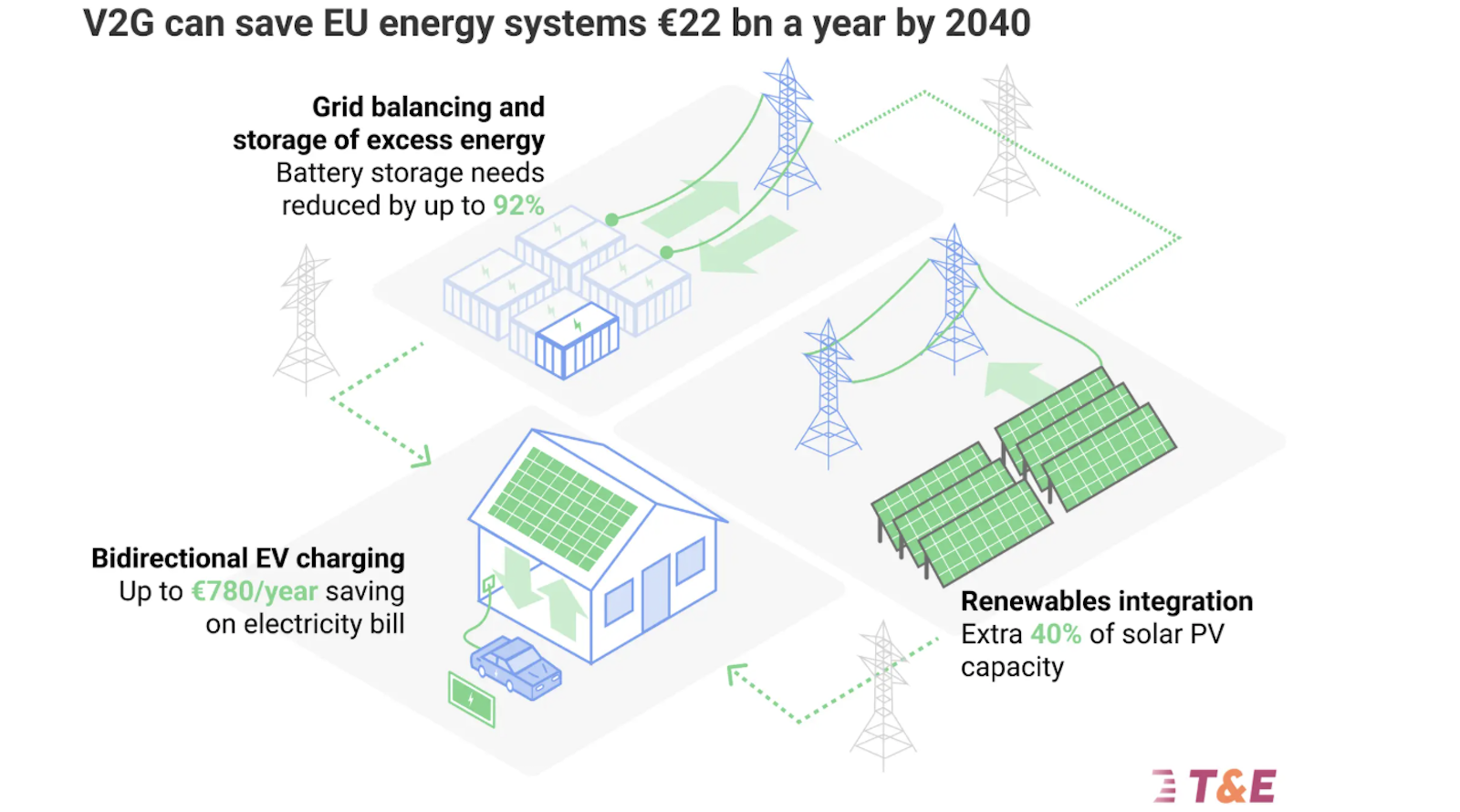
The European Commission's Electrification Action Plan positions direct electrification as Europe's primary mechanism for reducing energy demand, strengthening industrial competitiveness, and lowering energy costs. Transport & Environment, a Brussels-based advocacy group, conducted an in-depth review of the plan's implications across the sector.
The action plan prioritizes accelerating EV adoption across multiple vehicle categories. Cars, vans, and buses form the core of the transport electrification strategy, reflecting a shift from internal combustion engines to battery-electric powertrains. This approach addresses two interconnected crises: Europe's energy security concerns and its climate commitments under the European Green Deal.
Direct electrification offers efficiency gains over alternative pathways. Battery-electric vehicles convert roughly 77 percent of electrical energy to power at the wheels, while combustion engines achieve approximately 12 to 30 percent efficiency. Scaling EV manufacturing strengthens Europe's supply chains and reduces dependence on imported fossil fuels, lowering exposure to volatile global energy markets.
The plan recognizes that transport electrification alone requires synchronized infrastructure investment. Charging networks must expand across member states. Grid capacity requires upgrades to handle increased electricity demand. Power generation must shift toward renewable sources to realize emissions reductions.
For buses and commercial vans, electrification presents particular advantages. Municipal fleets operate predictable routes, enabling centralized charging infrastructure. Commercial vehicle electrification cuts operating costs through reduced fuel and maintenance expenses, offsetting higher upfront capital requirements over vehicle lifespans.
The Commission's framework signals regulatory momentum. EU targets require 55 percent emissions reductions by 2030 compared to 1990 levels. Transport accounts for roughly 27 percent of EU greenhouse gas emissions, making sector decarbonization essential for meeting climate obligations.
T&E's analysis examines how member states operationalize these targets through national