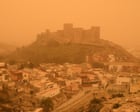
Saharan dust storms deliver thousands of tonnes of fine sand across Europe with increasing frequency, and researchers now focus on the microbial cargo this dust carries. The phenomenon sometimes produces "blood rain" marked by visible red streaks, but the real concern extends beyond appearance to what arrives in the soil.
Scientists at the University of Lisbon launched genomic mapping studies to understand how imported microorganisms alter European soil microbiomes. Southern Portugal sits along a major deposition corridor for Saharan dust, making vineyards there an urgent research priority. The dust events transport live microbes alongside mineral particles, raising questions about agricultural consequences.
The core issue centers on soil fertility and crop yields. When foreign microbes colonize agricultural land, they reshape existing microbial communities that regulate nutrient cycling, water retention, and plant health. Wine production in Portugal depends on soil chemistry and microbial function, making vineyards particularly vulnerable to disruption. Researchers worry that Saharan microbes could either compete with native species or introduce pathogens that damage vines.
Dust transport from North Africa to Europe intensified over recent decades. Climate change, desertification, and shifting wind patterns increase both frequency and scale of these events. A single major dust storm can deposit massive quantities of material across multiple countries within days. This acceleration means more microorganisms reach European soils more often.
The research explores whether blood rain events create measurable changes in soil microbial composition. Initial work involves collecting dust samples during storms, analyzing their genetic fingerprints, and tracking how imported organisms establish themselves in recipient soils. Scientists monitor whether these microbes persist, spread, or die off after arrival.
Understanding these dynamics matters for food security. Portugal's wine industry generates billions in revenue annually, and any threat to vineyard productivity affects economic output. More broadly, similar risks affect wheat, olive, and citrus production across Mediterranean regions. Soil