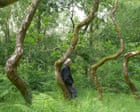
The Ash Dome, a living sculpture created by artist David Nash in the 1970s in Blaenau Ffestiniog, Wales, stands ravaged by ash dieback disease. The artwork, designed as an elegant circular arrangement of ash trees intended to mature across the 21st century, now displays pale twisted limbs and accumulated dead branches at its center.
Ash dieback, caused by the fungus Hymenoscyphus fraxineus, has swept across Wales and Britain since the early 2010s, decimating native ash populations. The disease reached this remote corner of Gwynedd within the past decade, transforming Nash's carefully engineered natural sculpture into what the diarist describes as an "elephant's graveyard."
The artwork represents a specific artistic vision: trees trained and shaped over decades to create a living monument. Nash, a renowned sculptor whose practice merges art with forestry and land management, planted the dome with the expectation that it would evolve gracefully across generations. That vision collided with a pathogen that has killed millions of ash trees across Europe.
Yet the Ash Dome offers a counterpoint to pure loss. New shoots emerge from some trunks, indicating the trees' capacity for regeneration despite infection. Ash trees display variable resistance to the disease, with some individuals surviving while others succumb. This biological variation suggests the dome may transform rather than simply disappear.
The Ash Dome embodies competing narratives about environmental change. It documents human ambition to shape nature across timescales beyond individual lifespans, while simultaneously revealing nature's vulnerability to novel pathogens spread through global trade. The sculpture now records both artistic intention and ecological disruption, becoming an unplanned monument to ash dieback itself.
As dead material accumulates and saplings push upward, the artwork enters an unforeseen chapter. The dome