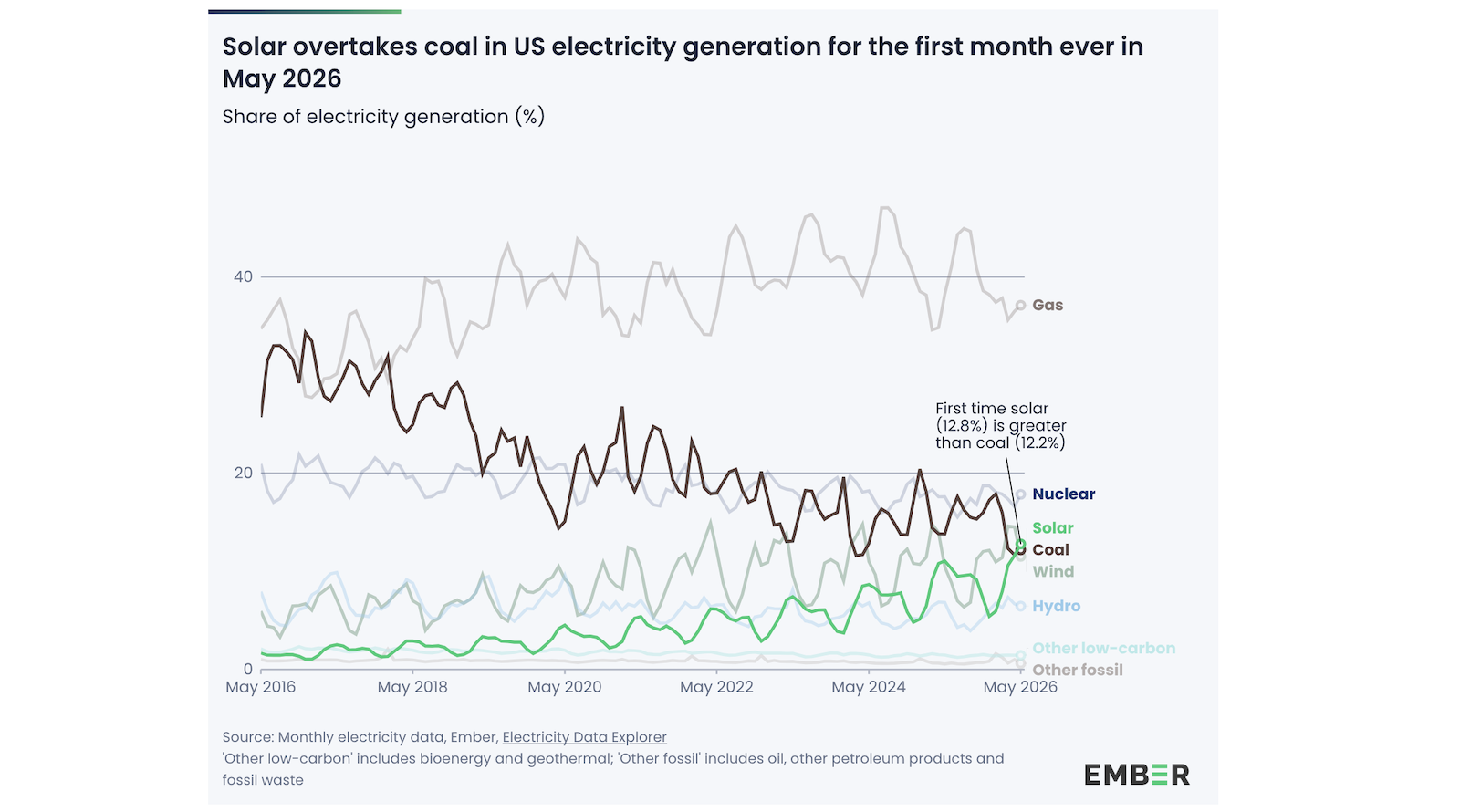
Solar power generation exceeded coal-fired electricity production in the United States during May 2026, marking the first full month in American history when solar outpaced coal on the power grid.
This milestone reflects the accelerating decline of coal as a generation source and the rapid scaling of solar capacity. Data from grid operators shows solar plants generated more kilowatt-hours than coal plants throughout May, a threshold the nation had approached but never crossed for a complete calendar month before.
The shift stems from two overlapping trends. Solar installations continue expanding across residential, commercial, and utility-scale projects. The U.S. added roughly 27 gigawatts of solar capacity in 2025 alone, according to industry tracking groups. Meanwhile, coal plants retire at an accelerating pace. Economic pressures from cheaper natural gas and renewable sources have pushed numerous aging coal facilities offline over the past five years. Coal currently supplies roughly 16 percent of U.S. electricity, down from 50 percent in 2005.
Solar now accounts for approximately 6 to 7 percent of national generation, up from less than 1 percent a decade ago. Geographic distribution matters. States including California, Texas, and Florida drive solar adoption through favorable solar resources, state renewable energy mandates, and declining installation costs. Battery storage systems increasingly complement solar farms, smoothing generation variability and extending output into evening hours when demand peaks.
Electricity grid operators report manageable integration challenges from solar's variable output. Existing natural gas plants and hydroelectric capacity provide flexible generation to balance supply. Wind power, which surpassed coal in 2019, now generates roughly twice as much electricity as solar nationally.
Energy analysts project solar will continue displacing fossil fuels. If current deployment rates persist, solar could supply 10 percent or more of U.S. electricity within five years. Coal retirements will likely accelerate further as nuclear