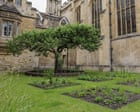
Cambridge researchers have recreated John Ray's 17th-century garden from the 1650s, restoring the botanical space where the foundational naturalist first systematized plant study. Ray, who coined "petal" and "pollen" and earned recognition as the father of natural history, established this garden while serving as a college tutor at Cambridge.
The recreation honors Ray's methodical approach to botany, which helped establish modern biology's empirical framework. His work cataloging and classifying plants departed from earlier, less rigorous observation. The garden project connects contemporary scholars directly to the physical space where Ray began his systematic investigations.
Ray's contributions extended beyond terminology. His botanical practices emphasized careful observation and categorization, approaches that shaped how naturalists studied living organisms for centuries. The 1650s garden represented an early instance of plants being studied not merely for medicinal or ornamental value, but as objects worthy of scientific analysis in their own right.
The Cambridge reconstruction serves both historical documentation and educational purposes. By restoring the garden's layout and plant selections based on available historical records, researchers create a tangible connection to Ray's methods and intellectual environment. This allows visitors and scholars to understand the practical dimensions of 17th-century natural history.
Ray's career spanned decades of field observation and publication. His botanical work influenced Linnaeus and other naturalists who built modern taxonomy. Yet the Cambridge garden project focuses specifically on his formative years, when he developed the observational habits that would define his life's work.
The initiative reflects growing recognition that scientific history requires understanding both intellectual contributions and their material contexts. Gardens themselves become archives of knowledge production, revealing how scholars organized, viewed, and understood the natural world. Ray's garden reconstruction demonstrates that environmental history and the history of science intertwine. The physical space where a naturalist worked shaped his discoveries just as his discoveries transformed how people perceived gardens and plants.