Earth will pass 1.5°C of warming by 2030, making the 2015 Paris Agreement target no longer achievable. The world faces climate overshoot and will head toward even higher temperatures.
A September report from the United Nations Environment Programme examined whether net-negative emissions could pull carbon dioxide back out of the atmosphere and return Earth to safer temperatures. The experts noted this approach would rely on sustained net-negative emissions, likely to be slow and uncertain.
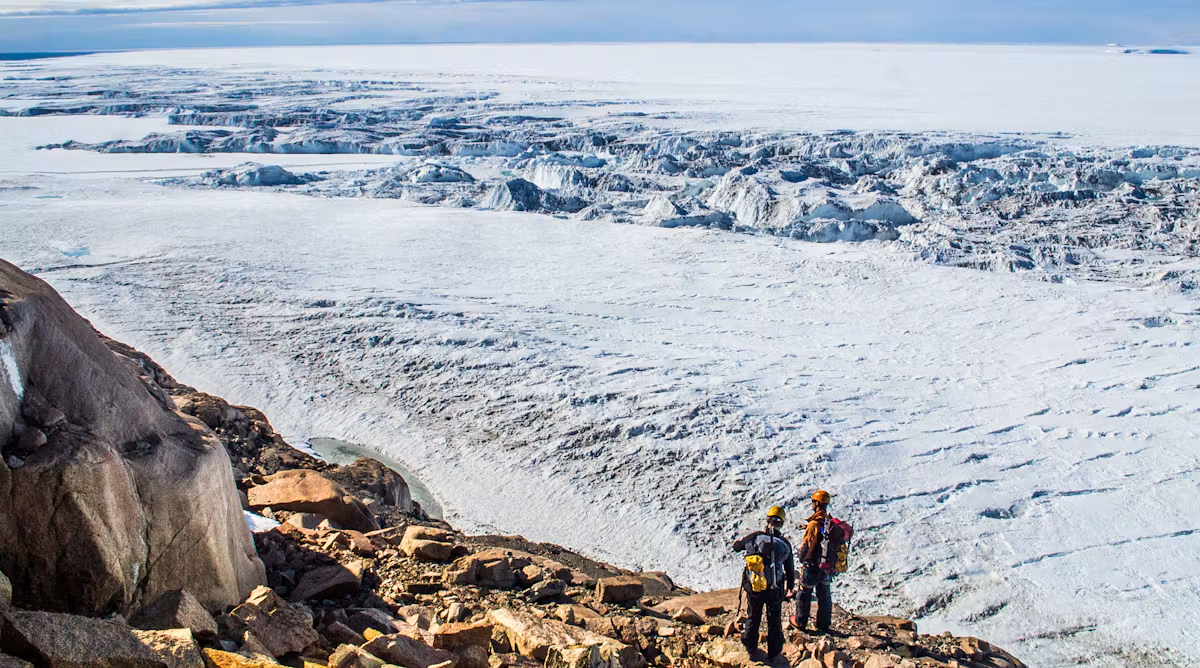
New research shows the world's ice will continue melting even if net-negative emissions are reached quickly. Many parts of the cryosphere have long memory. If glaciers and ice sheets hit critical thresholds, they will lock in centuries of sea-level rise regardless of whether emissions become net-negative.
Sea ice, snow, and permafrost are already outside the previously stable climatic envelope, meaning losses may be irreversible. Land ice as a whole has not yet crossed into unsafe territory, but because land ice responds slowly, enough losses are now locked in to cause dangerously advancing sea levels by the end of the century.
Almost 90% of the world's land ice sits in Antarctica. Research published this year shows current rates of Antarctic ice loss strongly predict its contribution to sea level rise over the next three to five decades, after which it may accelerate.
Glaciers are retreating at accelerating rates across nearly every part of the planet. Switzerland's glaciers lost 5.5% of their ice this year alone. Since 2021, almost 20% of these glaciers have melted. Melt rates between 2022-26 are more than double any five-year period previously monitored. Globally, glaciers are predicted to lose about 40% of their current mass even if global temperatures stabilize at current conditions.
In August, over 130 million cubic metres of rock and ice broke away from Langtang Lirung in Nepal. The resulting ice avalanche triggered devastating flooding, leaving thousands dead or missing. Melting permafrost and glacier retreat destabilized the mountain slope.
A new United Nations report released this month states that very rapid emissions cuts could allow the cryosphere to remain within a safe operating space, with sea level rise impacts reduced or spread across centuries or millennia.
Researchers are calling for the health of the cryosphere as a whole to be tracked and reported on under the planetary boundaries framework, which lays out nine boundaries for processes keeping Earth systems stable.