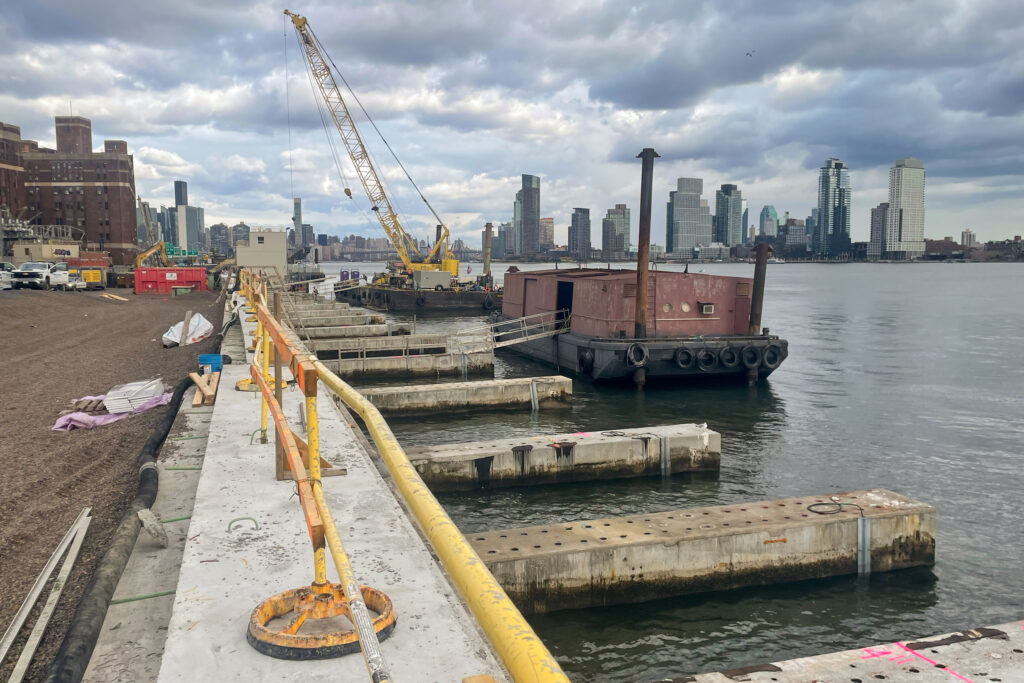
New York City has completed flood protection infrastructure for lower Manhattan as part of the East Side Coastal Resiliency Project, which neared completion protecting approximately 110,000 residents from coastal flooding.
The project, which began construction in 2020 and is expected to finish in 2027, raised sections of East River Park by 8 to 10 feet and installed floodwalls, berms and movable floodgates along the waterfront. The system is designed to protect against flooding up to 16.5 feet above sea level, with an additional two feet of protection built in, bringing the total to 18.5 feet, according to Joseph G. Lione, associate commissioner for coastal resiliency at the Department of Design and Construction.
The 1.45 billion dollar project protects the barrier with underground steel structures and concrete walls. A 2-foot-thick concrete wall anchors to steel sheets or large underground pipes driven into the ground, depending on location. Engineers used jet grouting, which injects cement-based material into soil, to prevent water seepage beneath the wall, as cumulative damage from repeated flooding could erode the ground supporting the structure over time.
More than half the park has reopened to the public. The city was required to keep at least 41 percent of the park open during construction. The rebuilt park includes a continuous bike lane and bridges for pedestrian access from the Lower East Side. The city plans to plant 2,000 trees, with about 600 planted so far.
The project faced community opposition beginning in 2018 when the city announced a redesign requiring extensive tree removal. Some residents remain concerned about the lack of shade in the rebuilt park. Amy Burkoff, a retired biology professor, documented that 28 trees measured between 2015 and 2021 showed growth, with average trunk diameter increases of slightly more than two inches. "There is no evidence that these trees are sick and dying," Burkoff said.