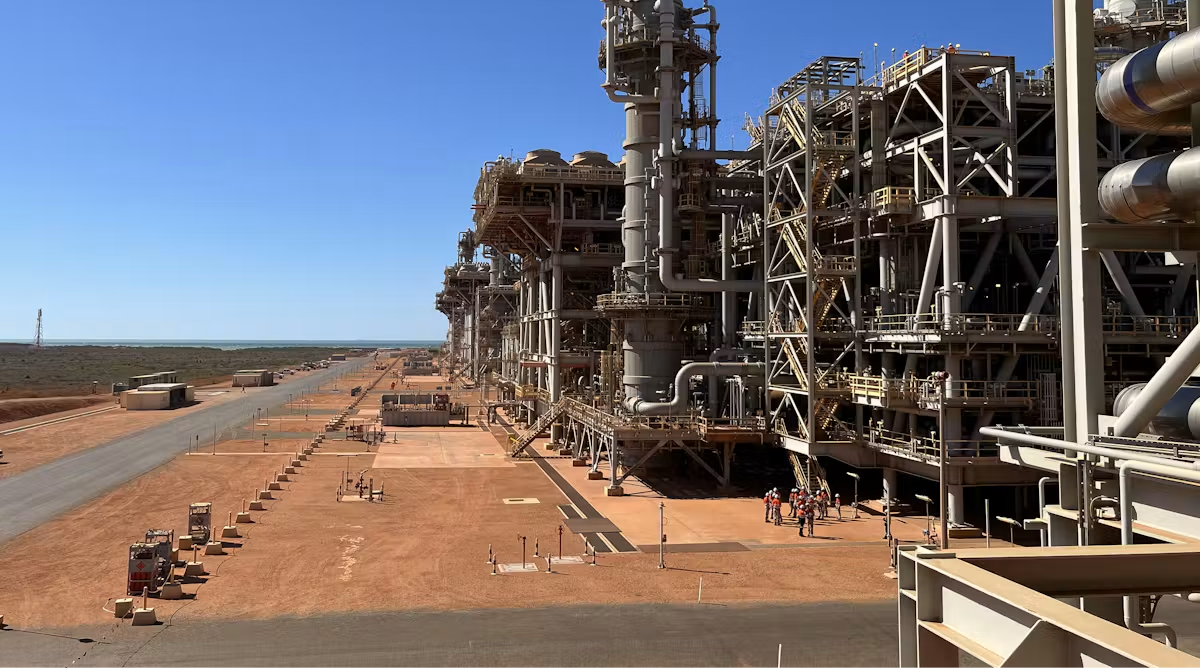
Australia's federal government implemented a domestic gas reservation scheme requiring exporters to reserve up to 20% of their production for the domestic market beginning in 2028. The Australian Energy Regulator will set the exact percentage for each exporter, with a target of achieving a 10% supply surplus.
The scheme exempts gas committed under existing contracts, other domestic reservation arrangements, or cases involving infrastructure constraints. The policy aims to increase domestic gas supply, improve energy security, and reduce prices by increasing competition among suppliers.
Gas exports from Australia have historically proceeded with limited government control over domestic supply. The east coast experienced periods of tight supply and high prices. Gas serves households, electricity generation, and industries including manufacturing, chemicals, fertilisers, and food processing.
The scheme does not set gas prices directly. Instead, it seeks to lower wholesale prices by increasing available supply and competition. Retail prices will still depend on retailer contracts, infrastructure costs, and market conditions. The scheme does not address transportation costs from exporters' gas fields or processing facilities to the domestic market.
Gas producers have raised concerns that lower prices could reduce investment incentives for new production. Western Australia has operated a domestic reservation policy since 2006. A 2022 Senate inquiry found Western Australian domestic gas prices were less than half those on the east coast, attributing this substantially to the reservation policy.
Experts identified design complexity as a potential issue. If rules prove opaque, exporters could reallocate existing supply rather than make additional gas available to consumers. Success will depend on whether the scheme genuinely delivers new gas supply without discouraging future investment.