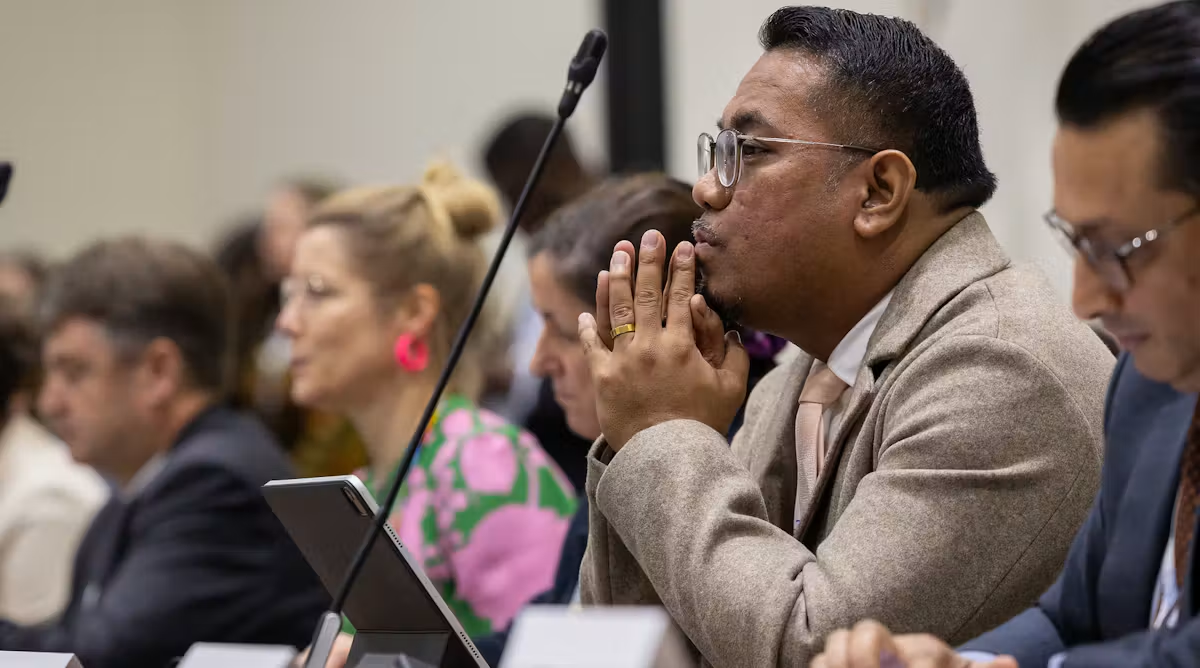
At COP31 in Antalya, Turkey, government officials are negotiating climate policy amid energy crises and Middle East conflicts that have destabilized fossil fuel markets and prices. A U.N. report projects global warming will overshoot the 1.5 degrees Celsius target countries agreed to pursue a decade ago.
Countries that expanded renewable energy have weathered the energy crisis better than those dependent on imported fossil fuels. Pakistan avoided more than $12 billion in fossil fuel imports over six years through rapid solar expansion, with forecasts suggesting $6 billion more in savings by year's end. Spain, relying more on solar than natural gas compared to other European nations, kept electricity prices lower than more exposed systems like Italy's.
The co-presidents of COP31 from Turkey and Australia proposed a global target of 35% of all energy use from electricity by 2035, covering transportation and industry. The International Energy Agency estimates this could save fossil-fuel-importing countries $400 billion annually. At global averages, $100 spent on electricity powers a car three times farther than $100 of gasoline. Reaching the target could cut energy emissions across transportation, buildings and industry by up to 55% by 2035.
The International Renewable Energy Agency forecasts that at least 78% of electricity must come from renewable sources to keep warming under 1.5 degrees Celsius. Electrification requires infrastructure costs and supportive policies.
Brazilian President Luiz Inácio Lula da Silva called on COP31 leaders to advance fossil fuel transition work from Brazil's hosting of COP30. Brazil announced it will host a future conference on fossil fuel transition, following the first in Colombia in April 2026 and a second planned for 2027 in Tuvalu. Brazil achieved its greatest one-year reduction in deforestation and produced three road maps for transitioning away from fossil fuels, ending deforestation, and securing $1.3 trillion in financing for developing countries.
California Governor Gavin Newsom and 18 House members attended COP31. President Donald Trump withdrew the U.S. from the U.N. Framework Convention on Climate Change and the Paris Agreement, and sent no formal delegation to the talks.
A coalition of oil-producing countries led by Saudi Arabia opposed any mention of Brazil's fossil fuel road map in the official COP31 agreement on the opening day.