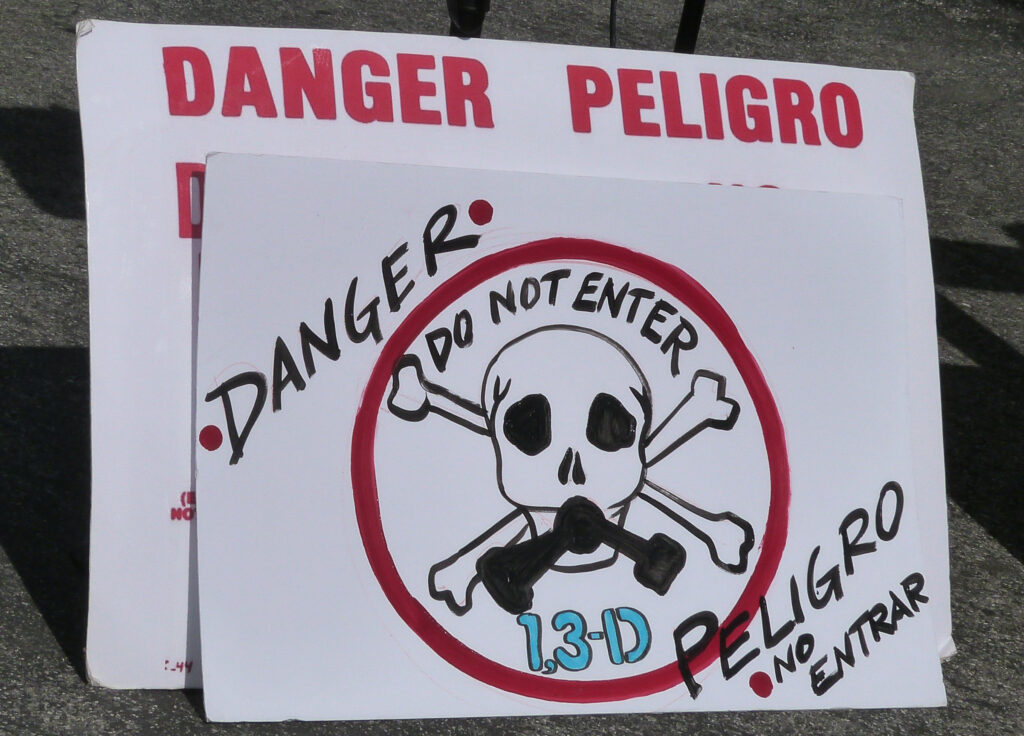
California regulators voided nine months of air-monitoring data for two pesticides used widely on farms across the state. The Department of Pesticide Regulation said the state laboratory that analyzes its samples had to recall results for 1,3-dichloropropene, or 1,3-D, and methyl bromide collected from October 24, 2025, through June 30, due to quality-control problems.
The reference standards used to measure chemical concentrations in the samples had degraded between 18 percent and 96 percent over the nine-month period, according to the agencies.
Methyl bromide, a potent neurotoxin banned by the Environmental Protection Agency for most uses in 2005 to protect the ozone layer, causes severe neurological disease, multisystem organ failure, and death. California farmers apply about 1.6 million pounds of the gas each year under a critical use exemption. The state applies more than 7 million pounds of 1,3-D annually, a cancer-causing pesticide banned in 40 countries. Both chemicals drift from treated fields and can expose workers and nearby residents to toxic air.
The lost data undermines efforts to assess whether new state regulations protect agricultural workers. A rule for workers that took effect in January set a safety target five times higher than scientists at the Office of Environmental Health Hazard Assessment said reduces lifetime cancer risk from 1,3-D exposure.
Sellen of Californians for Pesticide Reform said the data loss prevents auditing the regulation's effectiveness. A draft report released in October showed that after a residential rule took effect in 2024, both applications and emissions of 1,3-D rose following a multi-year decline.
Chemist Susan Kegley said regular quality-control tests are standard laboratory practice. Caroline Cox, a retired pesticide scientist, expressed concern that it took nine months to detect the problem. She said state air monitors detect 1,3-D emissions above safe levels at some point. The state takes only one 24-hour sample per week, providing limited visibility into actual exposure patterns.
DPR proposed replacing lost data with modeled values. Sellen said the modeling methods lack clear documentation and that independent review confirmed the model underestimates higher concentration values.