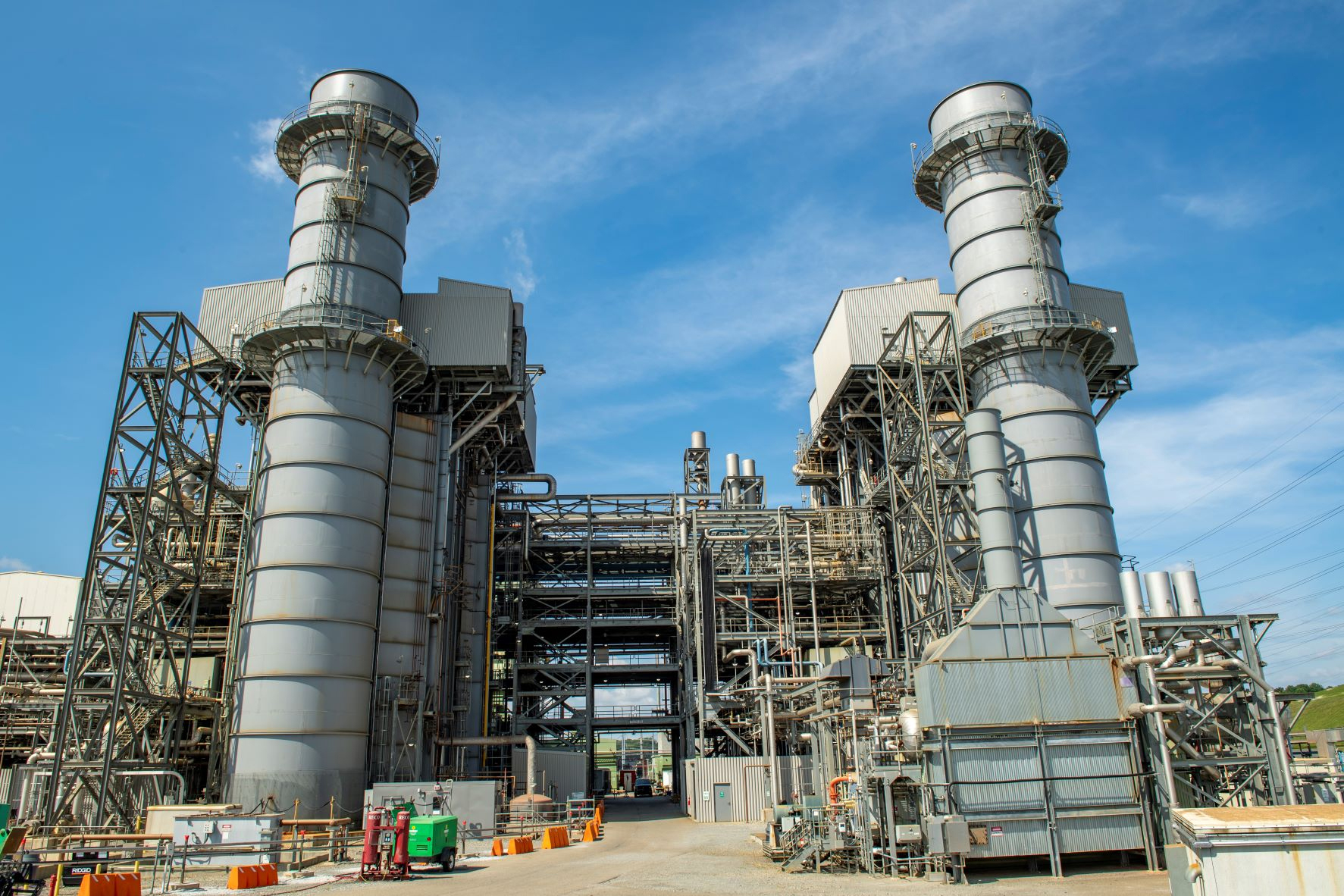
Georgia Power is planning to add between 2,000 and 6,000 megawatts of new electric capacity by 2032 and 2033 to meet demand from data centers and electrification. The utility is considering natural gas and battery storage to meet those needs.
How much each resource counts toward that expansion depends on a calculation called Effective Load Carrying Capability, or ELCC. The metric measures how much capacity a power resource can reliably contribute to the grid.
Natural gas typically has an ELCC near 60 to 80 percent. Solar and wind projects without battery storage range from 4 to 40 percent. With batteries, renewables can reach around 95 percent ELCC, though that value drops as more batteries are added to the grid.
Georgia Power previously assigned battery storage an ELCC of 95 percent for its first 3,000 megawatts of capacity, declining to 75 percent for the next 3,000 megawatts and 50 percent beyond that. Based on current and planned battery capacity on the grid, the utility's own earlier calculations suggest the current ELCC should be around 75 percent.
In its latest procurement, however, Georgia Power is using an ELCC of just 20 percent for battery storage, according to Bob Sherrier, an attorney with the Southern Environmental Law Center and the Advanced Power Alliance. That means a 1,000-megawatt battery project would count as just 200 megawatts toward capacity needs, while a 1,000-megawatt natural gas plant with an 80 percent ELCC would count for 800 megawatts.
Georgia Power told Inside Climate News that its calculations have been consistent and committed to accurate evaluations of all resources but did not provide details on the methodology.
Sherrier called the change a "thumb on the scale for gas," arguing it makes battery storage artificially less valuable. "Batteries are going to look significantly more expensive than gas," he said. "We know that is not the case anymore." Recent cost estimates show utility-scale solar can be cheaper than new natural gas generation.
For its 2029-2031 expansion, Georgia Power planned roughly 6,000 megawatts from natural gas along with solar and battery projects. More than 6,000 megawatts of natural gas capacity at full output year-round could produce an estimated 20 million metric tons of carbon dioxide equivalent annually, roughly equivalent to 4 million cars.
Georgia Power and regulators are expected to discuss which projects to move forward with early next year. The Southern Environmental Law Center and Advanced Power Alliance plan to push for a higher ELCC for batteries in the next expansion planning round, expected to begin in 2028.