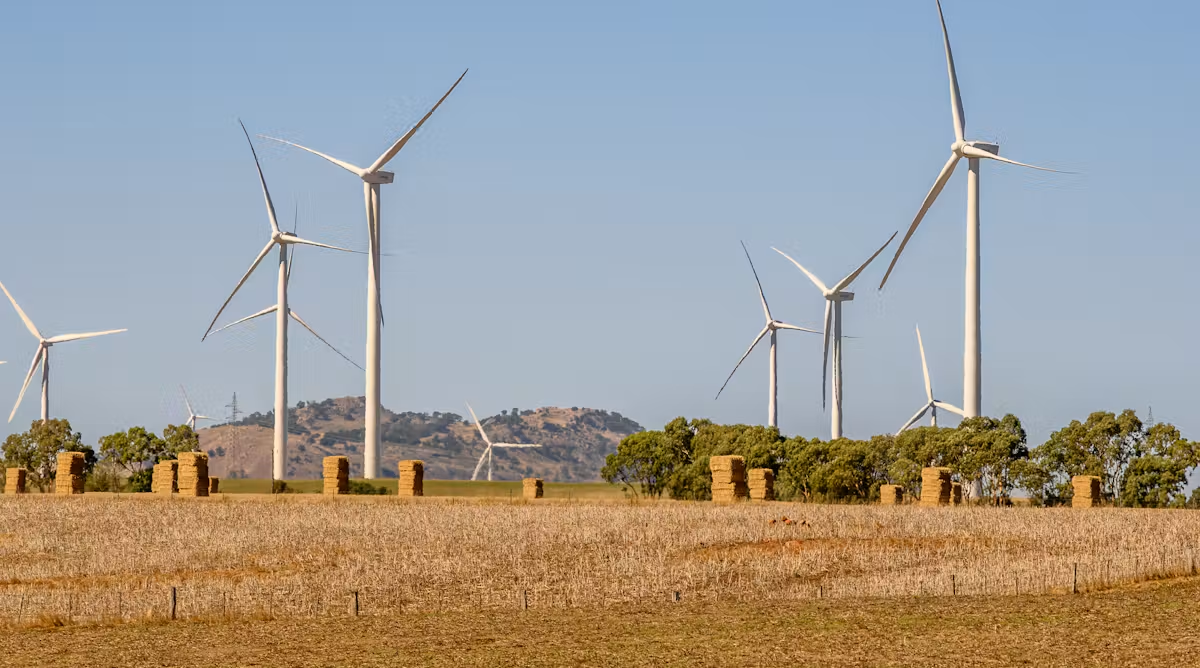
Australia's renewable energy transition is concentrating infrastructure in rural regions far from the cities that will consume the power. Wind farms, solar panels, and transmission lines are being built across farmland in communities hundreds of kilometres from major urban centres.
The Australian Energy Market Operator estimates that net zero emissions will require $106 billion in new investment by 2050, including 6,000 kilometres of new transmission lines. Clean energy projects worth about $32.5 billion were financed or under construction in the first half of this year, according to the Clean Energy Council.
Regional communities face the local burden. Projects impact farmland and load roads. They create pressure on housing and services. States are managing this differently. Victoria released community engagement and social value guidelines that set minimum expectations for engagement and benefits but do not specify a dollar-per-megawatt figure, unlike New South Wales. The Victorian guidelines only become mandatory in mid-2027 and do not cover critical mineral projects.
Community opposition has stalled some projects. Sustained backlash from farmers delayed the Victoria to NSW Interconnector West transmission project in north-west Victoria. The state government abandoned plans for a renewable energy zone around Dookie after intense community backlash.
Research by the Australian Public Policy Institute, based on workshops and interviews in three regional NSW towns, found that affected communities broadly support the shift to clean energy. However, the research identified three major obstacles. Community consultation was inconsistent and inadequate, with limited opportunities for communities to influence planning. Communication and planning lacked transparency and local focus. Communities experienced significant social and economic impacts, and benefit-sharing was viewed as inequitable and lacking long-term value.
Trust in industry, government and the planning system was fragile across all sites. The research recommended minimum, enforceable engagement standards for all major energy projects; government-led development of benefit-sharing frameworks embedded in planning regulations; more support for communities negotiating project benefits; and place-based planning tailored to local needs.