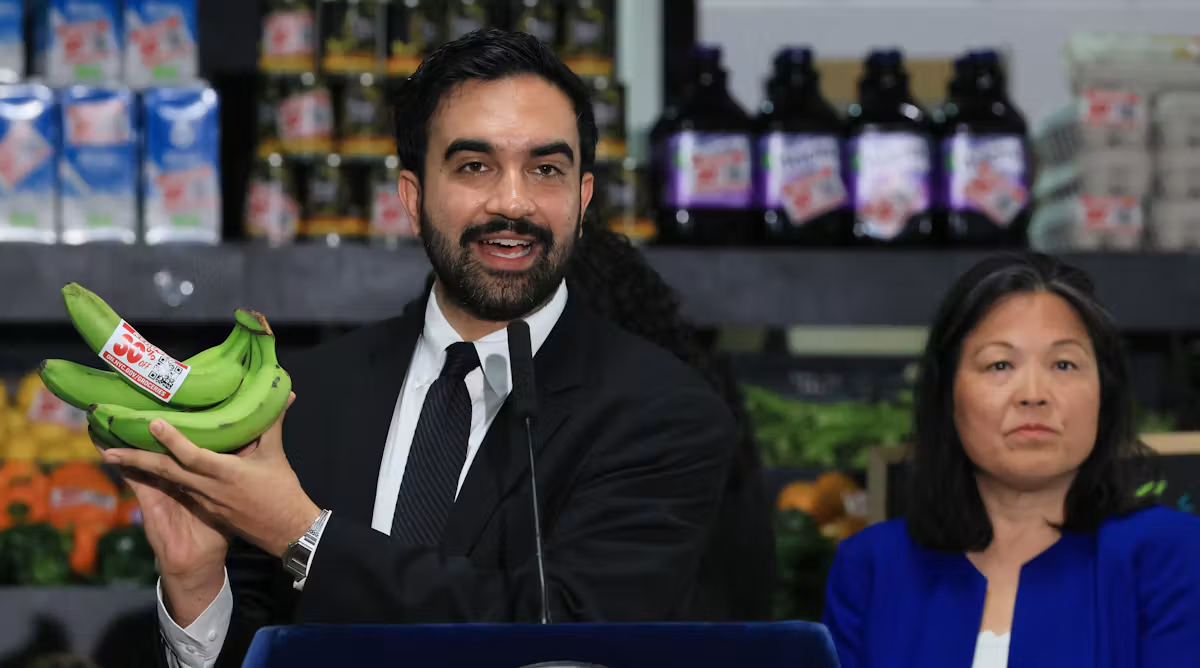
New York City is moving to open five city-run grocery stores, with the first scheduled for the Hunts Point neighborhood of the South Bronx in 2027 and a second planned for East Harlem. Mayor Zohran Mamdani announced the plan in May 2026.
The city has committed $70 million to develop the stores. They will operate on rent-free municipal sites, be managed by private operators, and price essential foods 30 percent below typical retail prices. The stores will be open to all residents.
Five stores are unlikely to substantially change grocery prices across a city with nearly 1,000 supermarkets and more than 8 million people. But they could reduce grocery bills for shoppers in lower-income neighborhoods where they open.
The initiative has drawn fierce opposition from independent grocers, supermarket trade associations, and a coalition representing immigrant-owned food businesses. Some warn that a publicly subsidized competitor could draw customers away and put local retailers out of business.
The stores represent a different model of public investment. Unlike existing programs such as the city's FRESH initiative, which uses tax breaks and zoning incentives to encourage private supermarket development, the municipal stores make affordability an explicit condition. They will also carry distinct branding so shoppers know the government's role in providing affordable food.
The stores' impact on nearby retailers remains uncertain. However, East Harlem's Pathmark supermarket offers one example of coexistence. Between 2000 and 2015, the number of small grocery stores and bodegas in East Harlem increased from 100 to 126, while supermarkets rose from 10 to 18.
Government-supported food retailing has precedent in New York. In 1934, Mayor Fiorello La Guardia's administration began selling discounted milk to low-income families, though grocers protested unfair competition. Independent merchants similarly objected in the 1990s when the city subsidized a Pathmark supermarket in East Harlem.