Global carbon dioxide emissions continue rising despite three decades of United Nations climate negotiations, with scientists reporting that average global temperature has reached a record high of more than 2 degrees Celsius above preindustrial levels in recent days. Carbon dioxide emissions in 2026 are on track to reach another record high.
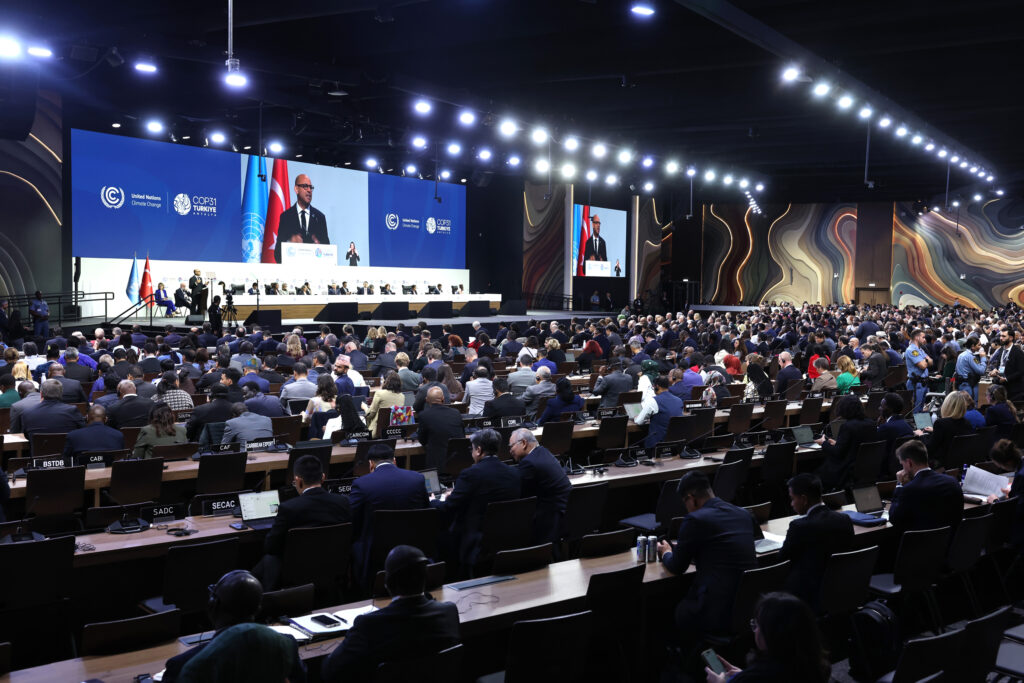
COP31, the latest climate conference, opened Monday in Antalya, Turkey, against a backdrop of diesel fumes and continued fossil fuel infrastructure, mirroring a pattern seen at previous conference sites including coal-dependent Poland and oil-producing Azerbaijan.
Marc Hudson, an unaffiliated climate researcher in the United Kingdom, traced the problem to decades of missed opportunities, political compromises and broken promises. Scientists understood the looming problem nearly 70 years ago. In 1957, Charles Keeling began measuring atmospheric CO2 rise, and a landmark research paper challenged the assumption that oceans could absorb fossil fuel emissions.
By 1985, scientists at an international climate conference in Austria warned that rising CO2 levels could produce climate warming greater than any in human history. The Intergovernmental Panel on Climate Change issued its first major assessment in 1990, spurring United Nations action.
The U.N. Framework Convention on Climate Change negotiations began in 1990. At that point, about 10 industrialized countries were responsible for about 80 percent of all historic CO2 emissions. The United States, led by George H.W. Bush, a former fossil-fuel industry executive, worked with Saudi Arabia and other Gulf oil and gas exporters to ensure the agreement remained weak. France and other European countries pushed for binding emission-reduction timetables, but the U.S. threatened to boycott the 1992 Rio Earth Summit unless the language was watered down. References to binding cuts were removed before the U.S. became a signatory.
The U.N. Framework Convention included an agreement to stabilize emissions at 1990 levels. At COP1 in Berlin in 1995, delegates acknowledged this framework alone would not solve global warming and agreed to continue meeting for a follow-up deal with quantifiable emission-reduction targets.
Joanna Depledge, a climate diplomacy researcher at the University of Cambridge, said the U.S. remained reluctant to accept an agreement putting the onus on developed countries to reduce emissions first and reluctant to assume financial obligations toward developing countries. This worldview has continued shaping the climate talks for 30 years.
Two years after COP1, the Kyoto Protocol with obligatory emissions reductions for industrialized countries was adopted at COP3. Just before the conference, the U.S. Senate passed the Byrd-Hagel Resolution by a vote of 95–0, declaring it would not ratify the agreement.