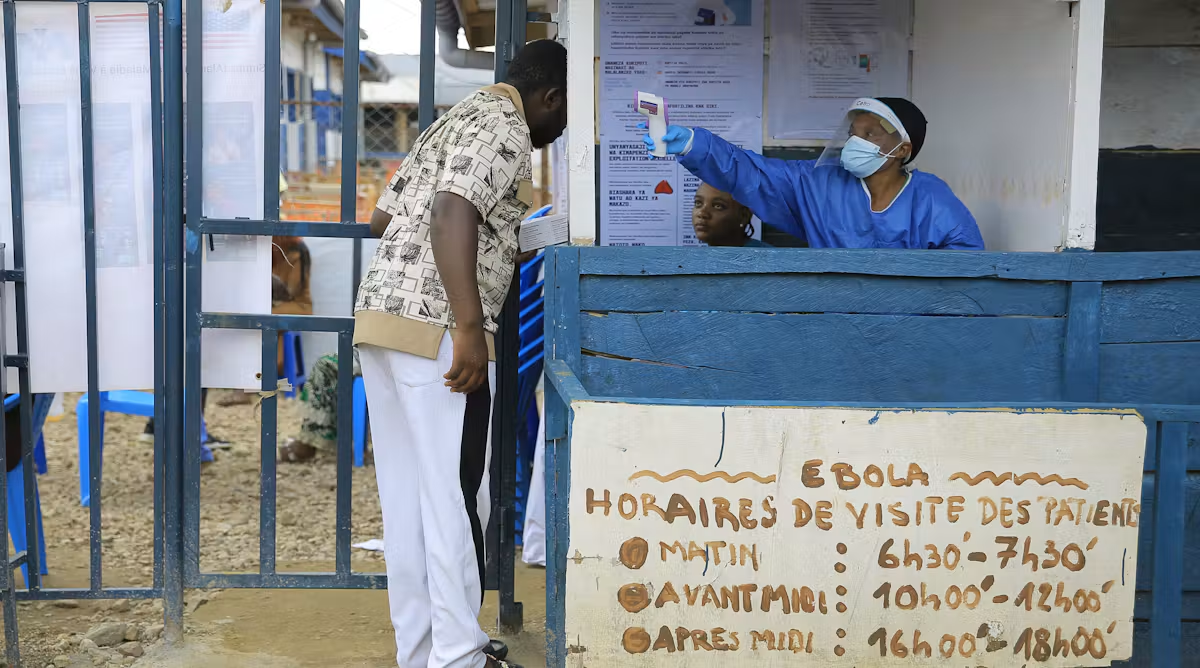
The Ebola outbreak in the Democratic Republic of Congo, declared in May 2026, has grown to 10,305 confirmed cases and 4,996 deaths across five countries as of October 28, 2026, according to the U.S. Centers for Disease Control and Prevention. This makes it the second-largest Ebola outbreak on record, after the 2014-16 West African epidemic.
The current outbreak is caused by the Bundibugyo virus, for which no vaccine or specific treatment is currently approved. The World Health Organization warns that late detection, deaths outside health facilities, and sustained transmission in the DRC remain serious concerns.
International contributions have been announced. In September 2026, the United States reported $887 million in Ebola-related health and humanitarian assistance. The U.K. announced roughly £78 million ($104 million). The World Bank described $426.6 million in current and planned financing for the DRC and neighboring countries. Africa Centres for Disease Control and Prevention reported nearly $3 billion in international pledges following a September mobilization effort.
However, pledges differ from supplies delivered or services provided, and contributions are arriving late in the outbreak. According to the WHO, massive cuts to international aid over the past year diminished a quicker response.
The DRC faces obstacles beyond health capacity. Insecurity and displacement due to ongoing conflict, poor roads, and lack of equipment prevent supplies and patients from reaching treatment centers and keep laboratories from receiving samples. In October, the World Bank reported that supported detection timelines in the DRC had improved, with new cases detected within one or two days by September, compared to a 10-day timeline early in the outbreak.
The Tumaini vaccine trial began in Bunia, DRC, in October 2026 as research toward a potential vaccine for Bundibugyo.
The outbreak follows human movement. In October, Kenya reported infections linked to a traveler from the DRC who passed through Uganda. Nigeria also reported an imported case around the same time.