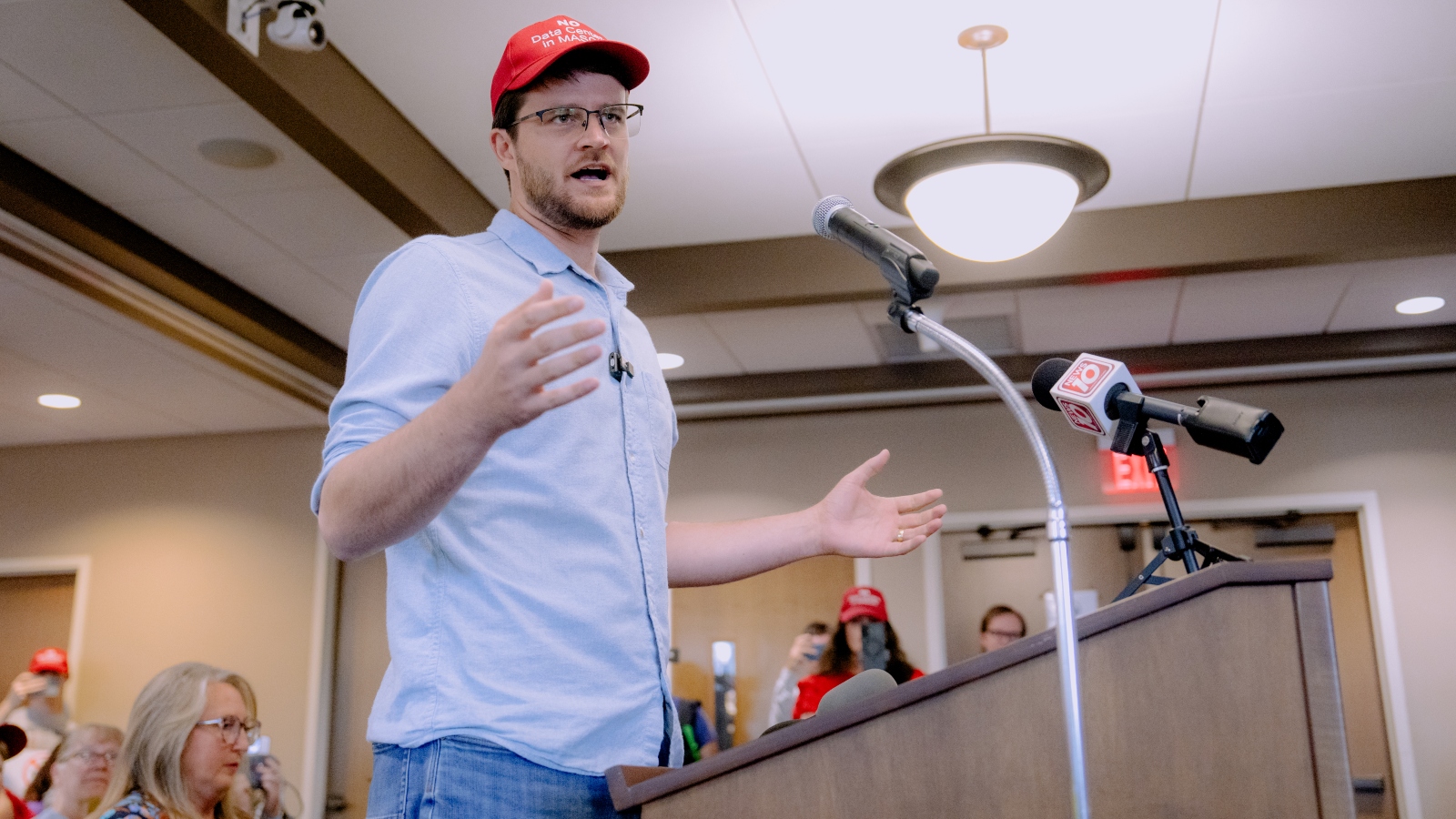
Marjorie Steele runs the Economic Development Responsibility Alliance, a Michigan activist group opposed to large-scale industrial development including solar farms, battery storage systems, and transmission lines. She founded the group to oppose a Chinese electric vehicle battery plant near Big Rapids and now focuses much of her work on data centers.
Earlier this year, Steele met William Lawrence, a Democrat running for U.S. Congress in Michigan's 7th District. Lawrence co-founded the Sunrise Movement, a prominent climate organization. During their meeting in Lansing, Steele detailed what she sees as negative consequences of clean energy development, including noise pollution and destruction of farmland. Lawrence listened and later appeared to repeat many of her points in an interview. The Economic Development Responsibility Alliance endorsed him, which the group rarely does for major-party candidates.
Lawrence, 36, co-founded Sunrise Movement in 2015 and organized a sit-in at Nancy Pelosi's office in 2018 calling for a Green New Deal. He won 40 percent of the vote in the August Democratic primary, beating two centrist candidates. He has since secured an endorsement from Democratic congressional leaders who opposed him in the primary.
The 7th District, which includes Lansing and suburbs, is a swing seat. Moderate Democrat Elissa Slotkin won it three times by slim margins before running for U.S. Senate in 2024. Republican Tom Barrett then won the seat and is running for reelection.
Local opposition in the district spans data centers, solar farms, battery storage systems, and transmission lines. Ed Rivet, who runs the Michigan Conservative Energy Forum, a right-leaning group advocating for clean energy, said opposition to data centers has bled over into opposition to other infrastructure. He called this "infrastructure fatigue" unfortunate because solar and battery storage "will have tangible benefits for customers in terms of cost, reliability, and cleaner energy."
Michigan aims to transition its power grid fully to clean energy by 2040. After local governments passed zoning laws banning solar farms, the state legislature in 2023 preempted those statutes, allowing developers to apply for direct state approval. Assembly Solar, the first project permitted under this state law, finished construction on the eastern edge of Lawrence's district. Lawrence criticized the state policy in a radio appearance.