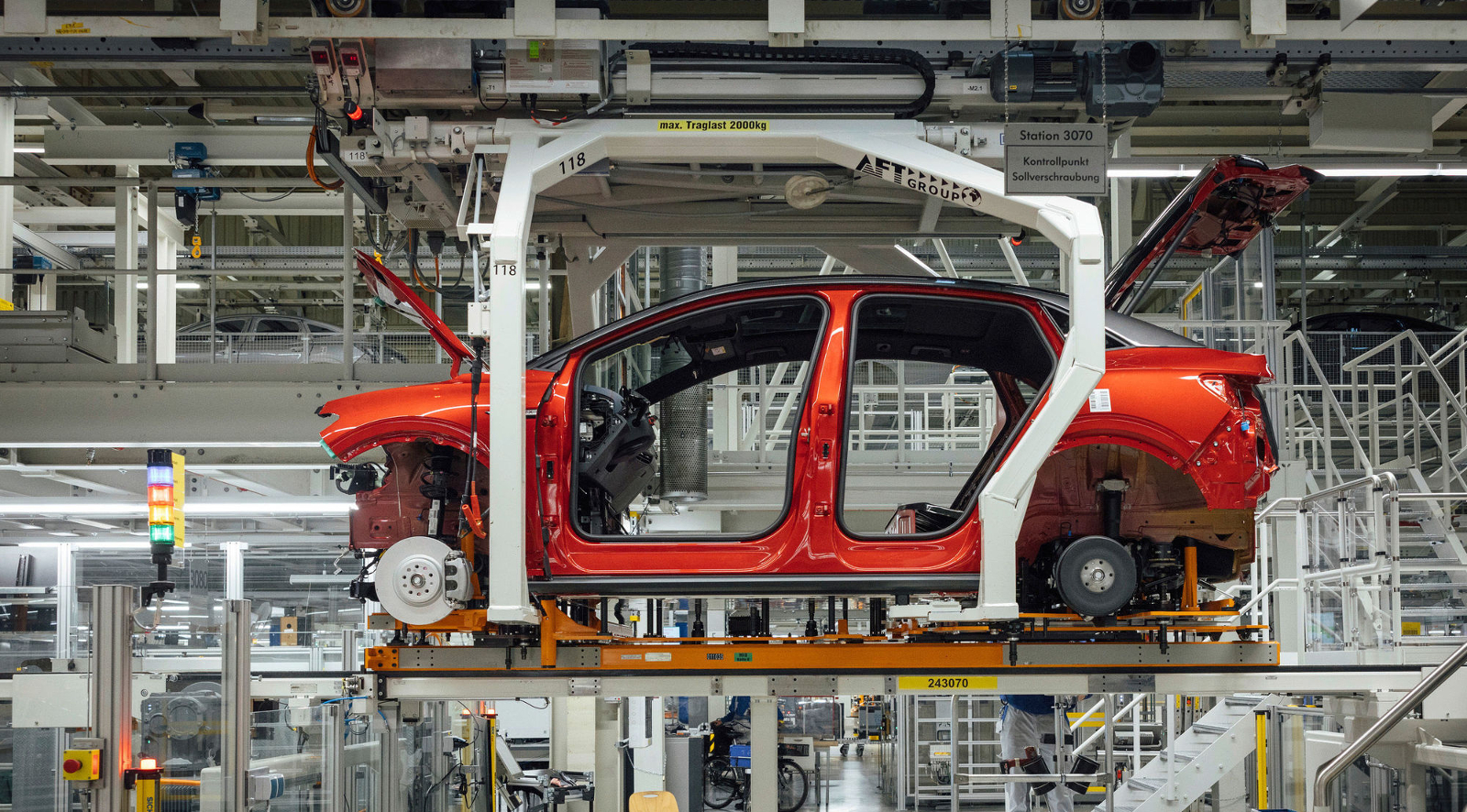
Volkswagen Group faces a profitability crisis that threatens its European manufacturing footprint and could reshape the company's electric vehicle strategy. Operating profit collapsed from €22.6 billion in 2023 to €8.9 billion in 2025, with company leadership projecting further halving by 2026. The German automaker now operates excess factory capacity in its home country, creating pressure to either close plants or relocate production.
Wage negotiations between Volkswagen and IG Metall, Germany's largest industrial union, begin November 24. These talks represent a critical juncture for European auto manufacturing. The union represents approximately 120,000 Volkswagen workers across German facilities. Historically, IG Metall has secured strong contracts, but the company's financial deterioration limits negotiating room. Volkswagen has already signaled willingness to close plants for the first time in decades, a statement that fundamentally changes the leverage dynamic.
The company's cost structure in Germany cannot compete with its operations elsewhere. Labor costs per vehicle in German factories exceed those at facilities in Mexico, Eastern Europe, and other regions. Volkswagen's management has explicitly stated the need for restructuring, including plant closures and workforce reductions. This positions the union in a defensive posture, forced to negotiate job preservation rather than wage increases.
Speculation about relocating Audi production to the United States reflects broader industry trends. An American Audi factory would position the premium brand closer to North American consumers while avoiding European tariffs and labor costs. Volkswagen already operates plants in Tennessee and Mexico. A U.S. Audi facility would complement existing capacity and hedge against trade barriers. However, confirmation remains pending pending formal announcements.
The timing of these negotiations intersects with Europe's electric vehicle transition. Volkswagen committed €180 billion to EV development through 2030 but must fund this investment while managing legacy internal combustion engine manufacturing. German plants designed for traditional vehicles require expensive retooling for battery electric production. Closing underutilized facilities reduces this burden.
IG Metall has not accepted Volkswagen's framing passively. The union argued in October that the profit decline reflects strategic missteps and market timing rather than labor cost inevitability. IG Metall pointed to successful Chinese competitors operating with comparable labor expenses, suggesting management decisions account for much of the financial deterioration. The union also highlighted Volkswagen's continued dividend payments despite financial stress, framing the conflict as management prioritizing shareholder returns over worker security.
Volkswagen's position weakens if production truly shifts westward. German plants employ approximately 270,000 people directly, with supply chain employment reaching hundreds of thousands more. Plant closures trigger severance obligations, retraining costs, and social consequences that union pressure can magnify. Government intervention remains possible, as German federal and state authorities typically support negotiations over unilateral restructuring.
The November 24 talks will determine whether Volkswagen achieves cost reductions through negotiated wage moderation or through confrontational plant closures. Either outcome reshapes European auto manufacturing. Successful negotiation requires both parties to accept pain. Volkswagen must demonstrate genuine financial necessity. IG Metall must accept that some restructuring proves inevitable. Failed negotiations risk escalation including strikes, government intervention, and protracted industrial conflict that further damages Volkswagen's competitive position.