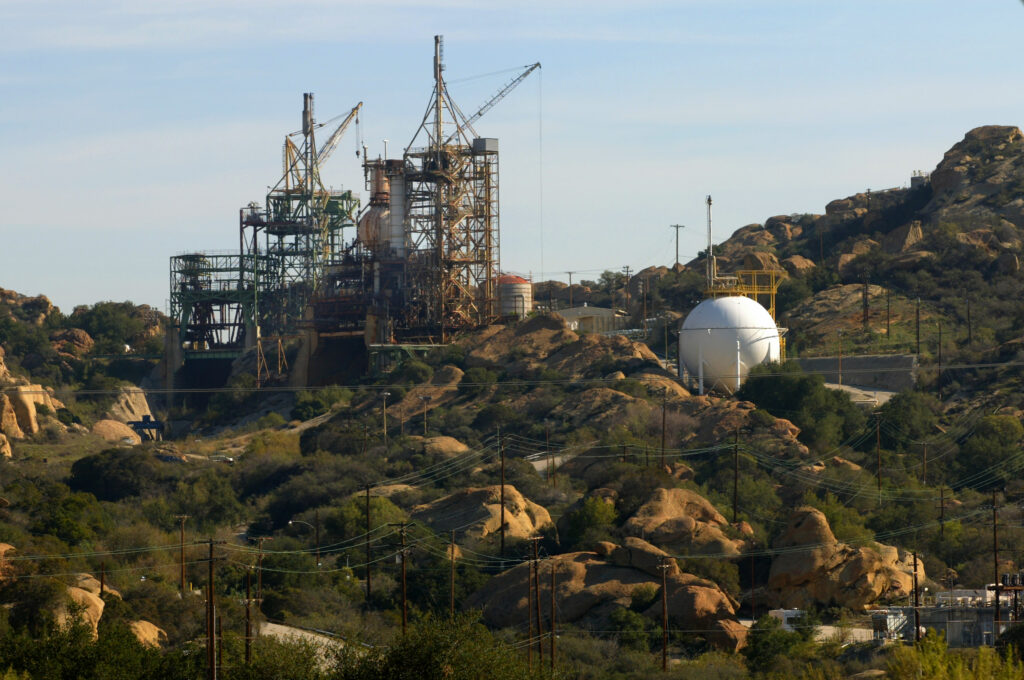
Boeing's demolition of buildings at the Santa Susana Field Laboratory in Ventura County, California raises fresh health alarms for families living downwind of the notorious nuclear testing site. The company has nearly finished razing five structures at the former Rocketdyne facility, where a 1959 reactor meltdown released radioactive materials across the region. Residents fear the teardown itself could mobilize contaminated soil and ash, creating new pathways for radioactive particles to reach homes and lungs.
The Santa Susana incident remains one of the worst nuclear accidents in U.S. history, occurring nearly three years before the better-known Three Mile Island disaster. The 1959 meltdown at the Site Engineer Test Reactor released iodine-131 and other isotopes into the air. Experts estimate the accident exposed roughly 260,000 people across Southern California to radiation, though official records downplayed the severity for decades.
Soil testing at Santa Susana has confirmed persistent contamination. Strontium-90, cesium-137, and plutonium remain embedded in surface and subsurface sediments across the 2,668-acre property. These long-lived isotopes pose ingestion and inhalation risks, particularly to children whose developing bodies absorb radioactive elements more readily than adults.
Boeing inherited the cleanup mandate when it acquired Rocketdyne in 1996. The company committed to decommissioning and decontaminating the site under oversight from California's Department of Toxic Substances Control (DTSC) and the U.S. Department of Energy. The demolition phase represents one stage of a broader remediation effort expected to span years.
Community groups argue the current demolition protocol lacks sufficient dust suppression and air monitoring. The process of breaking concrete and metal structures historically generates fine particulate matter that can travel miles downwind. Families in nearby neighborhoods, including Simi Valley and Moorpark, worry that inadequate containment during building demolition will re-suspend radioactive debris.
The DTSC has established cleanup standards for the property, but questions persist about whether those standards protect public health adequately. California's default soil cleanup level for plutonium is 8 picocuries per gram in unrestricted areas. Measurements at Santa Susana have detected plutonium at levels exceeding state standards in several locations. The agency's oversight of Boeing's demolition activities remains a focal point for resident advocacy groups.
Boeing has implemented dust control measures including water application and temporary barriers around the demolition zone. The company conducts ongoing air sampling at facility boundaries to detect radioactive particles. However, residents express doubt that perimeter monitoring captures all downwind exposure.
The site's geology compounds cleanup complexity. Santa Susana sits atop fractured sandstone and shale. Contaminants migrate downward through cracks and subsurface flow paths toward aquifers serving the region. Groundwater remediation may require decades of pump-and-treat operations to remove radionuclides.
Full site remediation under current DTSC plans targets completion in the 2030s. The demolition phase represents a preliminary step. Residents continue demanding enhanced air quality monitoring, expanded health screening programs, and transparent reporting of all contamination data. The health effects of the 1959 accident remain documented in elevated cancer rates across downwind communities, lending urgency to demands for protective demolition practices today.