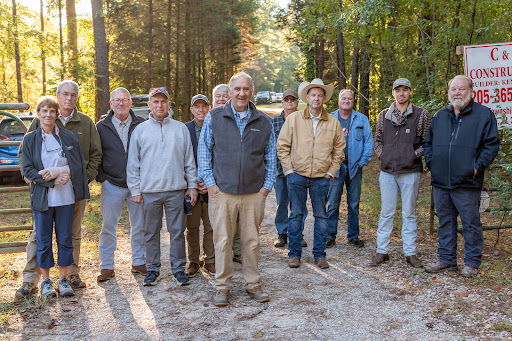
# A Homeowner's Last Stand Against Alabama Power
Fenn Church stands at the edge of a legal and personal crisis in Calera, Alabama. The homeowner faces removal from his property to make way for an infrastructure project backed by Alabama Power, one of the state's largest utilities. Church has resolved to physically block entry to his home rather than surrender it quietly.
His defiance reflects a broader tension between private property rights and utility expansion across the South. Alabama Power, a subsidiary of Southern Company, pursues infrastructure projects regularly. These ventures often require acquiring private land through eminent domain, a legal mechanism that permits government and certain corporations to seize property for public use with compensation.
Church's case touches on questions about what constitutes public benefit and who bears the costs of energy infrastructure. Utilities argue transmission lines, substations, and other projects serve the broader public by maintaining grid reliability and enabling new development. Landowners like Church counter that they shoulder disproportionate burdens while distant consumers reap benefits.
The emotional weight of property ownership complicates these disputes beyond legal frameworks. A home represents decades of investment, family history, and personal autonomy. Forced removal, even with court-ordered compensation, strips away choice and control. Church's stated willingness to face arrest signals how deeply he opposes displacement.
Alabama's legal system has repeatedly upheld utility companies' eminent domain authority. State law grants utilities broad powers to acquire land deemed necessary for public service. Courts typically defer to utility expertise in determining what projects serve the public interest. Individual landowners rarely prevail in such contests.
The Southern Company subsidiary operates within this permissive regulatory environment. Alabama Power holds significant political influence through campaign contributions and regulatory relationships. The Alabama Public Service Commission, which oversees the utility, maintains close ties to the industry it regulates. This dynamic creates structural advantages for utilities in property disputes.
Church's case also reflects growing frustration with how infrastructure burdens distribute unevenly. Rural and working-class communities often face disproportionate pressure from utility projects. Wealthier neighborhoods can afford legal challenges and political advocacy. Calera, a small town south of Birmingham, lacks the resources of urban centers to resist.
The utility expansion debate intersects with energy transition discussions. If Alabama Power plans substations or transmission upgrades to support renewable energy or grid modernization, that context matters. Infrastructure necessary for decarbonization carries different moral weight than projects designed purely for corporate profit. Church's case provides no information about the project's nature, leaving unclear whether public climate benefits factor into the equation.
Southern Company faces mounting pressure to transition away from coal and gas toward renewables. That transformation requires substantial new infrastructure investment. Some projects will demand private land acquisition. Companies like Alabama Power will increasingly face homeowner resistance, particularly in rural areas where alternative routes prove difficult.
Church's Thursday morning statement represents a moment of personal reckoning. His choice to resist through civil disobedience escalates the dispute beyond legal channels. Arrest would draw media attention and potentially mobilize broader community opposition to Alabama Power's project.
Whether Church's stand yields any practical outcome remains uncertain. Legal precedent favors the utility. His arrest would likely proceed without reversing the underlying eminent domain order. Yet his willingness to face incarceration demonstrates the depth of homeowner opposition to utility land seizures and highlights the human costs of infrastructure expansion that law and policy often render invisible.